

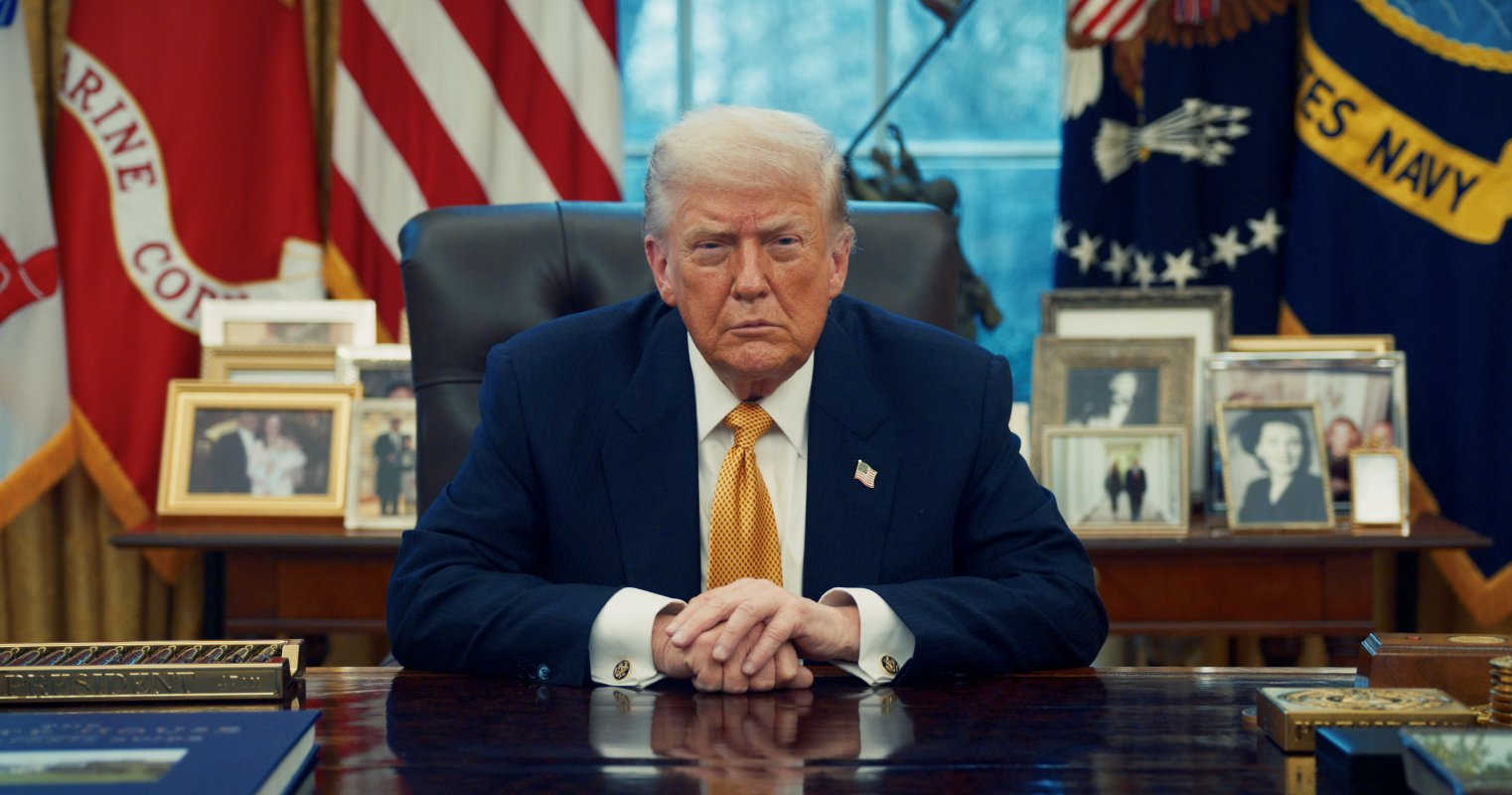
The U.S.-Iran ceasefire has effectively collapsed, with President Donald Trump formally notifying Congress that hostilities against Iran resumed on July 7, while U.S. forces carry out new strikes, revive a blockade of Iranian shipping and propose a 20 percent fee for safe passage through the Strait of Hormuz. The renewed fighting has already pushed oil prices to four-week highs, raising fresh concerns over fuel, freight and living costs in the U.S. Virgin Islands.

In a July 10 letter, Mr. Trump told lawmakers that he directed renewed military action after Iran allegedly violated a June 17 memorandum of understanding by attacking commercial vessels transiting the Strait of Hormuz. “I directed this military action consistent with my responsibility to protect Americans and United States' national security and foreign policy interests,” Mr. Trump wrote. The administration views the letter as opening a new 60-day window under the War Powers Act for military action without congressional approval.
The latest escalation follows months of conflict. The United States began attacking Iran on February 28 alongside Israel. Mr. Trump later ordered a two-week ceasefire on April 7, which was extended as the administration pursued a diplomatic solution. The June 17 memorandum was meant to support that process, but Mr. Trump now says Iran breached the agreement by targeting commercial shipping in the strait.
U.S. Central Command said its latest five-hour mission struck military targets across Iran, including Bushehr, Chah Bahar, Jask, Konarak, Abu Musa and Bandar Abbas, in an effort to degrade Iran’s ability to attack commercial shipping. CENTCOM said U.S. forces used precision munitions against Iranian coastal defense systems, missile and drone sites and maritime capabilities, and reported that more than 50,000 U.S. service members are currently deployed across the Middle East.

CENTCOM has also said its July 8 strikes hit approximately 90 Iranian military targets, following July 7 strikes on approximately 80 targets, including more than 60 Islamic Revolutionary Guard Corps small boats. The command said those strikes were intended to impose costs after Iran violated the ceasefire by attacking three commercial vessels navigating the Strait of Hormuz.
U.S. strikes continued early Tuesday after Mr. Trump said Washington was “reinstating” a blockade on Iran in the Strait of Hormuz. Iran responded with attacks on Middle East allies of the United States, including renewed attacks on Bahrain, which hosts the U.S. Navy’s 5th Fleet. Iran’s Revolutionary Guard also claimed responsibility for attacks on tankers in the strait, saying the vessels had “ignored repeated warnings.”
The Strait of Hormuz has again become the center of the conflict. Mr. Trump has said the United States controls the strait and would charge ships a 20 percent fee to guard the waterway. The move represents a major shift from longstanding U.S. freedom-of-navigation policy.
The economic risk is significant because the Strait of Hormuz is one of the world’s most important energy chokepoints. The U.S. Energy Information Administration has said oil flows through the strait averaged 20 million barrels per day in 2024, equal to about 20 percent of global petroleum liquids consumption, while flows through Hormuz accounted for more than one-quarter of global seaborne oil trade and about one-fifth of global oil and petroleum product consumption.
The International Energy Agency says traffic through the Strait of Hormuz has been “essentially halted” by the conflict, adding pressure to energy trade. The IEA also said around 25 percent of the world’s seaborne oil trade transited the strait in 2025, with limited alternatives for bypassing Hormuz, while more than 110 billion cubic meters of LNG passed through the strait that year.
Oil markets responded quickly. Brent crude on Tuesday rose $3.17, or 3.81 percent, to $86.47 per barrel, while U.S. West Texas Intermediate climbed $2.15, or 2.75 percent, to $80.29. Brent reached its highest level since June 12 and WTI its highest since June 16, before the U.S. and Iran signed the June 17 memorandum.
The local concern for the Virgin Islands is that oil-price volatility can move through fuel, freight, food and utility costs, even when retail prices do not change immediately. The territory was already facing elevated fuel prices before the latest escalation. In its fuel survey for the week of June 1, the V.I. Department of Licensing and Consumer Affairs reported average regular fuel prices of $4.946 per gallon on St. Croix, $5.304 on St. Thomas and $5.344 on St. John. Diesel averaged $5.713 on St. Croix, $7.011 on St. Thomas and $6.509 on St. John.
The territory’s cost-of-living exposure has been flagged by DLCA in other recent pricing work. In its 2026 “Affordability First” initiative, DLCA said fuel prices increased sharply in March because of rising wholesale import costs, with diesel rising by more than 61.1 percent, or $1.62 per gallon, between February 3 and March 23, while gasoline increased by more than 45 percent. DLCA also said grocery prices continue to reflect the territory’s reliance on imported goods, with fuel, freight and supply chain variability driving fluctuations.
National retail prices have not yet fully reflected the latest crude spike, but they remain above year-ago levels. The EIA’s latest weekly gasoline and diesel update showed U.S. regular gasoline averaging $3.777 per gallon on July 6, down from the prior week but 65.2 cents higher than a year earlier. U.S. on-highway diesel averaged $4.578 per gallon, also down from the prior week but 83.9 cents higher than a year earlier.

The legal and political fight in Washington is also intensifying. The War Powers Act requires the president to notify Congress within 48 hours of initiating hostilities and terminate unauthorized military action after 60 days unless Congress approves it. Both the Senate and House passed a resolution last month directing Mr. Trump to withdraw U.S. forces from hostilities with Iran, reflecting growing concern over the months-long conflict.