




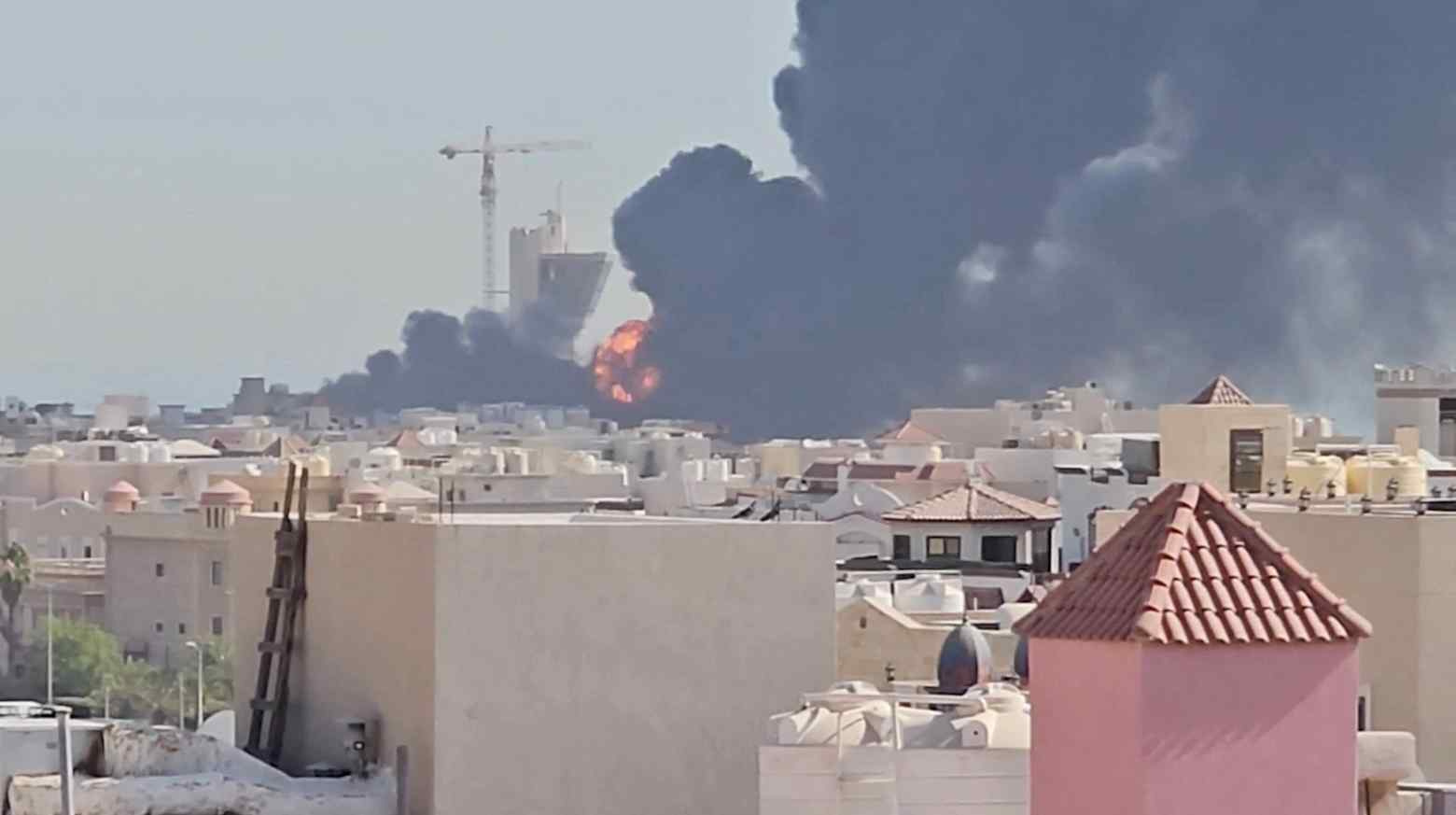
The U.S.-Iran war entered a more dangerous phase over the weekend after an Iranian ballistic missile and drone attack in Jordan killed two American service members, left another missing and sent four others to hospitals, while Tehran expanded its attacks against Gulf states and the U.S. military completed an eighth consecutive night of strikes inside Iran.

The latest exchange has widened the conflict beyond direct U.S.-Iranian military targets, damaged civilian and strategic infrastructure around the Gulf and pushed oil and retail fuel prices higher again, renewing economic concerns for the petroleum-dependent U.S. Virgin Islands.
U.S. Central Command said the two service members were killed in action July 17 as American and partner forces defended against Iranian ballistic missiles and drones in Jordan. One service member remained missing as of CENTCOM’s latest statement.
Four other American service members were medically evacuated to Jordanian hospitals and later discharged. Personnel assessed for less serious injuries returned to duty, according to the command. CENTCOM withheld the identities of those killed until their relatives could be notified.

The deaths brought the U.S. military toll in the war to 16, with more than 430 service members wounded, according to an Associated Press count based on military announcements.
The earlier deaths included six American soldiers killed in an Iranian drone attack at a civilian port in Kuwait, a seventh soldier who later died from wounds suffered in an attack on Prince Sultan Air Base in Saudi Arabia, six service members killed in a KC-135 refueling aircraft crash in Iraq and a Navy pilot who died after a helicopter crash in the Arabian Sea.
More than 50,000 U.S. service members remain deployed across the Middle East, CENTCOM said.
The Iranian offensive has increasingly drawn neighboring countries into the fighting.
Iran has launched missiles and drones toward Jordan, Kuwait and Bahrain, all of which host or support American forces. Kuwait and Bahrain again activated air-defense systems Sunday morning as authorities warned of incoming Iranian drones and missiles.
Iranian attacks have struck power and desalination facilities in Kuwait, threatening electricity and water services. Kuwait said its defenses intercepted and destroyed additional Iranian missiles Saturday, while Iran’s Revolutionary Guard claimed attacks on U.S. military targets in Bahrain and other parts of the region.
Tehran has also threatened to expand the attacks to the United Arab Emirates. Iran’s semiofficial Fars news agency carried a warning that airports in Dubai and Abu Dhabi and major ports in Fujairah and Jebel Ali should be evacuated if attacks on Iranian infrastructure continue.
The UAE Foreign Ministry responded by calling for restraint and condemning attacks on civilian facilities as violations of international law. The secretary-general of the Gulf Cooperation Council accused Iran of committing war crimes by striking civilian and infrastructure targets in neighboring countries.
Iranian authorities, meanwhile, said at least 50 people had been killed and more than 500 injured during the latest U.S. strikes. Those figures have not been independently verified.
CENTCOM said its latest operation ended at 11:30 p.m. Eastern time Saturday and marked the eighth consecutive night of American strikes against Iran.
U.S. forces targeted Iranian coastal-surveillance and air-defense facilities, maritime capabilities, and missile and drone storage sites. The military also struck Islamic Revolutionary Guard Corps forces it said were responsible for launching the attack against American personnel in Jordan.
During the previous night’s operation, U.S. fighter aircraft, aerial drones and warships hit surveillance sites, military logistics infrastructure, underground weapons storage locations and Iranian maritime capabilities, according to CENTCOM.
Iranian state media reported that U.S. strikes damaged a bridge and two tunnels along a principal highway leading toward Bandar Abbas, near the narrowest section of the Strait of Hormuz.
The U.S. campaign has increasingly targeted infrastructure supporting Iran’s military operations around the strait, while Tehran has retaliated against infrastructure in countries that host American forces.
The renewed fighting follows the collapse of an interim agreement intended to move the two countries toward an end to the war.
Iran has suspended its commitments under the agreement, while the United States has reimposed a naval blockade covering maritime traffic entering and leaving Iranian ports.
CENTCOM said the blockade resumed July 14 and applies to vessels traveling to or from Iranian ports and coastal areas. The command said it would continue supporting regional maritime traffic that does not violate the blockade.
During the earlier blockade between April 13 and June 18, U.S. forces redirected more than 140 vessels, disabled nine ships that did not comply and permitted more than 50 vessels carrying humanitarian aid to pass.
The Strait of Hormuz remains one of the world’s most important energy routes. In peacetime, roughly one-fifth of globally traded oil and natural gas moves through the narrow waterway.
The expanding military campaign has pushed energy prices higher and reduced tanker activity through Hormuz.
Brent crude settled at $84.23 per barrel Thursday, while U.S. West Texas Intermediate closed at $78.95. Reuters subsequently reported that oil prices rose more than 4 percent as attacks spread across the Gulf and concerns intensified over regional infrastructure and energy exports.
Retail fuel prices have followed the increase. AAA’s national average for regular gasoline stood at $3.998 per gallon Sunday, compared with $3.876 one week earlier. The national diesel average reached $5.101, up from $4.880 a week earlier.
Diminished tanker traffic through Hormuz and renewed hostilities were pushing the mainland gasoline average back toward $4 per gallon. Higher fuel prices also affect freight, transportation and logistics expenses, which can eventually increase the prices of other goods and services.
The Virgin Islands is particularly exposed to sustained increases in petroleum and refined-fuel prices.
A U.S. Department of Energy assessment states that all fuel consumed in the territory is imported and is used for electricity generation, water desalination, transportation and industry.
The U.S. Energy Information Administration reported that propane produced approximately 60 percent of utility-scale electricity in the USVI during 2025, while fuel oil generated roughly 37 percent and solar supplied about 2 percent. Imported petroleum products therefore continue to support nearly all utility-scale generation.

That dependence means a prolonged increase in crude oil, propane, gasoline and diesel prices could raise WAPA’s fuel-purchasing costs, local transportation expenses and the cost of moving food and other goods into and throughout the territory.