
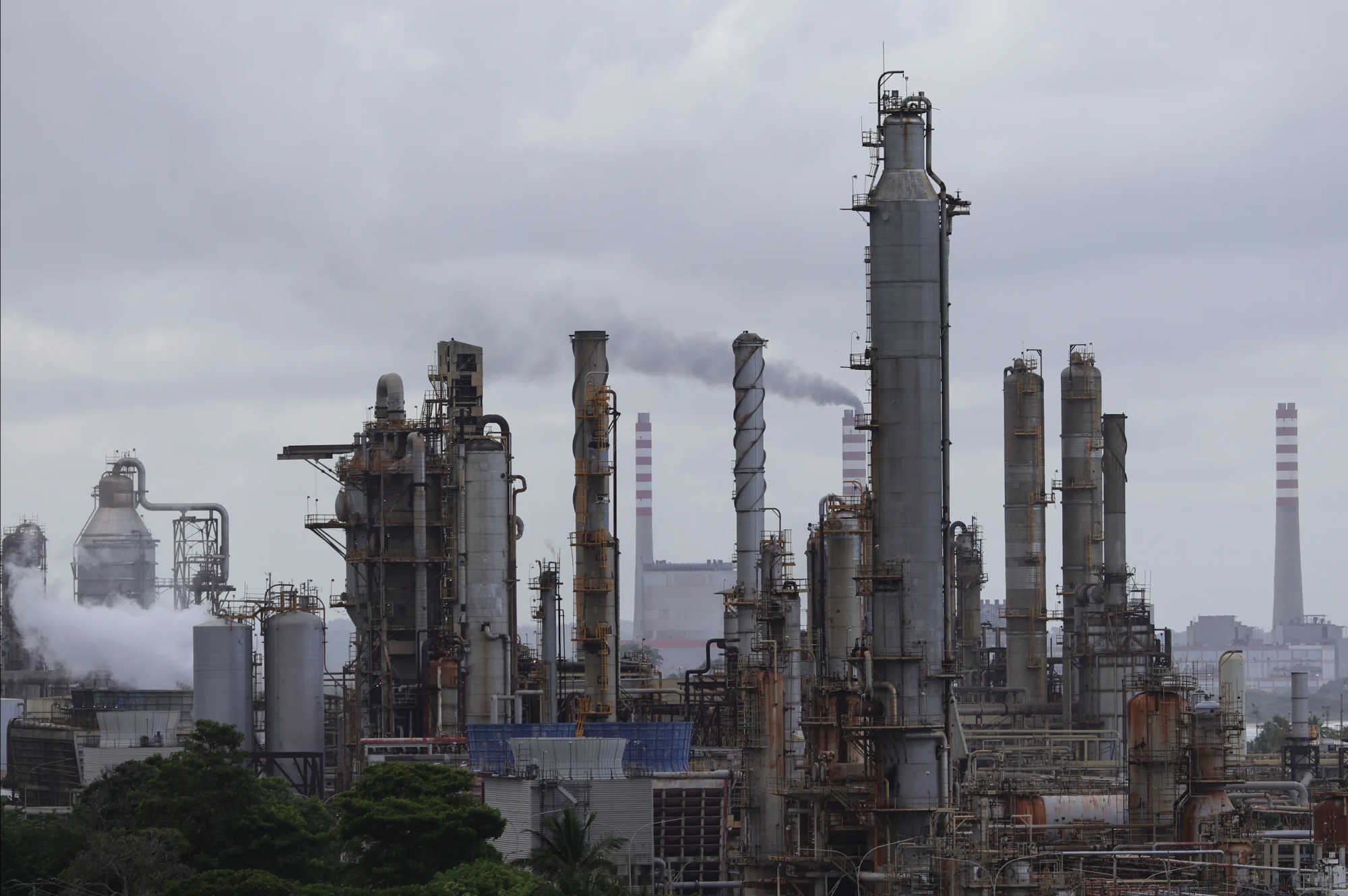
President Donald Trump announced Tuesday, January 6 that Venezuelan interim authorities would transfer between 30 million and 50 million barrels of high-quality oil currently under U.S. sanctions to the United States, a move the administration says is intended to benefit both Venezuela’s population and American interests during the country’s transition period.
In a post published on Truth Social, Trump stated: “I am pleased to announce that the Interim Authorities in Venezuela will be turning over between 30 and 50 MILLION Barrels of High Quality, Sanctioned Oil to the United States, which will be taken by storage ships, and brought directly to unloading docks in the United States. This Oil will be sold at its Market Price, and that money will be controlled by me, as President of the United States, to the benefit of the Venezuelan People, as well as the United States.”
White House officials later confirmed that, based on current market prices, the shipment is valued between approximately $2.4 billion and $2.8 billion. According to those officials, proceeds from the sale would be managed under U.S. oversight while Venezuela undergoes what the administration has described as a transitional phase. Specific mechanisms for the management or eventual distribution of those funds have not been publicly detailed.
The oil transfer announcement follows Trump’s disclosure on January 3 that U.S. special forces had carried out what he described as a “large-scale strike” inside Venezuela, resulting in the capture of President Nicolás Maduro and his wife, Cilia Flores. According to White House sources who spoke to reporters at the time, the raid targeted the couple’s compound amid reports of explosions and gunfire in Caracas. Those sources said Maduro and Flores were transported to the United States for processing.

The operation marked the culmination of months of escalating U.S. actions against Maduro’s government. These measures included expanded economic sanctions, the designation of Venezuelan entities such as the Cartel de los Soles as terrorist organizations, increased U.S. military presence in the Caribbean under what the administration has called Operation Southern Spear, interdictions of suspected drug-trafficking vessels, and a blockade imposed in December on oil tankers carrying sanctioned Venezuelan crude. Trump had also previously stated that he offered Maduro safe passage out of the country, amid U.S. accusations of election fraud and ties to narco-terrorism.
U.S. Attorney General Pam Bondi subsequently announced indictments against Maduro and Flores filed in the Southern District of New York. The charges include narco-terrorism conspiracy, conspiracy to import cocaine into the United States, possession of machine guns and destructive devices, and conspiracy to possess such weapons. In a statement, Bondi said the defendants would “face the full wrath of American justice” on U.S. soil, thanked Trump for demanding accountability, and praised the military for carrying out the mission. The indictments expand on charges first filed in 2020 and reflect the Justice Department’s continued focus on Maduro’s alleged links to international drug-trafficking organizations, with potential trials in U.S. courts expected to expose details of his alleged operations.
Inside Venezuela, reactions have varied sharply among those in leadership. Opposition figures, including María Corina Machado, described the developments as an opportunity to pursue a peaceful political transition. By contrast, allies of Maduro condemned the U.S. action as an invasion and a violation of national sovereignty. Maduro was not recognized as the legitimate president of the country after seizing power following lawful elections that he lost. Millions of Venezuelan citizens at home and abroad have been celebrating Maduro's ouster. Trump has indicated that the United States would oversee oil production during an interim period as a measure to maintain stability.
International responses have also been divided. Russia and China characterized the operation as a violation of Venezuelan sovereignty and called for an emergency meeting of the United Nations Security Council. Several Latin American governments have taken differing positions, with Colombia expressing support for a transition process, while Brazil and Mexico urged restraint, warning of potential regional instability and increased migration pressures. The United Nations has convened an emergency session, underscoring broader global concern about unilateral U.S. military action.
Within the United States, congressional leaders from both major parties requested classified briefings on the operation, including its legal basis. Republican lawmakers largely praised the administration’s decisiveness, while Democrats raised concerns about possible executive overreach and the absence of explicit congressional authorization. Legal experts have debated whether the direct capture of Maduro and Flores, rather than extradition, complies with international law, although administration officials have argued that the actions were justified as self-defense against narco-terrorism threats.

The oil agreement itself has the potential to influence global energy markets by providing the United States with additional supply amid ongoing international shortages. However, details regarding logistics, sales processes, oversight of revenues, and long-term allocation of funds remain unclear. The administration has not announced a timeline for Maduro’s trial or for the establishment of a new governing framework in Venezuela.