




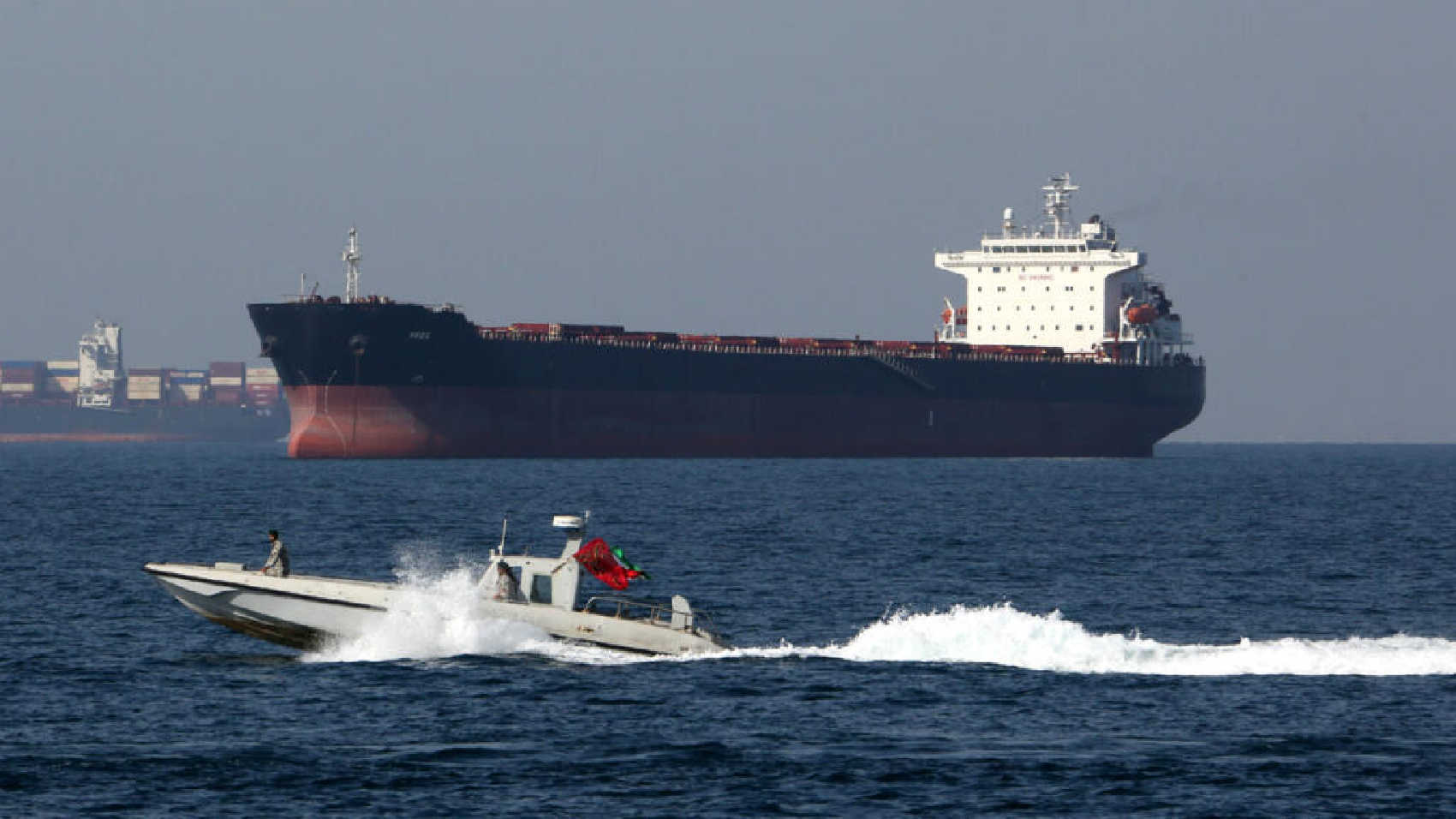
Iran said Monday that the Strait of Hormuz remained closed after U.S. and Iranian forces exchanged heavy missile, drone and air attacks across the Gulf, while Washington disputed Tehran’s claim and launched another wave of strikes against Iranian military targets.

The renewed fighting sharply reduced vessel traffic through one of the world’s most important energy corridors and drove oil prices more than 2 percent higher Monday morning. The developments present renewed economic risks for the U.S. Virgin Islands, where electricity generation, transportation and the movement of goods remain heavily dependent on imported petroleum delivered by sea.
The latest exchange followed an Iranian attack on a container ship in the strait off Oman, according to the Associated Press. Tehran subsequently said passage had been suspended after what it described as an unauthorized transit through the waterway.
U.S. Central Command said its July 12 operation struck dozens of Iranian military targets at multiple locations. Those targets included air-defense systems, coastal radar installations, missile and drone capabilities, and small boats.

The strikes involved U.S. fighter aircraft, naval vessels, one-way aerial attack drones and one-way sea drones, with CENTCOM saying the sea drones were used in such an operation for the first time. The command said the attacks were intended to reduce Iran’s ability to target international shipping passing through Hormuz.
Washington maintains that Iran cannot unilaterally control or close the international waterway.
“Iran does not control it,” CENTCOM said, adding that U.S. forces remained positioned to protect freedom of navigation for commercial vessels.
Iran responded by widening its attacks on American military facilities and countries hosting U.S. forces across the region.
Iran’s Revolutionary Guards said they struck U.S. facilities in Bahrain and Kuwait, destroyed radar systems in Oman, and targeted fuel tanks and ammunition depots at Prince Hassan Air Base in Jordan. Bahrain said its air defenses intercepted several Iranian missiles and drones early Monday, while Jordan reported intercepting Iranian missiles without casualties or property damage.
Iranian media also reported explosions in Bandar Abbas, a major Iranian port on the Strait of Hormuz, and on nearby Qeshm Island. Those claims could not be independently verified.
At least one person was reported killed and seven others injured in a U.S. strike Monday morning, according to Iranian reporting. Reports and official statements on individual incidents indicated that approximately 20 people may have been killed during renewed U.S. strikes over the past week, though Iran has not released a comprehensive death toll for the period.
Competing Claims Over Whether Hormuz Is Open
Iran announced the latest closure Saturday and said Sunday that vessel passage remained suspended. Tehran said permits could resume once “stability and calm” had been restored and has sought to establish a permanent permit and fee system for ships using the strait.
Iran is also pursuing a joint arrangement with Oman to manage traffic through the waterway, according to its Foreign Ministry.
The United States insists that the strait remains open. U.S. officials said approximately 20 vessels had been escorted through the passage during the previous 24 hours.
Independent ship-tracking information, however, showed substantially reduced activity. MarineTraffic reported that vessel movements through Hormuz fell approximately 52 percent from July 10 through July 12 compared with the preceding week. Kpler recorded only six vessels transiting the strait Sunday, the lowest level in five weeks.
Before the current conflict began in late February, approximately one-fifth of the world’s daily oil and liquefied natural gas supplies moved through the Strait of Hormuz.
Although the waterway may not be completely sealed, the reduced traffic shows that shipping operators are avoiding the area or delaying voyages because of the security risk.
The renewed attacks have placed an interim U.S.-Iranian agreement signed last month in further doubt. The agreement was intended to reopen the strait and suspend hostilities while the parties pursued another 60 days of negotiations.
President Donald Trump has said he considers the ceasefire over but has not ruled out additional negotiations. Iranian officials have also taken a harder public position while continuing discussions involving Oman and other regional intermediaries.
Oil Prices Rise as Shipping Risk Returns
Brent crude futures rose $1.67, or 2.2 percent, to $77.68 per barrel as of 9:55 a.m. Greenwich Mean Time on Monday. U.S. West Texas Intermediate crude increased $1.59, or 2.23 percent, to $73 per barrel.
The prices remained below the peaks recorded earlier in the conflict, but markets added a renewed risk premium because of the attacks and the decline in shipping through Hormuz.
The pressure was already beginning to reach American consumers before the latest weekend escalation. The average U.S. gasoline price rose six cents during the week ending Friday to $3.88 per gallon, the largest weekly increase since the middle of May, according to AAA data cited by Reuters.
Refinery disruptions in the United States and Russia and lower-than-normal U.S. gasoline inventories have added to the pressure created by the conflict.
What Higher Oil Prices Could Mean for the USVI
The Virgin Islands is particularly exposed to prolonged petroleum-market disruption.
The territory has no domestic fossil-energy resources and meets nearly all its energy needs through imported petroleum products. Those products are delivered entirely by ship and barge, leaving the territory vulnerable to both higher commodity prices and more expensive or disrupted marine transportation.
Imported petroleum also supplies nearly all utility-scale electricity generation in the territory. In 2025, propane generated approximately 60 percent of USVI electricity, fuel oil supplied about 37 percent and solar accounted for roughly 2 percent, according to the U.S. Energy Information Administration.
WAPA relies on petroleum-based fuels, its generation costs are subject to global petroleum-market prices. Ratepayers have historically been exposed to those costs through fuel-related charges on their electric bills.
A sustained rise in crude oil and refined-product prices could therefore place upward pressure on the utility's fuel expenses, retail gasoline and diesel prices, freight charges and the cost of goods shipped into the territory. Higher maritime insurance and transportation costs could add another layer of expense because virtually all local fuel arrives by sea.

Those effects would not necessarily appear immediately or produce an automatic change in electricity rates. The local impact would depend on WAPA’s fuel contracts, existing inventories, the duration of the disruption and future regulatory decisions. The territory’s dependence on imported petroleum, however, means extended instability around Hormuz can reach Virgin Islands consumers even when the fuel being purchased locally does not originate in Iran or the Persian Gulf.