



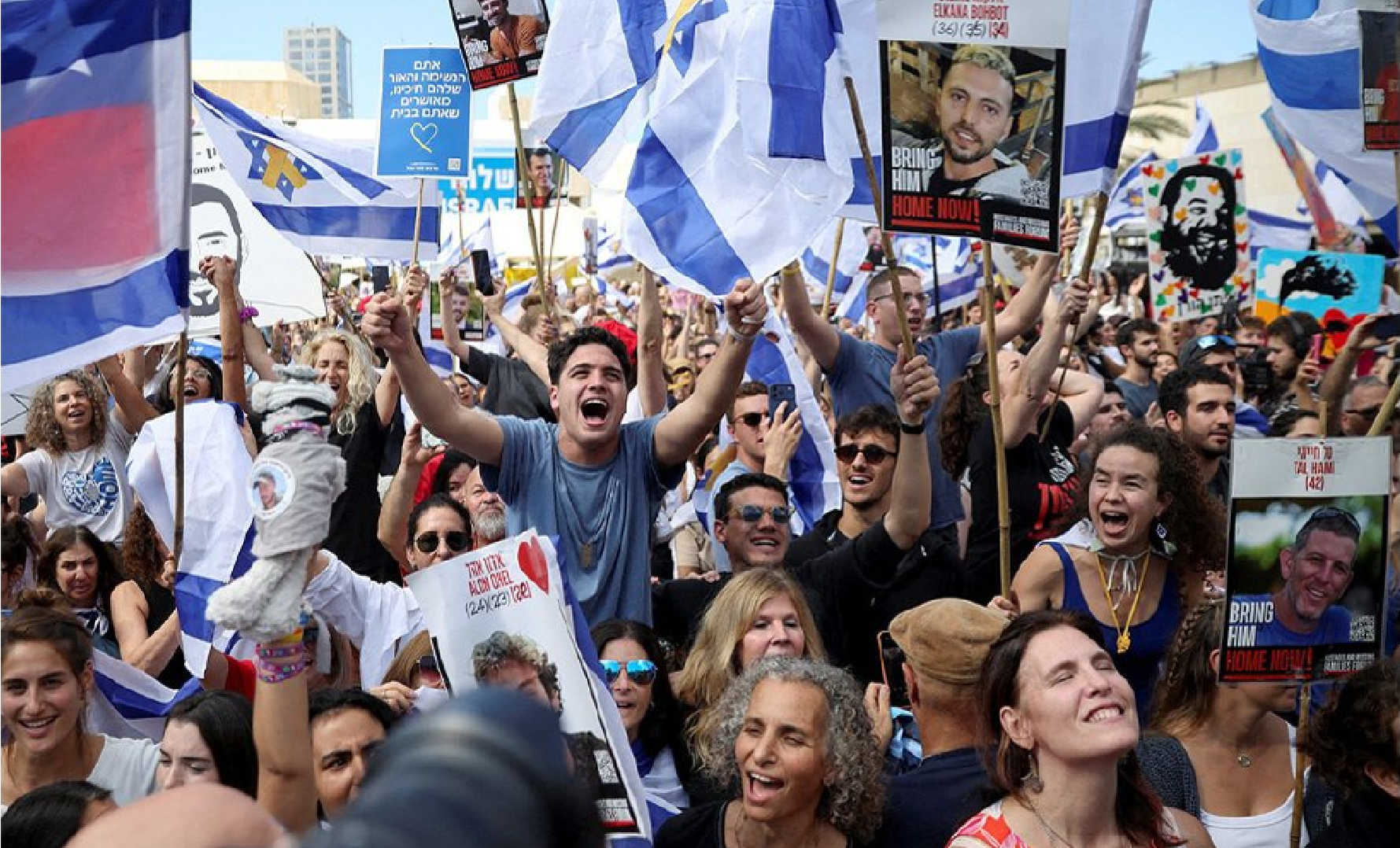
All 20 remaining living Israeli hostages held by Hamas for more than two years were released into Israeli custody early Monday, October 13, completing a pivotal phase of the President Donald Trump-brokered ceasefire agreement that has brought a fragile halt to the devastating conflict in Gaza.

The captives, transferred via International Committee of the Red Cross vehicles from Khan Younis in southern Gaza, crossed into Israel under military escort and were immediately taken to hospitals in Tel Aviv and the south for medical evaluations. Among them were individuals like Eitan Mor, a 28-year-old kidnapped from Kibbutz Be'eri, and twins Ziv and Gali Berman, seized during the initial Hamas assault on October 7, 2023. The Israeli Defense Forces confirmed the group's safe arrival, with initial reports indicating most were able to walk unaided despite their prolonged ordeal. In parallel, Israel began releasing approximately 1,950 Palestinian prisoners and detainees, including 250 serving life sentences, as stipulated in the accord's first phase, with buses carrying the first groups arriving in Gaza amid tight security.
The exchange fulfills the core humanitarian commitments of President Donald Trump's 20-point peace framework, unveiled last week and mediated by envoys including Steve Witkoff and Jared Kushner alongside Qatar, Egypt, and Turkey. Hamas handed over the living hostages in two groups—seven early Monday followed by 13 shortly after—after Israeli Cabinet approval on Thursday triggered a 72-hour implementation window. The deal also includes the forthcoming return of remains for 25 deceased hostages, though logistics for that segment remain under negotiation. Palestinian prisoners freed so far encompass women, children, and those detained since the war's outset, transported via the Rafah crossing under Red Crescent oversight. The White House described the milestone as a "testament to relentless diplomacy," with full aid convoys—carrying food, fuel, and medical supplies—now entering Gaza unhindered for the first time in months, per United Nations logs.
As the helicopters ferrying the hostages circled low over Tel Aviv's Hostage Square, where an estimated 65,000 gathered under a relentless sun, the air filled with cheers, tears, and spontaneous dances blending Hebrew folk tunes with American anthems. Families like that of Matan Angrest, a 22-year-old soldier captured near the Gaza border, watched live feeds on massive screens, erupting in embraces as the first images emerged. "Our nightmare is coming to an end," said Anat Angrest, Matan's mother, in a statement to reporters, her voice breaking amid the crowd's roar. The festive spirit extended nationwide, with synagogues tolling bells and streets in Jerusalem and Haifa adorned in blue-and-white banners, evoking the relief of past national triumphs. Yet beneath the jubilation lay raw emotion: relatives clutched faded photos of the captives, and counselors stood ready at reunion sites to address trauma accumulated over 737 days of uncertainty.

President Trump, arriving in Israel hours after the releases, was met with thunderous applause and a prolonged standing ovation upon entering the Knesset, Israel's parliament, where lawmakers, families, and dignitaries including Prime Minister Benjamin Netanyahu rose in unison. Speaker Amir Ohana welcomed him with, "Welcome to Jerusalem. Welcome to the Knesset. We’ve been longing for this day," before Trump signed the guestbook, inscribing "A great and beautiful day." Netanyahu, in a pre-speech embrace, called the moment a "sacred mission fulfilled," crediting Trump's persistence in bridging divides. Crowds outside the assembly waved U.S. and Israeli flags, chanting "We love Trump" in a reception that underscored the U.S. leader's pivotal role—his administration's pressure on all parties, including threats of withheld aid, had accelerated talks from impasse to agreement in under two weeks.
En route aboard Air Force One, Trump had proclaimed the conflict's conclusion to reporters, stating unequivocally, "The war is over." He elaborated that the ceasefire "is going to hold," adding, "Everybody is happy, and I think it's going to stay that way," while noting simultaneous celebrations across Jewish and Muslim communities as a historic anomaly. The declaration aligned with Hamas official Khalil al-Hayya's televised address confirming U.S. guarantees of a "permanent ceasefire," though the group emphasized the need for full Israeli withdrawal in subsequent phases. Trump's itinerary includes private meetings with freed hostages' families at Sheba Medical Center before addressing the Knesset on a "historic dawn of a new Middle East," followed by a flight to Egypt's Sharm el-Sheikh for a summit with over 20 world leaders to formalize reconstruction and governance plans.

The releases cap a war that claimed over 67,000 Palestinian lives, per Gaza's health ministry, and displaced nearly all of the enclave's 2.3 million residents, while Israel's response to the October 7 attacks—killing 1,200 and abducting 251—left deep scars on both sides. With Israeli troops now withdrawing to an agreed line inside Gaza, aid agencies report initial distributions reaching northern areas ravaged by famine. Yet challenges persist: unresolved elements like Hamas disarmament and postwar authority loom in phase two, and skirmishes in Gaza City between Hamas and rival clans highlight internal fractures. International observers, including U.N. Secretary-General António Guterres, hailed the progress as a "vital de-escalation" but urged safeguards against relapse.