




The Water and Power Authority has presented the Legislature with a packet of proposed items for legislative action that it says will help put it on a better financial footing. Currently operating within a structural deficit, WAPA owes vendors over $104 million. Local vendors, 185 in total, are owed $7.4 million of that amount.

Chief Executive Officer Karl Knight appeared before the Committee on Budget, Appropriations, and Finance on Monday to outline the Authority’s FY2026 budget. While WAPA anticipates collecting $325.2 million in revenue in the new fiscal year, there is a projected budget shortfall of $9.6 million. Reminding lawmakers that WAPA “has not required any support from the general fund beyond the government simply paying for services rendered,” Mr. Knight has now detailed ways that the Legislature can help.
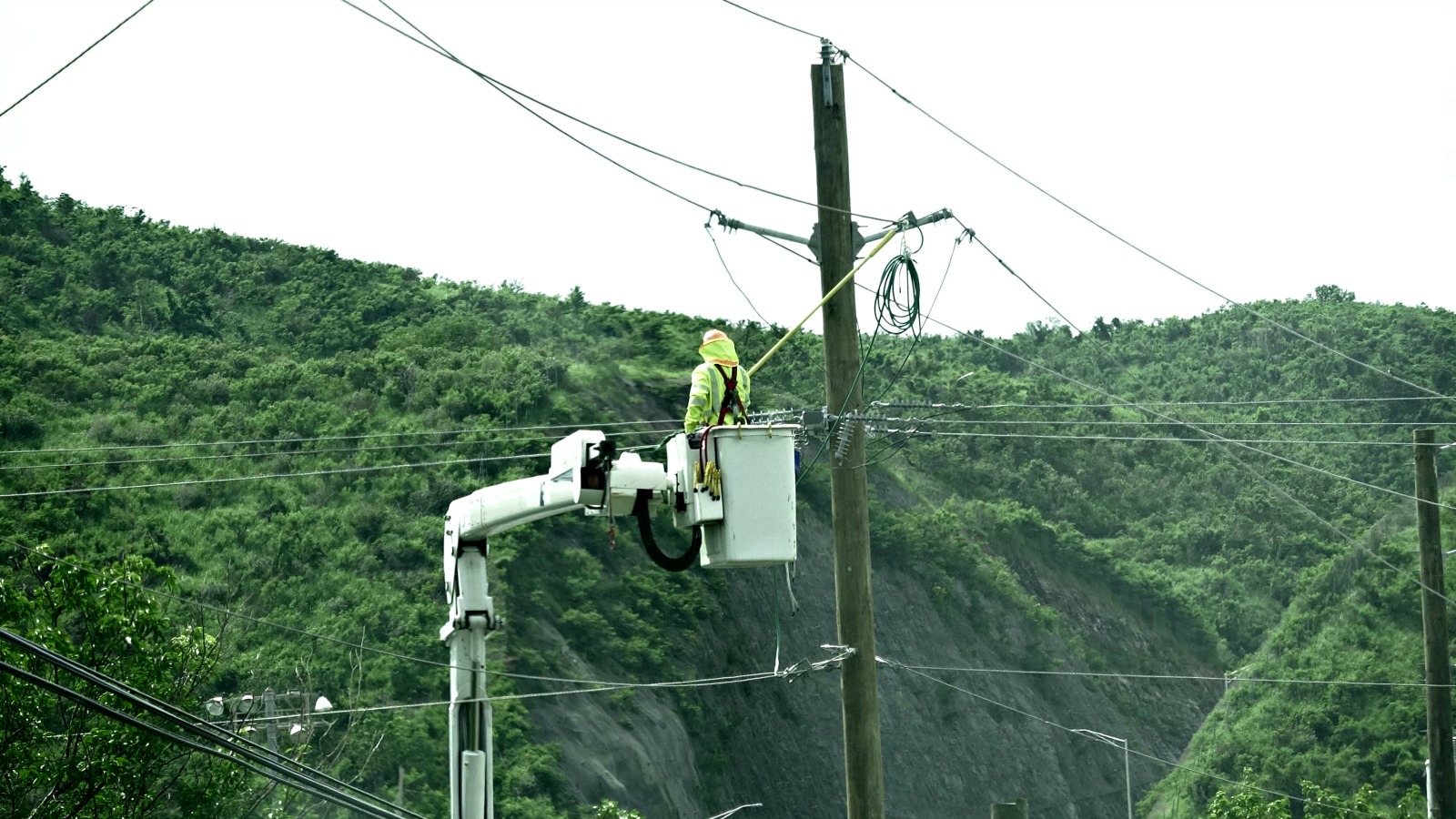
Among them is a request to increase disconnection fees in specific instances from $25 to $275. This would only apply to “disconnections conducted from the pole” in instances where “field personnel safety is at risk,” Mr. Knight assured lawmakers. The higher fee would apply “if you have a grow house or criminal activity, or you have been stealing service, or you have threatened my meter servicemen,” he explained. Lawmakers, initially concerned that such an increase could create adverse financial strain for customers, emphasized to WAPA that if such a change were made law, it would have to be very carefully communicated. “The public sentiment is that it will be the mundane disconnections that you're referring to,” warned committee chair Senator Novelle Francis.
WAPA also wants the Legislature to help it modify the statute regarding back-billing. Currently, the Virgin Islands Code restricts the authority from back-billing for more than one billing cycle or 30 days. The law establishing the 30-day timeline was passed in 2020, after the 33rd Legislature overrode Governor Bryan’s veto of the measure. Mr. Knight insists that such an arrangement “inadvertently provides an undue advantage to customers, especially large customers, who may benefit from underbilling.” He wants to return to a timeline of three billing cycles for “residential and small commercial customers.” For large customers, meanwhile, WAPA wants the ability to reach back twelve billing cycles. That recommendation is paired with another that asks the Legislature to adjust the legislatively mandated 30-day meter reading cycle to a “maximum of 35 days, consistent with common industry practices.”

“I'm going to support the 35 days because I think it makes sense,” stated Senator Kurt Vialet. He was the second to emphasize to the WAPA CEO the importance of an effective public education campaign, to prevent instances of customers believing their bills have been unduly increased.
WAPA is also requesting support for the full payment of streetlighting services. Mr. Knight says in FY2025, WAPA submitted invoices totaling $7.4 million to the Department of Finance but only received $4.7 million. CEO Knight says this “persistent underfunding” of the street lighting system is a “contributing factor to the ongoing structural deficit.” He has called for a “permanent solution” in the form of an “annual budget appropriation to reconcile the difference.” Responding to that request, Senator Francis stated that “it's a real conversation that I'd love to have because I think it's important. It goes towards crime prevention and public safety issues.”
Another major ask from WAPA is for the Legislature to appropriate some $2.8 million owed to the Public Services Commission for past due arrears on its annual assessment. While WAPA says it is trying to remain current with new payments, the arrears remain a burden. Mr. Knight testified that the authority “has had to make difficult decisions in recent years to prioritize the utilization of revenues on critical needs” instead of assessment payments. He insisted that bailing WAPA out in this regard would “further assist the Authority’s financial turnaround.”
Senator Hubert Frederick wasn’t so sure. “You're asking the people of the Virgin Islands to pay this,” he noted, referring to taxes deposited into the general fund. “Why should we pay this and not WAPA?” he asked bluntly. Mr. Knight noted that WAPA is “saddled with a $2.8 million deficit” and could benefit from “some sort of assistance in clearing the books with the PSC.” He reminded Sen. Frederick that several other entities that receive an assessment from the PSC generate and retain a profit, something that WAPA has long been unable to achieve.
According to WAPA’s chief financial officer, Lorraine Kelly, the PSC has “directly threatened us that if we did not pay their bills, that they would reduce our rates.” She told Senator Marise James that PSC Commissioner David Hughes is “on record as having said he wanted to teach WAPA management a lesson and put us in the penalty box, and that's why he reduced our rates.” Sen. James was visibly perturbed. Mr. Hughes’ comments during a June PSC meeting were made in the context of WAPA’s perceived failure to address the issue of deferred fuel costs. In recommending that the prevailing Levelized Energy Adjustment Clause rate be cut from 22.22 cents per kilowatt-hour to 17 cents, Mr. Hughes recommended that the utility be “put in the penalty box for three months while we consider the deferred fuel account.”
Other requests in WAPA’s legislative proposal packet include subsidizing the minimum wage increase, as it was “not anticipated in the original financial planning.” Payroll is expected to increase by $801,000. WAPA wants the Legislature to subsidize the 3% increase in the employer contribution to the Government Employees Retirement System as well – an “unfunded mandate.” WAPA currently owes GERS $17 million and anticipates that the increase could result in $907,000 in additional fringe costs.
The authority is also hopeful that the Legislature will assist with capping WAPA’s liability in tort claims and to implement a customer charge for the water system. Mr. Knight believes that by introducing legislation to address the above, lawmakers can help “accelerate WAPA’s path toward fiscal stability, enabling reliable supply to customers.” But as Senator Vialet reminded Mr. Knight, “it's up to this body to make the decision.” Like WAPA, Mr. Vialet said the Legislature must also weigh its options. “Overall, the government just is not in a good financial position,” he noted.

Lawmakers have made no promises to draft legislation to address the issues, leaving WAPA to find ways to pull itself out of a deep deficit. Mr. Knight has warned that any reduction in rates will “reduce the forecasted revenue collections and result in further underfunding of critical expenses.”