
ST. THOMAS — The V.I. Water and Power Authority is exploring a six-month lease of a floating power plant that would require $2.85 million upfront, plus electricity charges, as repeated equipment failures at the Randolph E. Harley Power Plant continue to leave customers without power for hours.

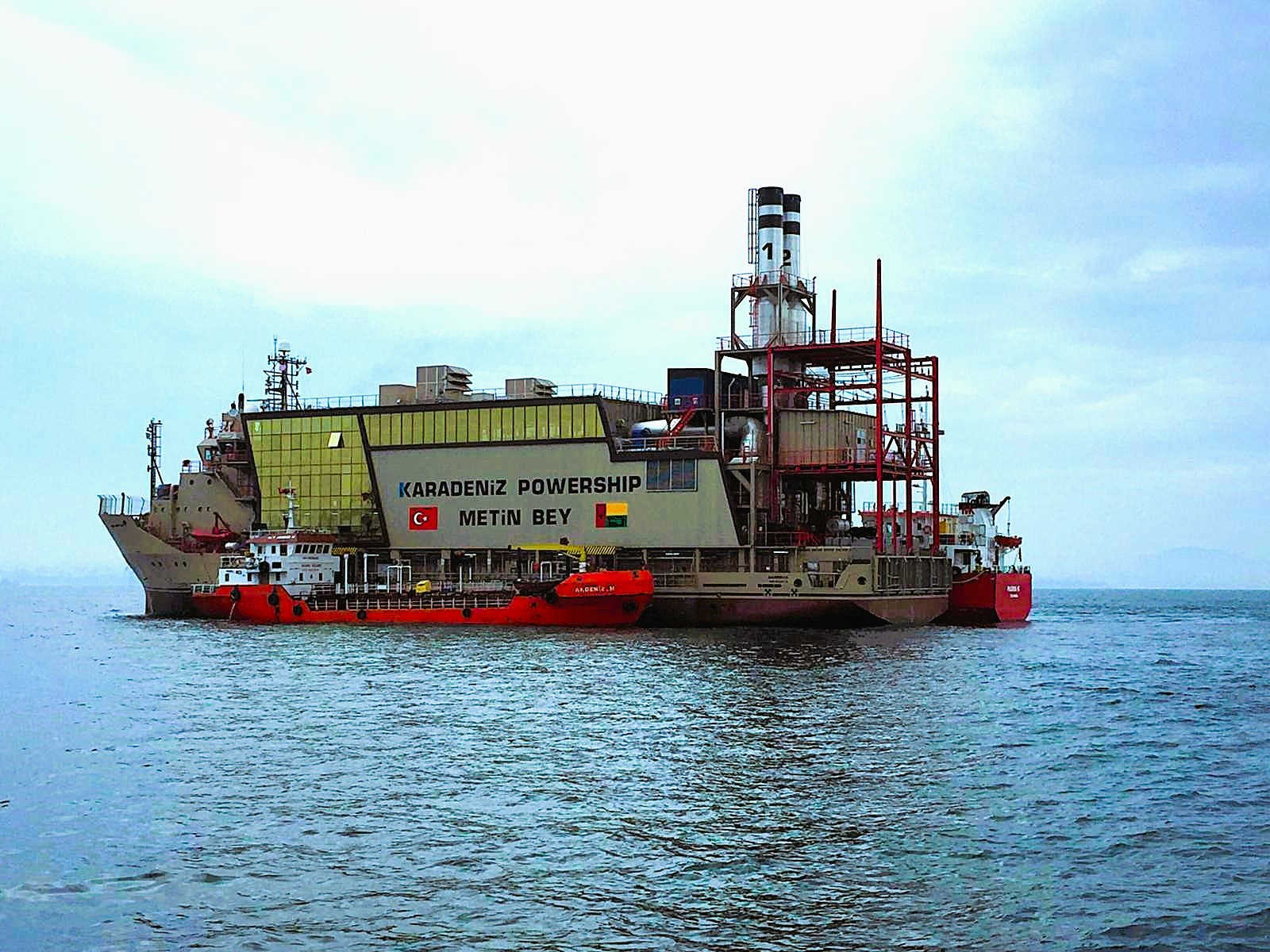
WAPA Chief Executive Officer Karl Knight told lawmakers Monday that the authority and the Office of Disaster Recovery are evaluating deployment of the KPS-51 Metin Bey power ship to Krum Bay. The vessel, which he said is anchored in the Dominican Republic, would provide at least 30 megawatts of generation.
The proposal remains under review, with funding still being discussed. Separately, Knight said repairs to an existing Wärtsilä engine could restore enough capacity to end the prolonged generation shortfall, offering the prospect of relief around early December if the work proceeds as anticipated.
Testifying before the Committee on Government Operations, Veterans Affairs, and Consumer Protection, Knight said the U.S. Department of the Interior and U.S. Department of Energy are helping conduct due diligence on the power ship proposal.
Beyond the upfront payment, WAPA would be charged 11 cents per kilowatt-hour. The $2.85 million therefore would not represent the full cost of the six-month arrangement.
When Senator Ray Fonseca questioned how WAPA would afford the proposal, Knight said the authority was “in discussions with the governor's office, but we're also working with our federal partners to allocate funding.”
Knight described the ship as a temporary source of generation while longer-term recovery projects advance. Additional capacity would also allow WAPA to take existing generators offline for maintenance, inspections and repairs without leaving customers short of power.
The need for that breathing room follows a series of failures involving both older generating equipment and the plant’s Wärtsilä engines.
Knight said Wärtsilä Engine 7 suffered a “maintenance failure” on October 21, with replacement turbocharger parts initially carrying a lead time of months. Unit 27 experienced a mechanical failure that same day and remained offline until October 25. WAPA was already discussing repairs to Wärtsilä Engine 5 when Engine 7 failed.
A maintenance team arriving in early November subsequently identified problems with Engines 4 and 6, bringing the number of affected Wärtsilä engines to four.
Engines 4 and 6 have since been repaired, Knight said. He expressed hope that Engine 5 could be completed within a week, restoring sufficient capacity to end the prolonged shortfall. A schedule submitted by Wärtsilä also indicated a possible December return for Engine 7, although Knight’s testimony did not establish either repair target as certain.
WAPA has entered into a three-year operations and maintenance contract with Wärtsilä, Knight said. He argued that the agreement would clarify responsibility for servicing the engines.
“We're no longer debating warranty repairs versus maintenance repairs,” he said. The contract’s cost was not provided.
Other repairs will take longer. Unit 15 has been offline since March 2026, and Knight described it as the Harley plant’s most critical generator until its eventual replacement. WAPA hopes to complete repairs within three months.
ODR representative Odari Thomas told lawmakers that the office recently issued a $2.8 million payment to purchase components with long delivery times for Unit 15.
“So money is flowing, and parts are on order,” Thomas said.
Knight also outlined targets for refurbished generating units to be installed by May 2027 and for Unit 23, which failed in March 2025, to return in June 2027. He said Unit 23 alone could meet approximately half of St. Thomas–St. John customer demand.
Additional plans include two 2.5-megawatt generators at the Harley plant and standby generation for St. John. Knight said the equipment intended for St. John remains on St. Thomas and requires FEMA approval before relocation.
He criticized federal and local approval processes, telling Senator Avery Lewis: “This is the same FEMA that’s urging us to move fast and spend money. If we have an emergency…I rather ask for forgiveness later.”
However, the St. John project has faced substantive questions about its design and implementation. As The Consortium previously reported, the proposal involves four generators—two each at Coral Bay and Frank Bay—with a combined capacity of 10 megawatts and 80,000 gallons of bulk diesel storage. Coastal Zone Management commissioners questioned engineering documentation, permitting requirements, site conditions and transportation arrangements. Those concerns remain part of the review ahead of another hearing expected in early December.
WAPA is also anticipating at least 10 megawatts of solar generation from the Estate Fortuna project and, over the longer term, new generation at both Harley and the Richmond Power Plant on St. Croix.
Yet Knight acknowledged to Senator Kenneth Gittens that WAPA’s current maintenance program is not adequately funded—a problem that additional equipment alone would not resolve.
“We can no longer delay doing maintenance on those units,” Knight said, describing the financial consequences of deferring work. “It's going to cost us three times as much on the back end. We're doing that right now. We're paying overtime. We're paying to expedite parts. We're paying for lost revenue…”

Despite the authority’s financial pressures, Knight pledged to budget for spare parts and required maintenance intervals.