

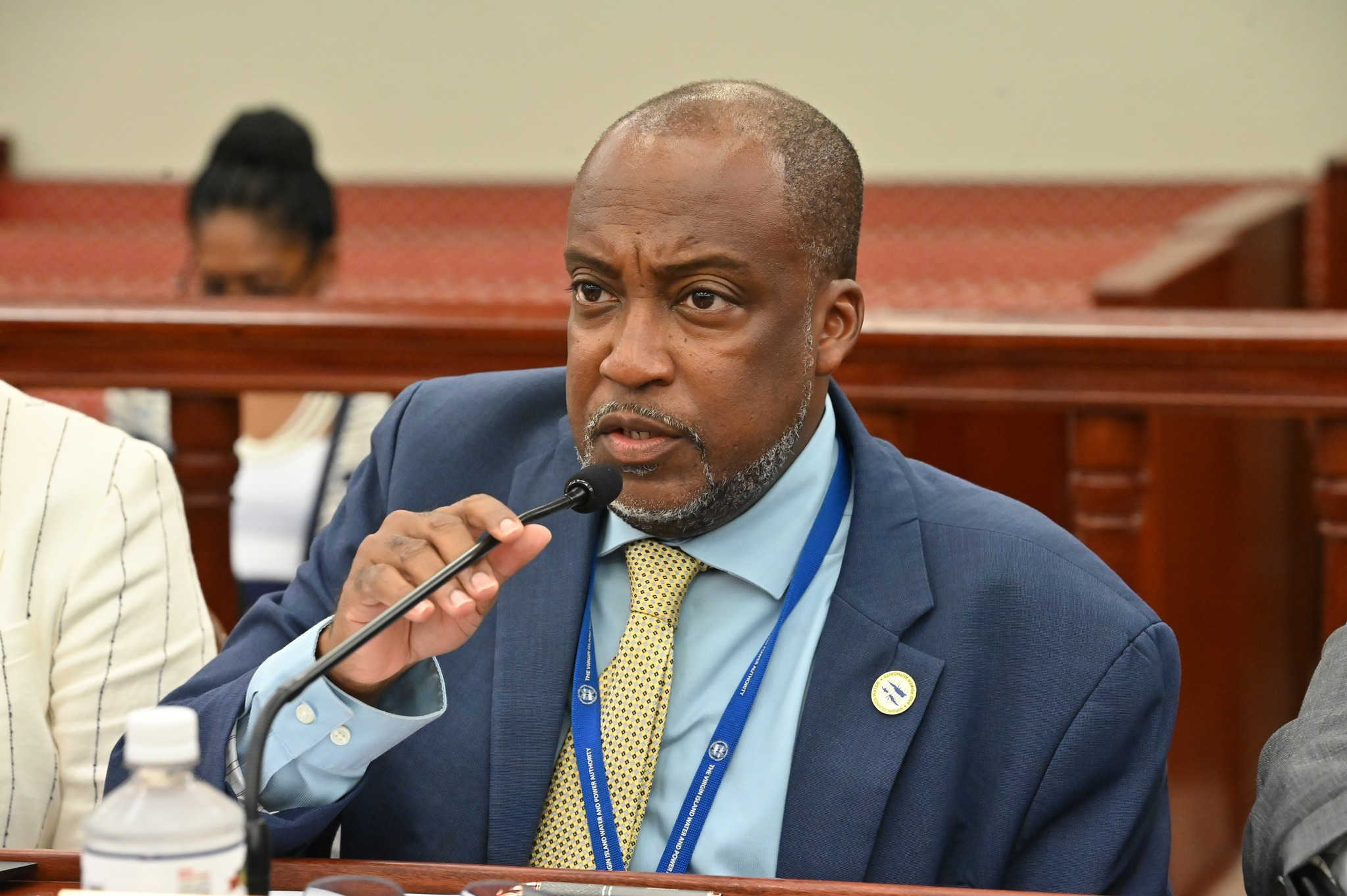
Residents enduring hours of rotating outages may still receive WAPA bills based on their previous electricity use rather than their actual consumption, Chief Executive Officer Karl Knight acknowledged Monday as senators questioned why prolonged interruptions have not translated into lower charges.

“It's an average of what it would have been the month prior, and it probably is not reflecting your current consumption,” Mr. Knight told the Committee on Government Operations, Veterans Affairs, and Consumer Protection.
He said WAPA intends to eliminate estimated billing through the replacement of defective meters, with installation scheduled to begin on St. John in January 2027 before extending to St. Thomas and St. Croix over the following 12 months.
“We have 55,000 meters that are awaiting deployment, and that's scheduled to start in the first week in January,” he said.

That timetable follows earlier installation targets. In an October 2025 interview with the Consortium, Mr. Knight expressed hope that installation on St. John would begin before the end of that year. WAPA’s project FAQ still lists summer 2026 as the anticipated start, with a rollout lasting approximately one year.
Senator Marvin Blyden illustrated the billing problem with his own experience, telling Mr. Knight that he had once switched off his electrical breaker before traveling but still received a bill.
Mr. Knight responded that an estimate would not account for that change in usage. He also contended that meters operating out of calibration and estimated accounts were “probably to your benefit, not ours.”
The WAPA chief said estimated billing accounts would receive credits. His assurance, however, did not provide a timetable or explain how adjustments would be calculated for individual customers.
Senator Kenneth Gittens urged WAPA to “aggressively address” billing discrepancies and warned against disconnecting customers who have formally disputed their bills with the Public Services Commission.
WAPA “shouldn't be cutting people power once they have submitted an official complaint to the PSC,” Mr. Gittens said.
Mr. Knight said the authority “typically” does not do so, but added that WAPA would not “allow that to be a loophole for not paying a bill either.”
Mr. Gittens pushed back, saying that determination was not WAPA’s to make and that the authority should concentrate on resolving the problems driving customers to the regulator.
“So whether or not they use it as a loophole or not, the thing is, it's for us to address what's going on so that they don't have to go to the PSC to make a complaint,” he said.
Lawmakers also questioned why some households with solar installations continue to receive substantial electricity bills.
Mr. Knight suggested that affected customers had not completed enrollment in WAPA’s net energy billing program, leaving the authority unable to properly account for electricity their systems supply to the grid.
“You probably have not changed the meters that we're using, and so their output is probably not being properly credited,” he told committee Chairman Avery Lewis.
Mr. Knight said customers must submit the necessary installation documentation and complete registration so WAPA can provide a meter capable of tracking electricity flowing in both directions. His explanation attributed the problem to incomplete enrollment, but did not establish the cause of each disputed solar customer’s bill.
WAPA’s program guidance confirms that net energy billing requires an application, review of the system and interconnection requirements, necessary permits and certifications, and a bidirectional meter. Credits apply to excess electricity exported to WAPA’s grid.
Senator Lewis questioned whether residents had been adequately informed about those requirements and urged WAPA to conduct public education campaigns.

For customers awaiting accurate readings, January represents the scheduled start of meter replacement, rather than an immediate territory-wide end to estimated bills.