




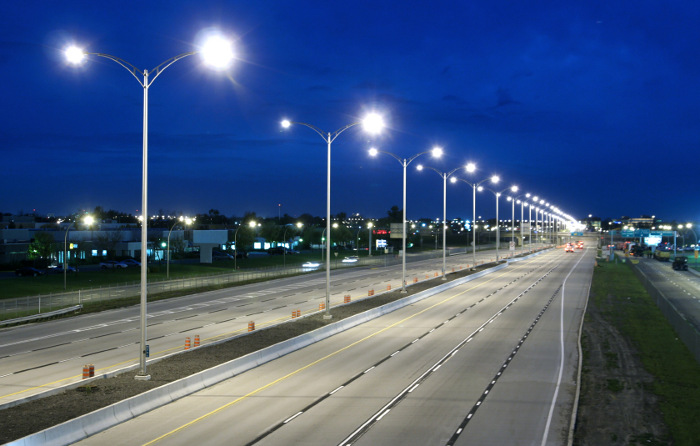
Despite objections from the Office of Management and Budget over the proposed funding source, the Senate Committee on Budget, Appropriations, and Finance has approved legislation to transfer $4 million from the Insurance Guaranty Fund to the Virgin Islands Water and Power Authority to address widespread streetlight failures across the territory.

The funding is authorized under Bill No. 36-0210 and is intended for the repair, replacement, and operation of streetlights territory-wide. Nonfunctioning streetlights have long been a public concern, leaving many neighborhoods in darkness and raising safety issues for motorists and pedestrians alike. As of Monday, December 15, officials reported 437 damaged streetlamps across the territory.
The bill was sponsored by Senator Kurt Vialet, who attributed much of the streetlighting backlog to unpaid government obligations. He told committee members that the Government of the Virgin Islands has “not paid the required amount to keep street lights on,” explaining that while WAPA continues providing the service, it is “not receiving sufficient funds to be able to maintain a service that they're providing.” According to WAPA testimony, the government is currently $8.3 million past due on streetlight payments.
The idea of tapping the Insurance Guaranty Fund arose during the budget markup process. The fund is required by law to maintain a balance of $50 million, with any excess eligible for use by the Treasury’s general fund. Senator Vialet said the fund currently holds “some $58 million” and is expected to collect between $20 million and $23 million during the current fiscal year.

With an $8 million surplus above the required threshold, Vialet argued that allocating $4 million toward unpaid streetlight obligations was appropriate. He said the funds would “jump start the ability to get streetlights back on the island,” describing the approach as “prudent” because it does not reduce the fund below the mandated $50 million level.
That reasoning was rejected by OMB Director Julio Rhymer, who testified that he was compelled to “respectfully oppose the use of the Insurance Guarantee Fund for the purposes proposed by this bill.” Rhymer cautioned against what he described as a “one-time quick fix” and urged lawmakers to focus instead on developing a long-term funding mechanism for streetlighting.
Rhymer explained that the Insurance Guaranty Fund exists to ensure the financial stability of the Virgin Islands Guarantee Association, which he said “is responsible for the payment obligation of insolvent insurance.” He stressed the importance of preserving the fund, particularly given the territory’s exposure to natural disasters. He reminded lawmakers that property values—and corresponding insurance costs—have increased sharply since the 2017 hurricanes, warning that a future catastrophic event could cost the government “way more than $50 million.” In that context, he argued, using the fund for streetlighting was “not financially prudent.”
As an alternative, Rhymer suggested pursuing a “sustainable funding strategy,” including adjustments to the allocation of property tax revenues to WAPA. Under current law, WAPA receives 4% of annual property tax collections for streetlighting.
WAPA Chief Executive Officer Karl Knight testified that the existing property tax allocation is insufficient. He said the authority expects to be $6,176,000 short on streetlight costs this year and estimated that the property tax share would need to rise to “approximately 12% or 13% in order to be made whole.”
Knight also told lawmakers that WAPA cannot pass streetlighting costs through to customers’ monthly utility bills, leaving the authority reliant on limited funding streams. That constraint, he said, has “constrained our ability to make proactive upgrades at the pace required.” The proposed $4 million transfer would allow WAPA to “advance a focused, high-impact maintenance initiative,” including replacing the 437 streetlights damaged during recent storms.
According to Knight, the funding would be stretched carefully across multiple needs, including spare parts, specialized equipment, and expanded preventative maintenance. He said the investment would “strengthen our routine and preventative maintenance to reduce outages,” emphasizing that it was “not merely a stopgap” but a “prudent, proactive investment in essential public infrastructure.”
Committee members expressed differing views. Senator Novelle Francis, the committee chair, said public safety weighed heavily in his support for the measure. “I think it's time for us to really address this particular issue, even if it's on a temporary basis, and then work collectively to address it on a long-term term,” he said.
Senator Hubert Frederick, an insurance broker, aligned more closely with OMB’s concerns, describing the Insurance Guaranty Fund as “too precious for us to play around with.” He suggested increasing the statutory cap to better reflect current insurance costs.
Senator Ray Fonseca voiced skepticism about WAPA’s ability to deliver results, saying, “I don't have faith that WAPA is going to be able to restore the street lights.” He also expressed concern that other critical needs, including hospitals, remain underfunded, remarking that “here we are giving more money to WAPA.” Fonseca ultimately sided with Rhymer, later characterizing the transfer as a “bailout for WAPA.”
Vialet rejected that characterization, reminding lawmakers that the government owes WAPA the money in question. He described the measure as “paying down outstanding debt” and dismissed concerns that the fund’s stability would be compromised by the $4 million transfer.

Following debate, the committee voted to approve Bill 36-0210, advancing it to the Committee on Rules and Judiciary. While the measure provides short-term relief, lawmakers and officials acknowledged the need for a more durable funding solution. Rhymer reiterated that options include increasing the property tax allocation, adjusting rates, or adopting a blended approach—strategies that WAPA leadership has indicated it is prepared to pursue.