




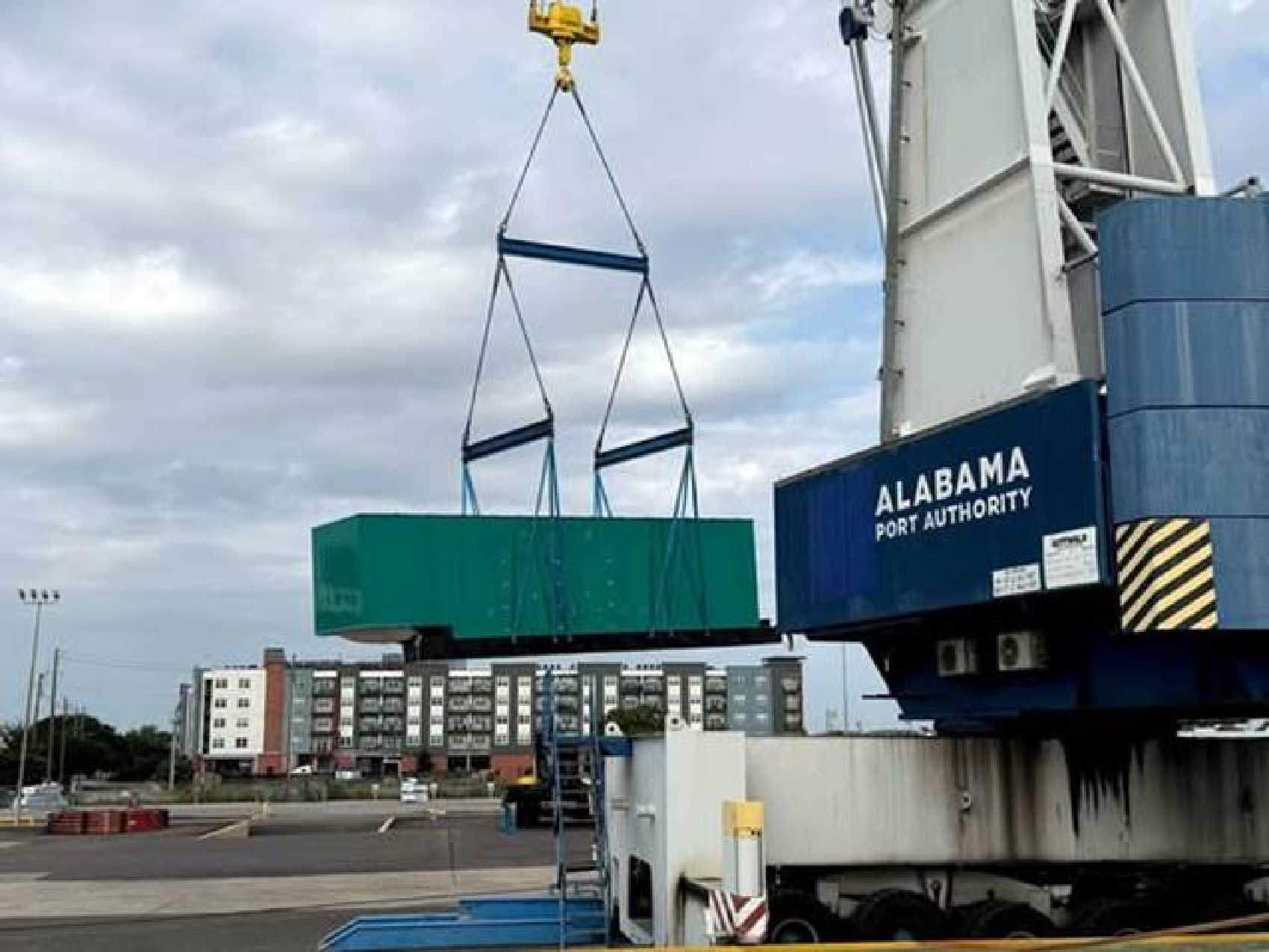
ST. JOHN — The V.I. Water and Power Authority's plan to install 10 megawatts of emergency backup generation at Coral Bay and Frank Bay faced scrutiny Thursday, as Coastal Zone Management commissioners questioned the adequacy of engineering plans, the permitting process and the safety of transporting and storing 80,000 gallons of diesel fuel on the island.

The concerns emerged during a public hearing before the St. John Committee of the Coastal Zone Management Commission, where WAPA officials and project consultants presented plans for four generators intended to reduce the island's dependence on electricity supplied from the Randolph Harley Power Plant on St. Thomas.
The proposal calls for two 2,500-kilowatt diesel generators at each location, providing five megawatts per site. Each facility would also have two double-walled, 20,000-gallon aboveground fuel storage tanks, along with smaller fuel tanks attached to the generators. According to WAPA's project documents, the combined storage capacity at each site would support up to five continuous days of operation at full load.
While commissioners generally welcomed the prospect of additional backup generation, Kurt Marsh Jr. sharply criticized the level of detail provided in the project's engineering and construction plans.

“These drawings are absolutely deficient,” Mr. Marsh said, questioning why the commission was being asked to review the project without more complete engineering information, civil drawings and topographical data.
“We are reviewing a major project in very, very volatile areas, so I honestly can’t believe that we’re reviewing draft plans without site-specific conditions to be considered,” he continued.
Mr. Marsh also questioned why the project was proceeding through a federal consistency determination rather than the traditional Coastal Zone Management major permit process.
“The federal consistency process is initiated when the source of funding is from a federal agency, so it’s a federally supported activity,” explained CZM Director Marlon Hibbert.
Environmental consultant Amy Dempsey added that the review includes an environmental assessment associated with the release of federal funding. She assured commissioners that WAPA would still be required to obtain local earth change permits through the Department of Planning and Natural Resources.
Mr. Marsh remained dissatisfied, pointing to what he considered insufficient information about stormwater management, demolition of existing structures and other site-specific requirements.
“Nobody needs to tell us about how dire the need is to get this project executed,” he said. “However we are regulators, and we have to follow the tune of the process. And right now…it seems very deficient.”
Former CZM Commissioner David Silverman, speaking during the public comment portion of the hearing, agreed with Mr. Marsh's concerns about the permitting process. Mr. Silverman maintained that the project must undergo the major CZM permit process under Virgin Islands law.
No final determination resolving the disagreement over the applicable permitting requirements was announced during Thursday's hearing.
The proposed generators have already arrived in the territory. As previously reported by the Consortium, the four Cummins units were delivered in August under an approximately $8 million investment supported by the Federal Emergency Management Agency.
The generators have undergone load testing and received air permits, but installation remains dependent on additional approvals and site preparation.
The project is intended to allow St. John to generate electricity locally during emergencies, reducing its reliance on submarine cables that carry power from St. Thomas. The island currently has no operating local generation capacity.
Beyond the permitting questions, commissioners expressed concerns about transporting the generators from barges to the proposed sites, particularly given St. John's narrow and winding roads.
Commissioner Rafe Boulon raised questions about the logistics of moving the equipment and transporting diesel fuel to the facilities. With four 20,000-gallon storage tanks proposed across both locations, the sites would have a combined bulk storage capacity of 80,000 gallons.
Project engineer Greg Reiner explained that fuel is already delivered to gas stations on St. John in truckloads of approximately 5,000 gallons. Because the proposed generators are intended primarily for emergency use rather than continuous operation, he said large-scale fuel deliveries would not be required on a routine basis.
José Robles of RG Engineering also sought to reassure commissioners about the movement of the generators, explaining that specialized transportation equipment would be used to navigate the island's roads at walking speed.
The operation would be coordinated with the Virgin Islands Police Department, and residents would receive advance notice of the movements.
“It’s going to be an ordeal, but it’s one that will happen very slowly,” Ms. Dempsey acknowledged.
Mr. Boulon remained concerned about the practicality of offloading the generators at the shallow boat ramp in Coral Bay, an issue Mr. Marsh had also raised.
The project's environmental review documents identify the Coral Bay boat ramp as the intended arrival point for equipment destined for that site, allowing WAPA to reduce the distance the heavy generators must travel over public roads.
At Frank Bay, the project would use the existing WAPA substation property, which also contains structures from a former water production facility. The proposed work includes demolition of unused structures, installation of the generators and fuel systems, and later upgrades to electrical switching equipment.
The Coral Bay project would likewise proceed in phases, with the emergency generators initially connected to WAPA's existing distribution system before additional switching infrastructure is installed.
Members of the public also questioned the impact of the facilities on nearby homes and the surrounding environment.
Maya Craig, watershed coordinator for the Coral Bay Community Council, expressed concern that the Coral Bay installation could affect property values and quality of life for approximately 100 households on the surrounding hillside.
She urged WAPA to strengthen vegetative screening around the site to reduce the visual impact of the generating equipment.
“We certainly will endeavor to do so through landscaping,” responded WAPA Chief Executive Officer Karl Knight.
WAPA's submitted environmental documents propose sound-attenuated generator enclosures, landscaping, double-walled fuel tanks with secondary containment, and erosion and sediment controls intended to protect surrounding properties and coastal waters.
The plans also include spill-containment systems around the fuel storage facilities and measures to prevent contaminated runoff from reaching nearby marine environments.
Despite those proposed safeguards, questions remained during Thursday's hearing about whether the available plans provided sufficient detail for commissioners to assess the potential impacts.
As the meeting concluded, St. John CZM Committee Chair Andrew Penn said the commission intended to attach conditions to any approvals issued, incorporating commitments made by WAPA officials regarding environmental protection and mitigation of community impacts.
WAPA estimates that the overall project, including its later phase of electrical infrastructure improvements, will require approximately 18 to 24 months to complete.

However, the utility hopes to have the emergency generators at Coral Bay and Frank Bay operational during the first quarter of 2027, provided the remaining regulatory approvals and installation requirements are completed.