




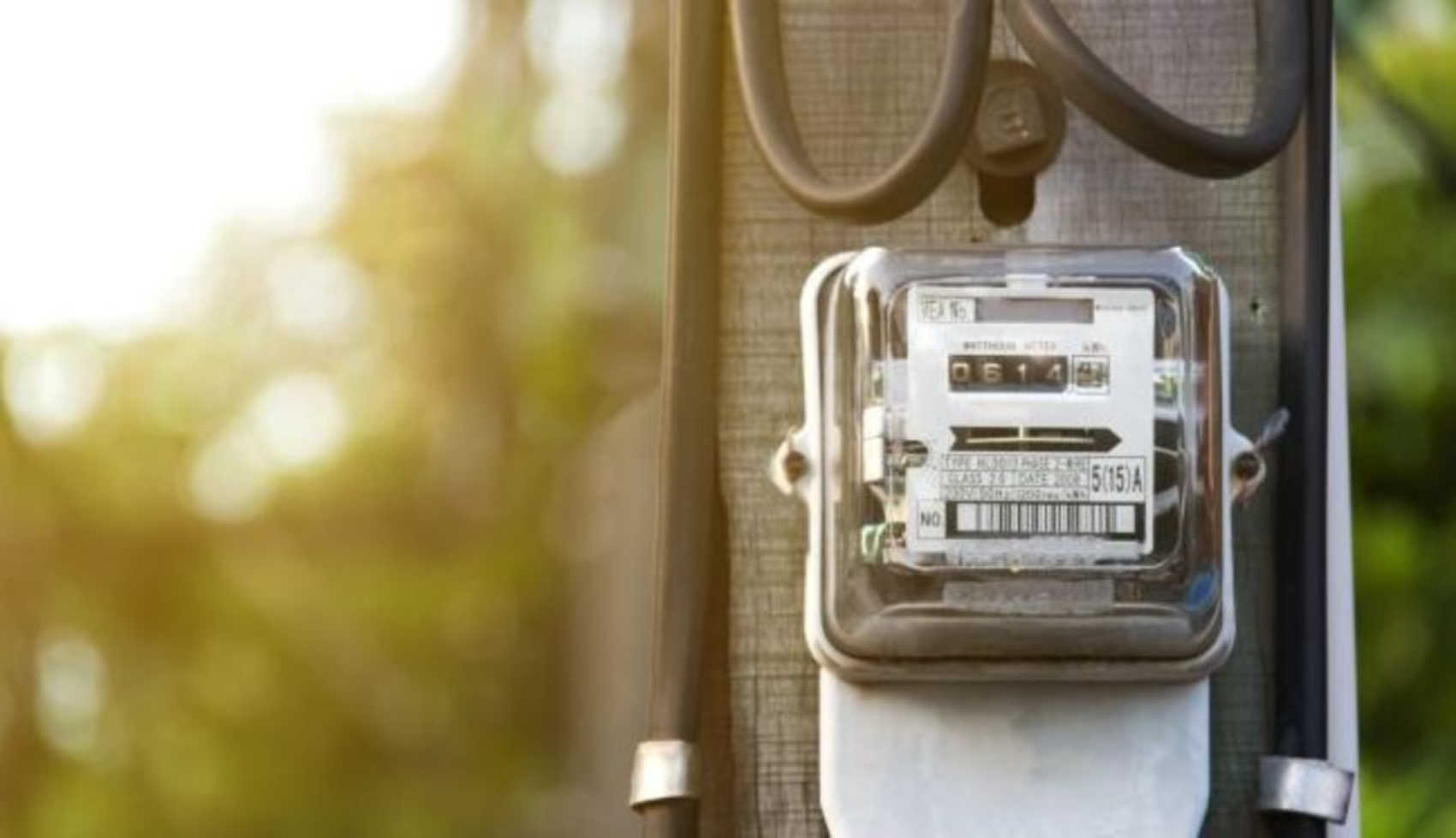
The V.I. Public Services Commission has ordered WAPA to issue thousands of dollars in refunds and credits to customers after reviewing four longstanding complaints involving overbilling, inaccurate meter readings, and service delays.
During a recent meeting, commissioners sided with ratepayers in each case, citing excessive reliance on estimated bills, unaddressed meter failures, and delays in net metering access as grounds for corrective action. Between January and July alone, the PSC received 148 complaints about WAPA, with Assistant Executive Director Tisean Hendricks reporting continued “frustration, confusion and a lack of confidence regarding billing practices.”
In the first case, a customer identified as Ms. Webster was found to have been significantly overcharged. In 2021, her average monthly bill was approximately $307. Beginning in early 2022, she received a series of estimated bills. Though she installed a gate and provided WAPA with an access code in February 2023, the estimated billing continued. In August 2024, her meter display went blank, making actual readings impossible.
Based on her historical average, the PSC calculated that Ms. Webster should have been billed $16,375 for the period between January 2022 and July 2025. However, WAPA billed her $26,872, resulting in an overcharge of $10,497. Although WAPA issued $4,029 in credits, the PSC concluded she is still owed an additional $6,466.

Despite receiving a new meter in January 2025, Ms. Webster continued to receive fluctuating estimated bills ranging from $180 to $3,000. “Moving forward, we are asking for the customer to get actual readings,” said Sacha Davis, utility staff assistant for St. Thomas/St. John. PSC attorney Boyd Sprehn added, “That indicates a credibility issue with the meter readings.” Ms. Webster also paid for a private electrical inspection, which found no faults. Commissioners ruled that WAPA must issue the remaining credits and refunds.
The second case involved Christopher Ekpo, who described erratic estimated bills after purchasing a property in 2023. Despite the home being built in 1996, regular meter readings were not conducted. “There’s no reason for them not to read meters on a regular basis,” Mr. Ekpo said. He noted that after receiving an $840 credit adjustment in May 2021, WAPA made it clear “that no further credits were going to be given.”
Ms. Davis reported that the PSC staff recommended an additional $3,659 credit “due to prolonged and excessive estimated billing.” After Mr. Ekpo’s meter was replaced earlier this year, the new equipment allowed for remote readings, and his bills began to accurately reflect his usage. Commissioners unanimously approved the full credit despite WAPA’s opposition.
In the third case, Ms. Leonard disputed water bills for a property she does not occupy. WAPA stated that they were unaware the unit was vacant, citing steady electricity usage as evidence of occupancy. The utility also acknowledged relying on estimated bills due to an inaccessible meter. After the meter was finally dug up and read, WAPA issued a $416 credit.
However, PSC staff concluded that Ms. Leonard was still owed an additional $469.99. Senator Carla Joseph, an ex-officio PSC member, personally confirmed that the unit was unoccupied. The commission voted to approve the staff’s recommendation for a full credit.
The fourth complaint, filed by Mr. Bostic, involved a 39-month delay in installing a bi-directional meter needed for participation in WAPA’s net billing program. According to Ms. Davis, the customer had already passed inspections and had been producing energy but was unable to benefit from the program due to the lack of proper metering equipment.
“The complaint before the PSC has been pending for 11 months,” Ms. Davis noted. WAPA acknowledged a “glitch” in its database that had delayed the process but failed to provide a resolution timeline. Staff recommended that WAPA be ordered to install the meter within 20 days.
Commissioner David Hughes moved to adopt the recommendation and added that WAPA should issue a credit to Mr. Bostic for the energy he has been exporting back to the grid. The motion passed unanimously.
In response to the mounting complaints, WAPA CEO Karl Knight addressed the commission. “There are issues that pop up,” he said, noting that WAPA serves approximately 70,000 customers. He acknowledged the utility’s “well-documented” structural and equipment challenges and referenced federal funding from FEMA intended to replace failing systems.

Knight reported that the rate of estimated billing has improved, falling from around 30% to 18.7%, but admitted that “that is still too much and too high.” He assured commissioners that WAPA is “making strides to make improvements” and that more meters are on the way. He confirmed that 500 bi-directional meters needed for net metering have already been received and are currently being installed.