




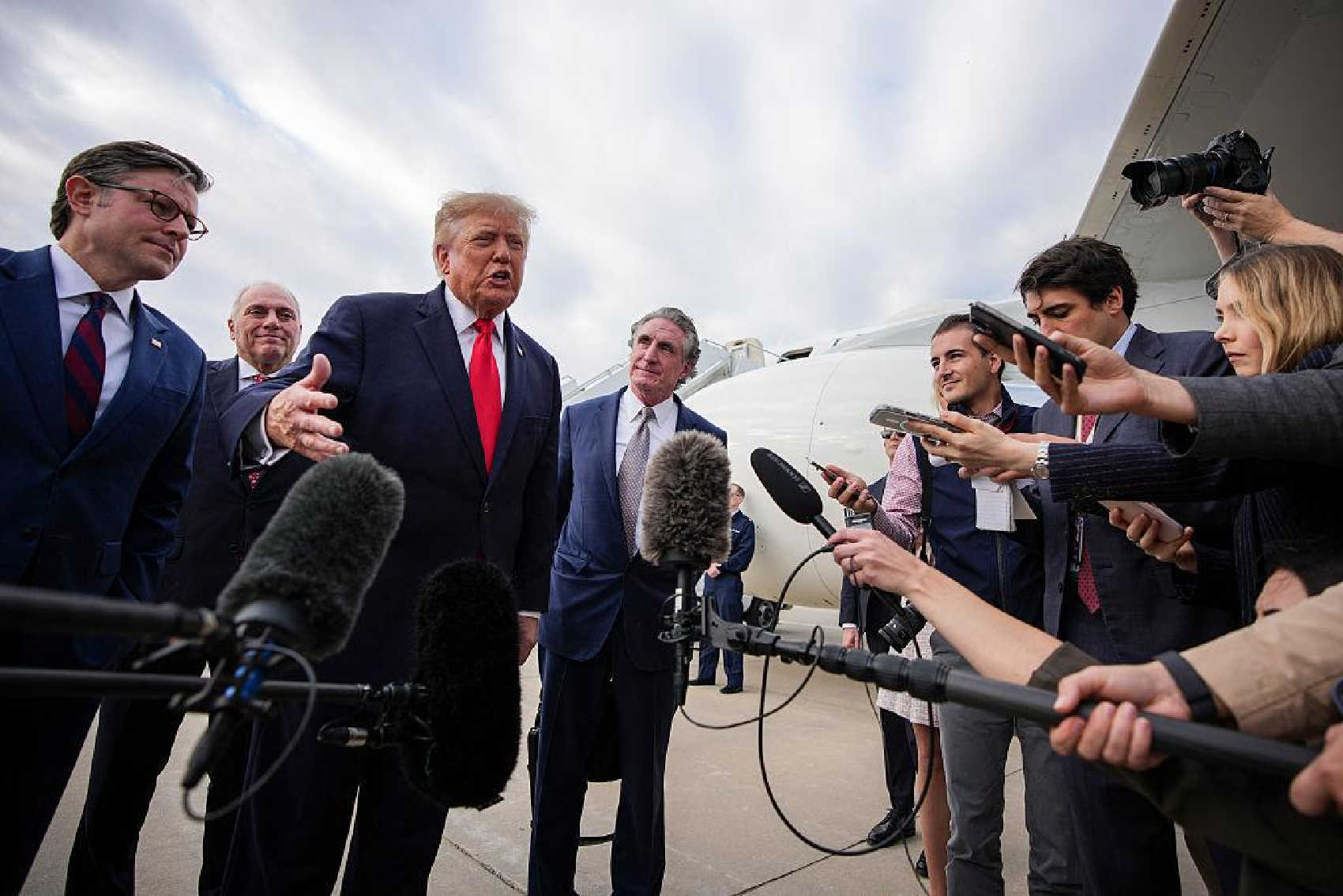
President Donald Trump has opened the door to negotiating legal status for certain undocumented immigrants who have lived and worked in the United States for years, acknowledging that his administration's aggressive deportation campaign may have gone too far and contributed to Republicans' sweeping defeat in the November 3 midterm elections.

In an interview with CBS's 60 Minutes recorded Friday and aired Sunday, Trump said he would welcome an immigration agreement with Democrats, who won control of both chambers of Congress in last week's elections.
The president's remarks suggest a potentially significant change in his immigration approach, particularly toward undocumented immigrants who have held steady jobs, paid taxes and remained in the country for extended periods without committing other offenses.
"I think it might be too tough, yeah," Trump acknowledged when asked whether his deportation policies had been excessively aggressive.

He defended his administration's border enforcement efforts and its focus on removing immigrants involved in serious criminal activity. However, he conceded that the removal of people who had established themselves in American workplaces was viewed differently by many voters.
Trump specifically mentioned employees working in hotels, landscaping companies and other service industries. He described the difficulty of removing people who have worked in such establishments for years and whose immigration violations may be limited to entering the country unlawfully.
The acknowledgment represents a notable departure in tone from the president's longstanding emphasis on mass deportations, although it does not constitute a change in federal policy.
Asked what he would like to accomplish with the incoming Democratic majority, Trump responded, "I'd love to do something on immigration."
When interviewer Ross Douthat raised the possibility of providing some form of legal status to undocumented workers, Trump responded affirmatively and elaborated on the circumstances of hotel employees and other workers facing deportation.
He also suggested that immigrants who have spent 10 or 15 years in the country could be candidates for an agreement, proposing that lawmakers "work a deal for them."
Trump expressed confidence that such negotiations could succeed, claiming that Democrats had already contacted him about potential cooperation.
The president did not identify a specific legislative proposal, outline eligibility requirements or indicate whether a deal would provide temporary protection, permanent residency or an eventual path to citizenship. A program offering protection from deportation would not necessarily grant permanent legal status, while a broader legalization initiative would generally require legislation approved by Congress.
For now, Trump's statements amount to an invitation to negotiate rather than an actual amnesty program. Undocumented immigrants have not been granted any new protections as a result of the interview.
The comments also come amid a consequential change in Washington's political balance. Democrats will assume control of the House and Senate when the new Congress convenes January 3, 2027, giving them greater influence over immigration legislation, federal spending and oversight of the Department of Homeland Security.
Whether the incoming Democratic leadership would accept Trump's proposed compromise remains uncertain, particularly given the administration's record of immigration raids, detention operations and expanded deportations.
There is also a significant contradiction between the president's conciliatory remarks and his latest White House personnel decision.
On Friday, the same day the interview was recorded, Trump announced the appointment of Stephen Miller as White House chief of staff, replacing Susie Wiles.
Miller has been one of the administration's principal architects of aggressive immigration enforcement and has consistently advocated a hardline approach to unauthorized immigration.
His elevation to one of the most powerful positions in the White House raises questions about how the administration would translate Trump's newly expressed willingness to compromise into actual policy.
The possible shift also carries implications for the U.S. Virgin Islands, where federal immigration enforcement has affected residents and raised concerns about the availability of workers in key sectors of the local economy.
In March, The Consortium documented immigration raids on St. Croix that prompted community concern over detentions and the treatment of undocumented residents.
The territory has also confronted broader workforce challenges involving federal immigration restrictions, particularly as disaster recovery and construction projects require substantial numbers of skilled workers. Earlier this year, then-Delegate Stacey Plaskett addressed the narrowing availability of Caribbean labor and the need to develop the territory's existing workforce.
Federal immigration law applies to the Virgin Islands, meaning any future nationwide legalization program could potentially benefit qualifying residents in the territory. However, no such program has been proposed in legislative form, and there is no indication that current enforcement activities will be suspended.
For Trump, the emerging discussion presents an opportunity to pursue a bipartisan agreement on one of the defining issues of his presidency following a significant electoral defeat.

For undocumented immigrants who have spent years building lives and working in the United States, the president's comments offer the possibility of a different approach, but no immediate legal relief.