




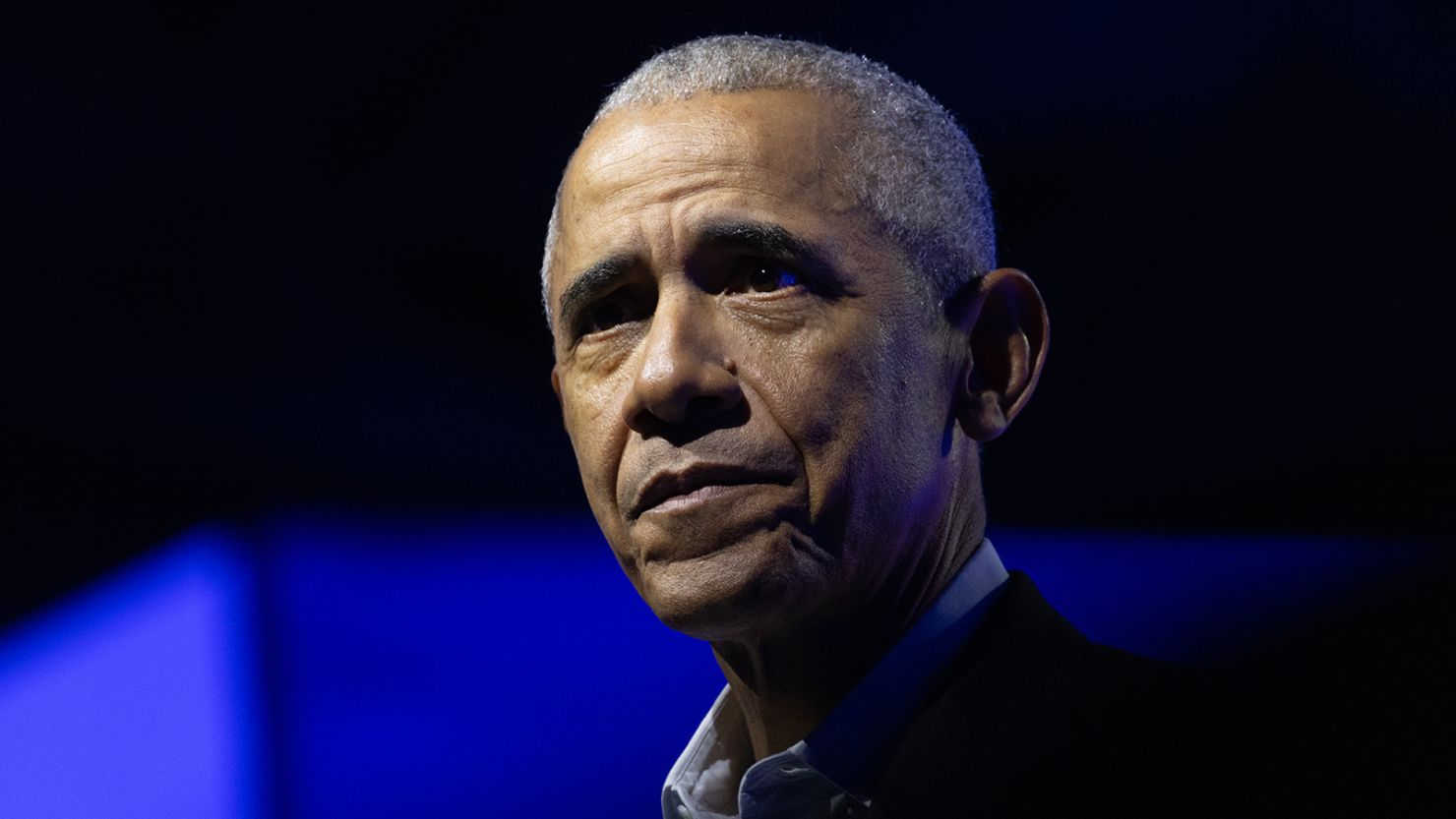
Political controversy erupted on Friday, July 18, when Director of National Intelligence Tulsi Gabbard released a declassified report accusing former President Barack Obama and key figures in his administration of orchestrating a “treasonous conspiracy” to undermine Donald Trump’s 2016 presidential victory.
The 114-page document, comprising emails, memos, and internal communications, alleges that senior Obama-era officials manipulated intelligence to falsely claim Russian interference in the 2016 election, laying the groundwork for what Gabbard calls a “years-long coup” against Trump. The allegations have ignited fierce debate, with critics dismissing the report as politically motivated and defenders hailing it as a long-overdue reckoning.
Gabbard’s report, released by the Office of the Director of National Intelligence (ODNI), centers on claims that Obama administration officials, including former Director of National Intelligence James Clapper, former CIA Director John Brennan, former National Security Adviser Susan Rice, former Secretary of State John Kerry, former Attorney General Loretta Lynch, and former FBI Deputy Director Andrew McCabe, knowingly fabricated a narrative of Russian election interference to delegitimize Trump’s presidency. The documents, many heavily redacted, point to pre-election intelligence assessments that concluded Russia was “probably not” attempting to influence the election through cyberattacks. A December 7, 2016, memo prepared for Clapper stated, “Foreign adversaries did not use cyberattacks on election infrastructure to alter the US Presidential election outcome.”
However, Gabbard alleges that after Trump’s victory over Hillary Clinton, Obama convened a closed-door meeting on December 9, 2016, with top intelligence officials, including Clapper, Brennan, and former FBI Director James Comey. Following this meeting, a January 2017 Intelligence Community Assessment (ICA) was released, asserting that Russia had interfered to boost Trump’s campaign—a conclusion that Gabbard claims relied on the discredited Steele dossier, which the intelligence community had previously deemed “not credible.” Gabbard’s report argues that this shift in narrative fueled the Trump-Russia collusion probe, led by Special Counsel Robert Mueller, as well as congressional investigations and two impeachments, damaging U.S.-Russia relations and sowing domestic discord.

“The information we are releasing today clearly shows there was a treasonous conspiracy in 2016 committed by officials at the highest level of our government,” Gabbard said in a statement accompanying the report’s release. “Their goal was to subvert the will of the American people and enact what was essentially a years-long coup with the objective of trying to usurp the President from fulfilling the mandate bestowed upon him by the American people.” Gabbard has referred the documents to the Department of Justice, urging criminal investigations into the named officials, including Obama himself.
The report also includes testimony from former FBI lawyer Lisa Page, who reportedly stated that Obama’s Justice Department blocked charges against Hillary Clinton for mishandling classified information. Gabbard alleges that this decision was part of a broader effort to protect Clinton while targeting Trump, further undermining the integrity of the 2016 election process. These claims have amplified long-standing accusations from Trump and his supporters that the Russia investigation was a “hoax” designed to obstruct his presidency.
The report has drawn sharp criticism from Democratic lawmakers and former intelligence officials, who argue that Gabbard’s allegations distort established findings and serve as a political maneuver to deflect attention from other controversies, including recent scrutiny over Trump’s ties to Jeffrey Epstein. Rep. Jim Himes (D-Conn.), the ranking member of the House Intelligence Committee, called the accusations “baseless” and accused Gabbard of “rehashing decade-old false claims about the Obama Administration” to “change the subject.” Himes pointed to a bipartisan Senate Intelligence Committee report from Trump’s first term, which concluded that Russia waged an aggressive campaign to interfere in the 2016 election through disinformation and hacking, though it found no evidence of direct collusion with the Trump campaign.
Sen. Mark Warner (D-Va.), a senior member of the Senate Intelligence Committee, echoed Himes, noting that the 2017 ICA focused on Russia’s disinformation efforts, not vote tampering, and was consistent with pre-election assessments. “The intelligence community’s work in 2016 was grounded in evidence, not politics,” Warner said in a statement. “These claims are a dangerous attempt to rewrite history.” Supporters of Gabbard’s report, however, see it as a vindication of Trump’s long-standing grievances.
Gabbard, a former Democratic congresswoman who joined Trump’s administration after endorsing him, has framed her actions as nonpartisan, emphasizing the need to restore trust in democratic institutions. “The issue I am raising is not a partisan issue. It is one that concerns every American,” she said. “The integrity of our democratic republic depends on full accountability.”
The Department of Justice has not confirmed whether it will pursue investigations based on Gabbard’s referrals, but sources indicate that former CIA Director Brennan and former FBI Director Comey are already under scrutiny for their roles in the original Trump-Russia probe. Legal experts caution that proving a “treasonous conspiracy” would require substantial evidence of intent to betray the United States, a high bar under federal law. None of the named officials—Obama, Clapper, Brennan, Rice, Kerry, Lynch, or McCabe—have publicly responded to the allegations as of this writing.