

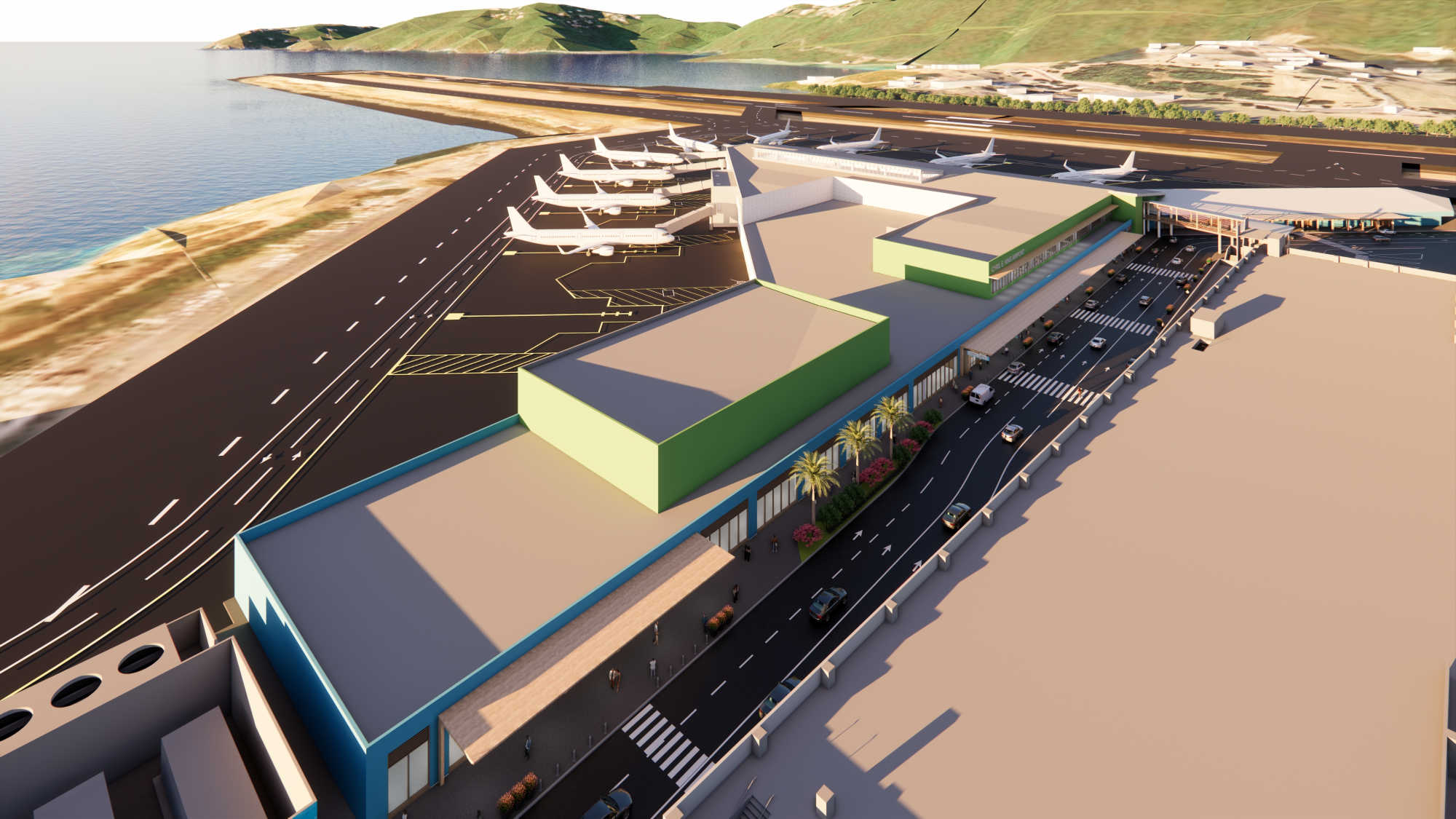
ST. CROIX — Modern baggage systems, enclosed and air-conditioned passenger areas, resilient utilities, new retail spaces, local employment opportunities and 12 passenger boarding bridges are among the improvements proposed for the U.S. Virgin Islands’ two airports under a privately financed redevelopment plan presented Monday evening.

Airlines serving the territory, however, warned that the long-term charges supporting the project could make flights less profitable, increase travel costs and eventually cause carriers to reduce or withdraw service from St. Thomas and St. Croix.
The dispute unfolding between the Virgin Islands Port Authority, SkyCity and the carriers is not over whether Cyril E. King Airport and Henry E. Rohlsen Airport require substantial improvements. All sides agree that they do. The disagreement centers on whether SkyCity’s comprehensive redevelopment can be delivered at a cost the territory’s relatively small aviation market can sustain, or whether the airlines’ smaller phased alternative would protect connectivity while leaving too much of the airports’ infrastructure problem unresolved.
Those competing arguments dominated the first of three public hearings on VIPA’s proposed aviation tariff methodology, held Monday at the University of the Virgin Islands Great Hall on St. Croix. VIPA and SkyCity presented the proposed charges, detailed the condition of both airports and displayed renderings of the planned facilities. Airline representatives and residents responded with concerns about affordability, transparency and the potential consequences for travel.

VIPA Interim Executive Director Ava Penn said the territory deserves safe and properly maintained facilities that provide residents, workers and visitors with a better experience.
“We deserve better. We deserve better facilities, safe, clean conditions to work in, and our visitor experience should be optimal, and we should be competitive with our neighboring islands,” she said.
Major Changes Proposed for St. Croix
At Henry E. Rohlsen Airport, SkyCity identified aging or failed equipment, a largely nonfunctional baggage-handling system, a fire-protection system that is not fully operational, inefficient passenger movement, roof ponding and leaking, deteriorated curbs, roads and parking areas, problems with the sanitary system and Federal Aviation Administration compliance challenges.
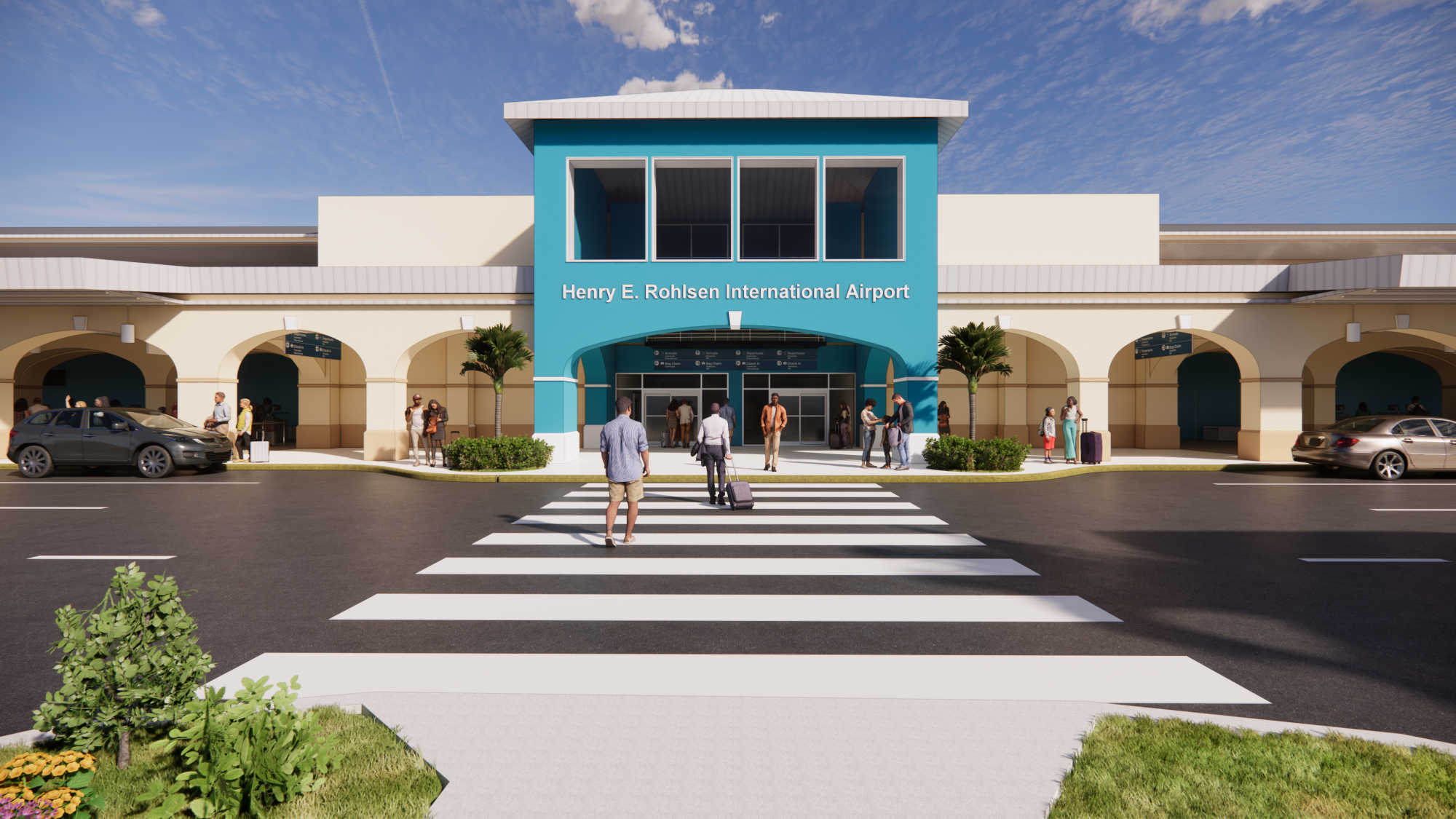
Main Entry and Commuter Departures: A rendering of the renovated entrance to Henry E. Rohlsen Airport, with updated curbside access, refreshed exterior features and designated areas for commuter passengers.
The St. Croix project would enclose and air-condition the domestic check-in area at the front of the terminal, protecting travelers from rain and heat while they complete the ticketing process. New ticket and rental-car counters would be installed, while the terminal façade, security infrastructure and passenger-processing areas would be refreshed.
Three passenger boarding bridges would be added, allowing arriving and departing passengers to move between the terminal and aircraft without walking outside. The commuter wing and commuter holding room would also be renovated and brought to a condition comparable to the domestic passenger area.
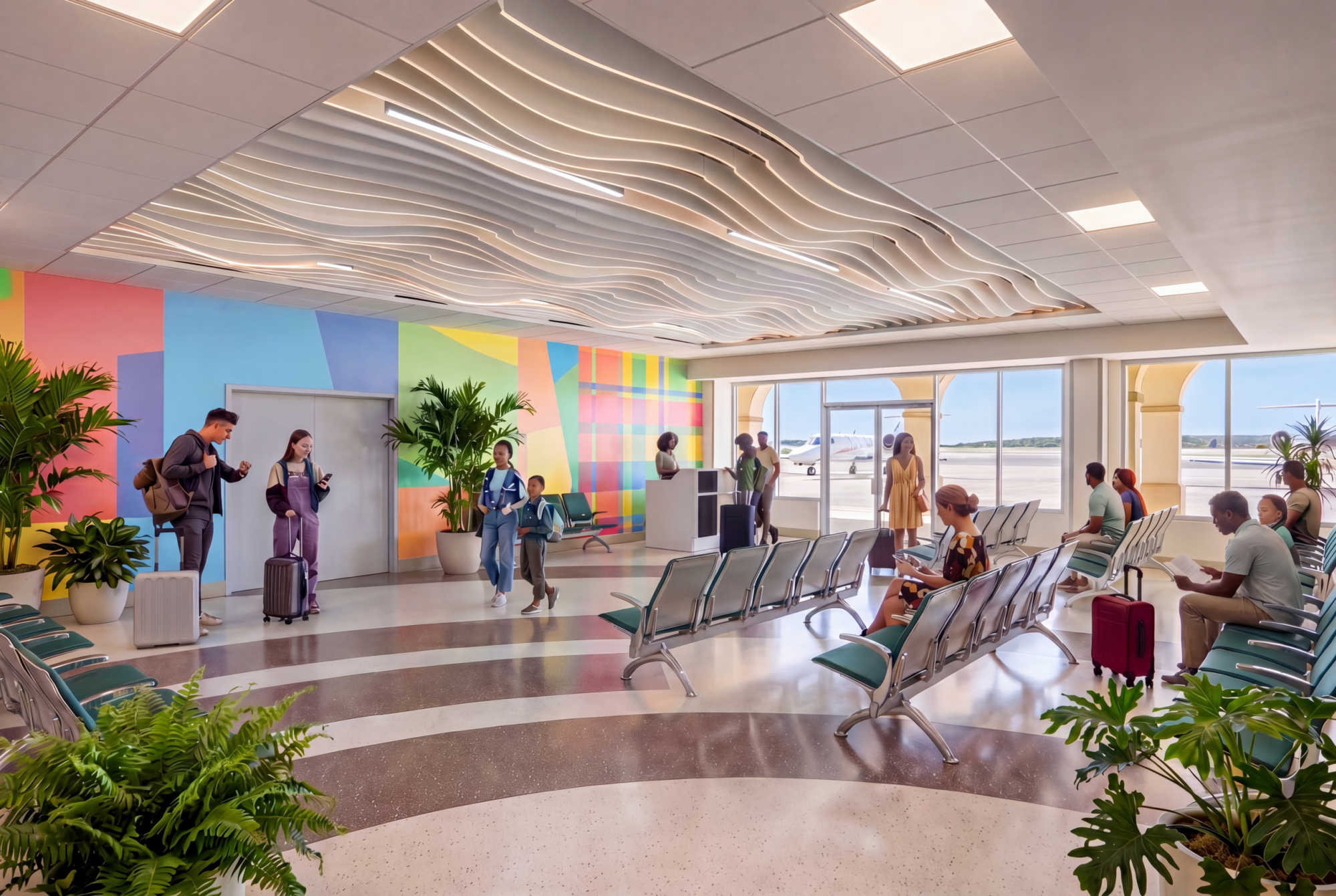
Commuter Holdroom: A rendering of the proposed commuter waiting area, featuring expanded seating, natural light, tropical design elements and direct views of the aircraft apron.
SkyCity said the project would modernize the airport’s baggage-handling equipment and replace or improve critical mechanical and electrical infrastructure, including generators, chillers and air-handling units. Plumbing, resilience and life-safety systems would also be addressed so the terminal could remain operational during environmental and climatic events.
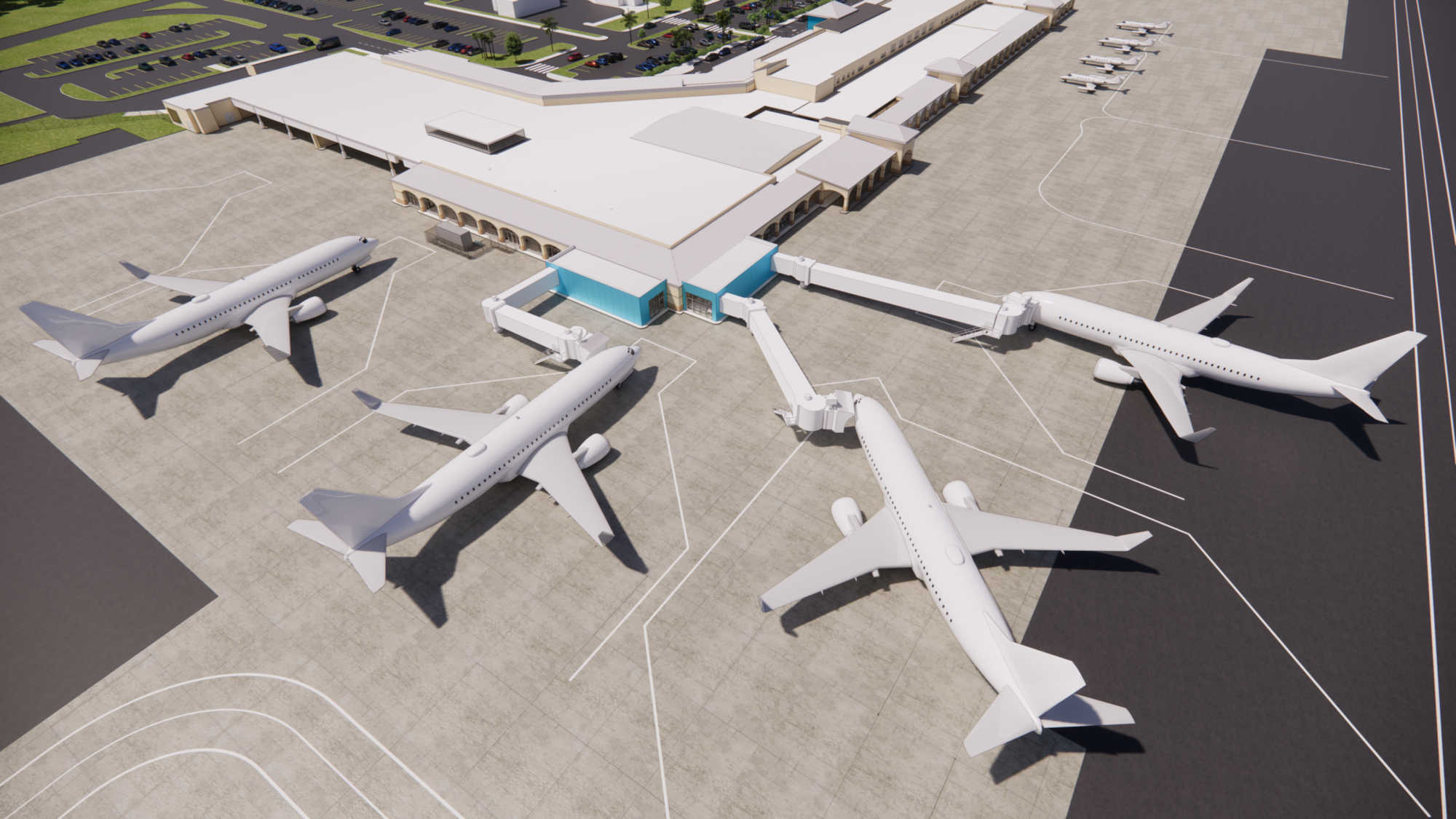
Passenger Boarding Bridges: An aerial rendering showing three planned jet bridges at Henry E. Rohlsen Airport, allowing passengers to board and exit aircraft without walking across the apron.
The improvements would incorporate design elements reflecting St. Croix’s history, culture and identity. SkyCity said the St. Croix work would take approximately 16 to 18 months once construction begins, with the terminal remaining operational throughout the project.
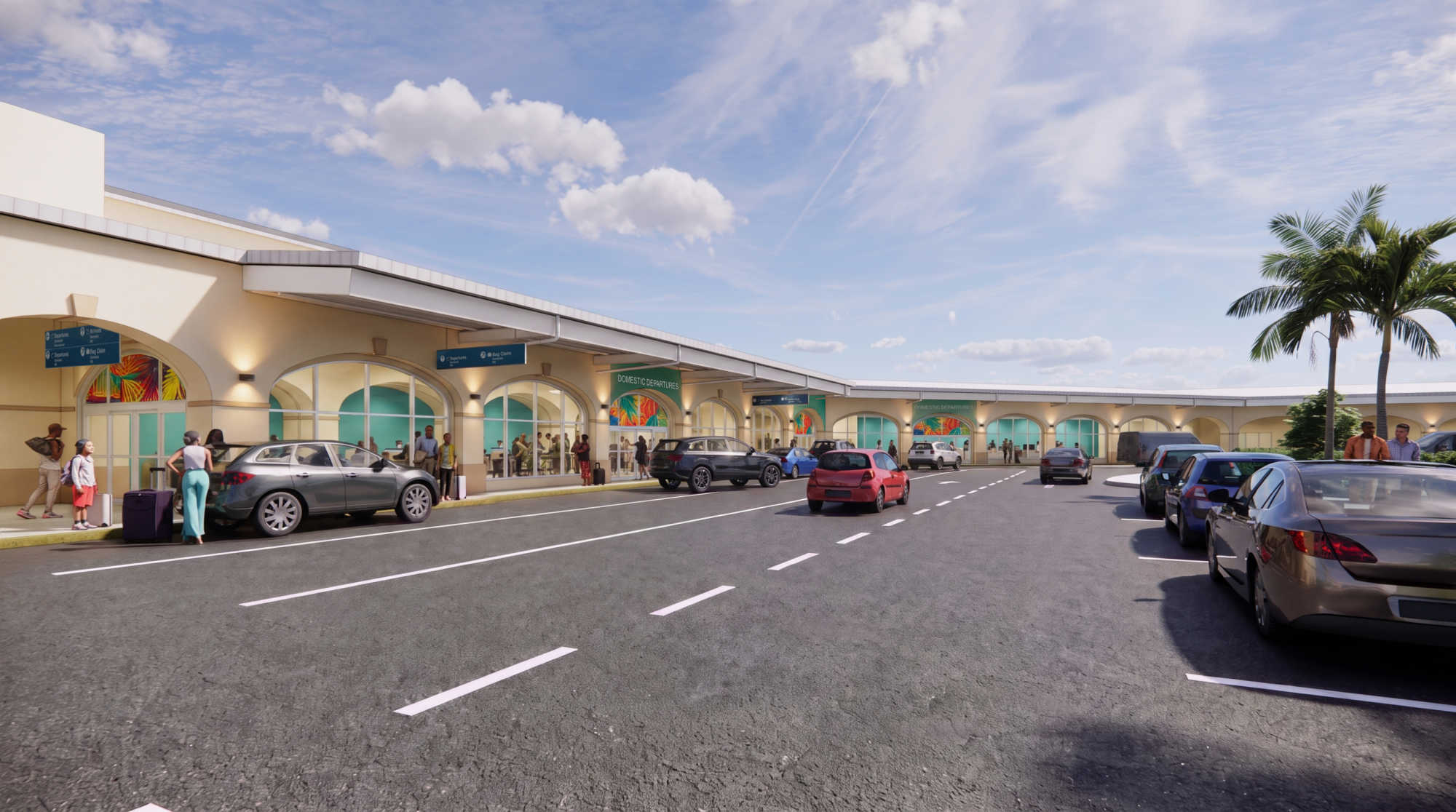
Enclosed Ticket Hall: A rendering of the proposed enclosed domestic ticketing area, designed to protect passengers from the elements while improving check-in, curbside access and traffic flow.
New Two-Story Terminal Planned for St. Thomas
The proposed work at Cyril E. King Airport is substantially larger.
SkyCity said the existing St. Thomas terminal was designed to accommodate roughly one-third of the passenger volume it currently handles. The building and many of its systems are beyond their useful lives, while the airport faces congestion, outdated baggage equipment, structural deficiencies and the need for seismic and foundation upgrades.
The company also cited code, health, safety and FAA compliance concerns, along with deteriorating passenger service and operating conditions.
SkyCity proposes to construct temporary facilities to relocate certain airport functions before beginning the progressive demolition and reconstruction of the existing terminal. The phased approach is intended to keep the airport functioning during construction.
The completed facility would be a new two-story terminal built to current structural, mechanical, electrical, safety and accessibility standards. It would include an enclosed passenger check-in area, modern ticketing facilities and updated Transportation Security Administration and U.S. Customs and Border Protection processing areas.
Travelers would proceed upstairs to a new passenger holding area containing additional seating, concessions, retail options and traveler amenities. Modernized access points and passenger-circulation areas are intended to reduce congestion and long waits.
A fully integrated baggage system would take checked luggage from the ticket counter through screening and processing, eliminating the current requirement for passengers to carry their bags from check-in to federal inspection areas.
Nine passenger boarding bridges would connect the terminal to aircraft. The airport would also receive updated security, mechanical, electrical, plumbing and technology systems, along with improvements intended to conserve water, increase energy efficiency, manage stormwater and protect the terminal from water intrusion and extreme Caribbean weather.
SkyCity said the St. Thomas construction program would be more complicated and would extend through 2031. The design would incorporate Virgin Islands culture and create what the company described as an appropriate sense of arrival and departure for residents and visitors.
Jobs, Training and Local Business Opportunities
SkyCity presented employment, training and business development as additional benefits of the redevelopment.
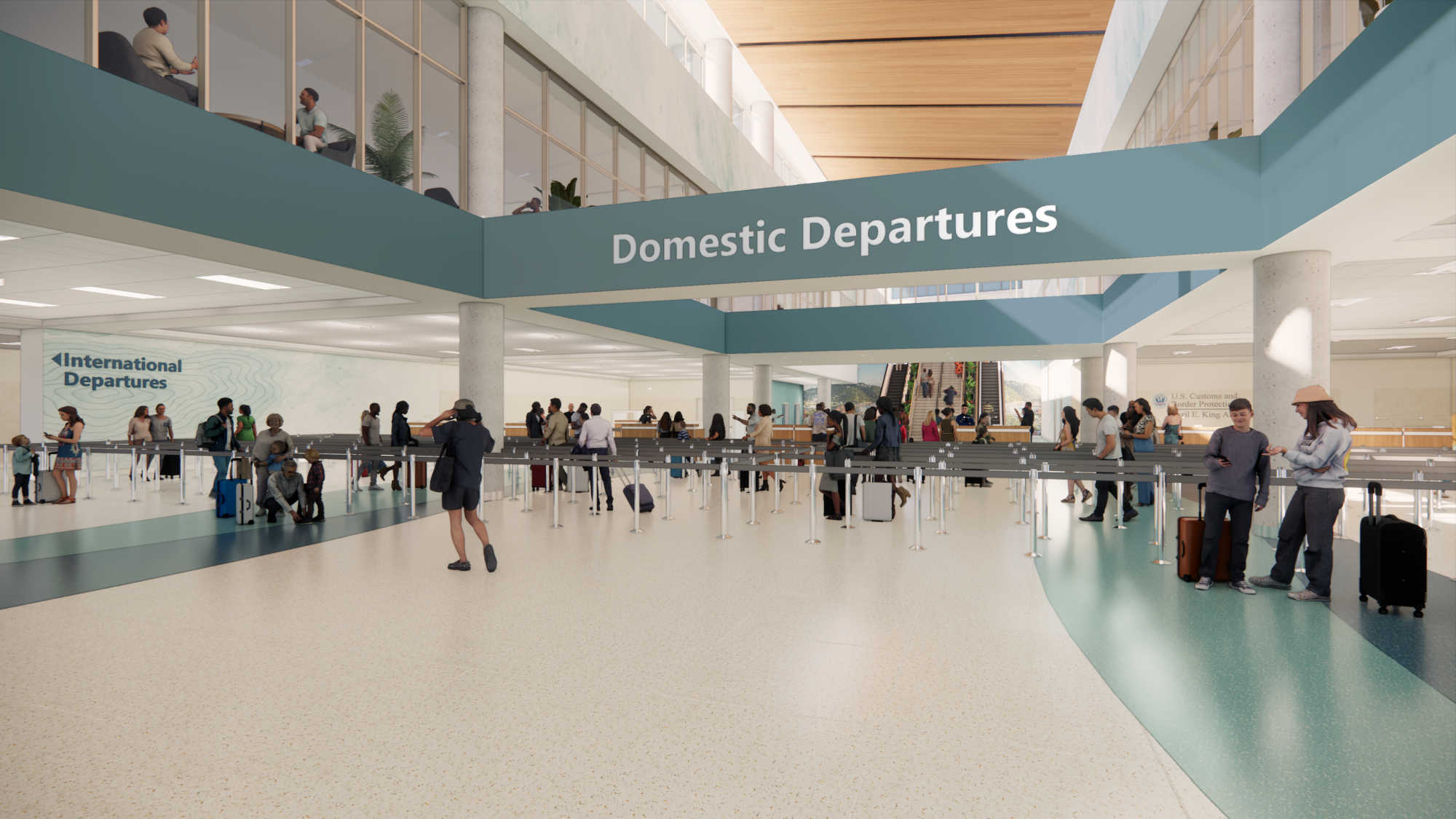
CBP Preclearance: A rendering of the proposed Cyril E. King Airport preclearance hall, with expanded passenger-processing space and separate access for domestic and international departures.
The company said employment offers were extended to all VIPA aviation employees at the St. Thomas and St. Croix airports, with the goal of maintaining employment continuity while creating professional-development opportunities.
SkyCity’s construction partner is Benton/Consigli, a partnership involving St. Croix-based J. Benton Construction and Boston-based Consigli Construction. SkyCity said the arrangement would allow the project to rely on a majority-local construction workforce while drawing on outside airport-development experience.
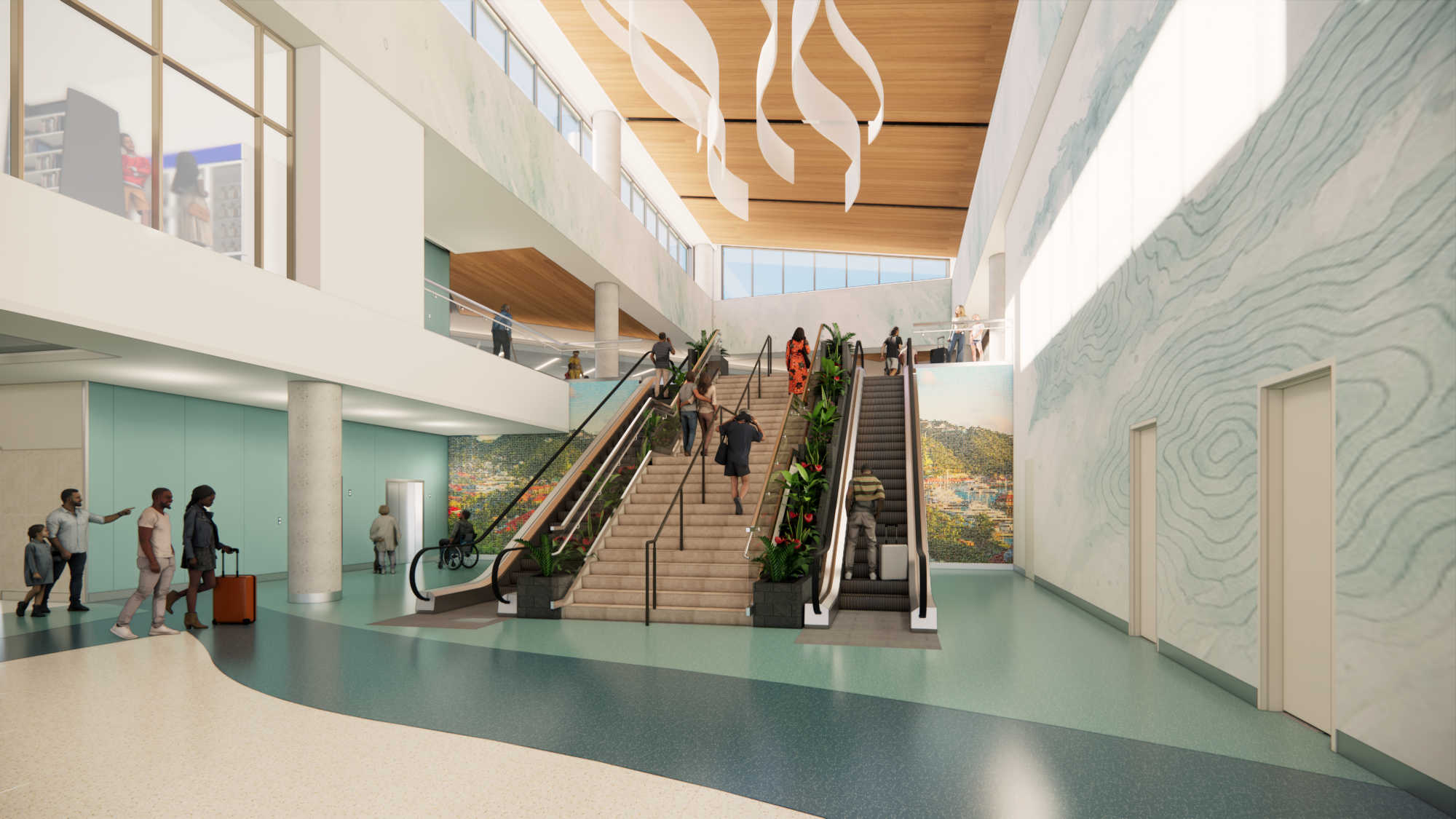
Stepped Street: A rendering of the terminal’s central circulation area, where stairs and escalators would connect passengers to the upper level amid open, island-inspired surroundings.
Employment opportunities are expected in construction, airport operations and maintenance, administration, technical services and project management. SkyCity also said it would develop training and apprenticeship programs and establish connections with community institutions, including UVI, to help residents obtain specialized aviation and infrastructure skills.
Jimez Ashby Jr., SkyCity’s human resources director, said he had been away from the territory for 13 years before the project created an opportunity for him to return and continue advancing his career.
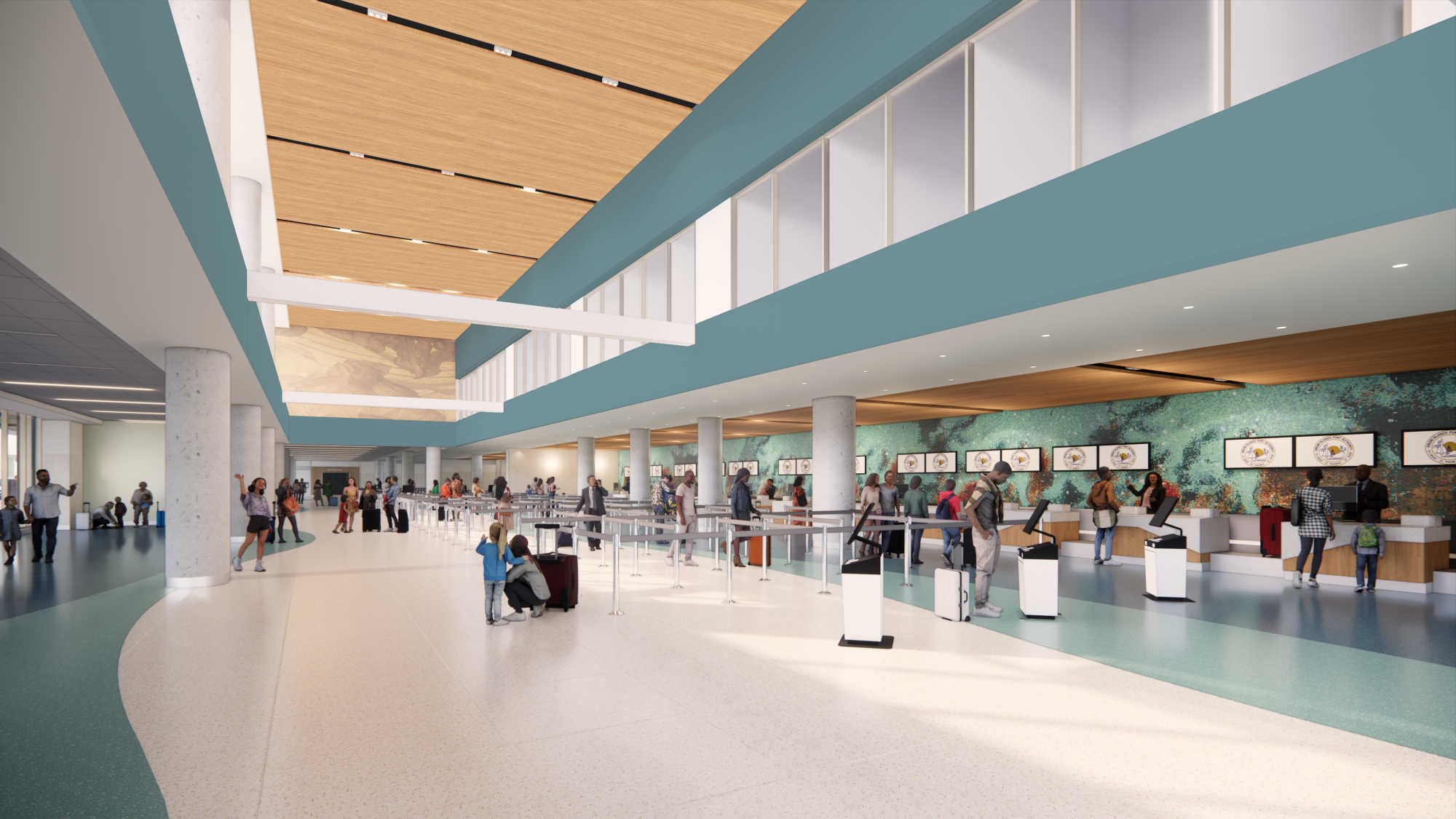
Ticketing Hall: A rendering of the proposed ticketing hall, featuring expanded check-in counters, self-service kiosks, natural light and a more open passenger-processing area.
“We are not just building infrastructure; we're building opportunity, right,” he said.
Mr. Ashby said the work could create pathways for other Virgin Islanders to return home, obtain new technical skills and pursue careers that previously may not have existed locally. He also pointed to the importance of improved accessibility for senior citizens, people with disabilities and residents who must travel for education or healthcare.
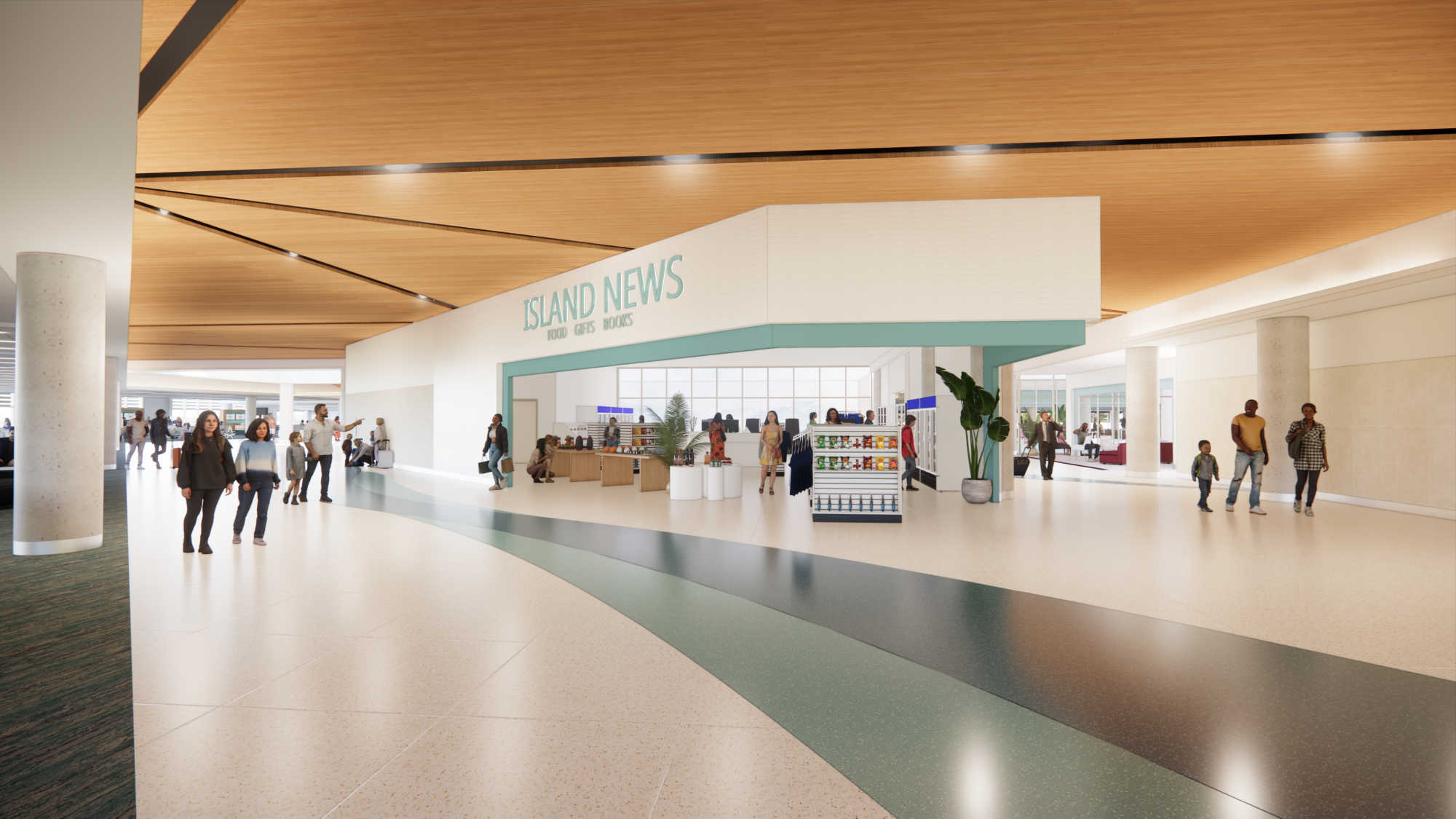
Concession Area: A rendering of a planned airport concession, illustrating the retail space that could create opportunities for local products, businesses and employment.
SkyCity said local businesses would continue to have opportunities to operate airport concessions, with Virgin Islands products and businesses incorporated into the passenger experience. Those opportunities are expected to extend beyond food and retail concessions to other goods and services needed for construction and airport operations.
How the P3 Would Work
SkyCity is a consortium created specifically for the airport public-private partnership.
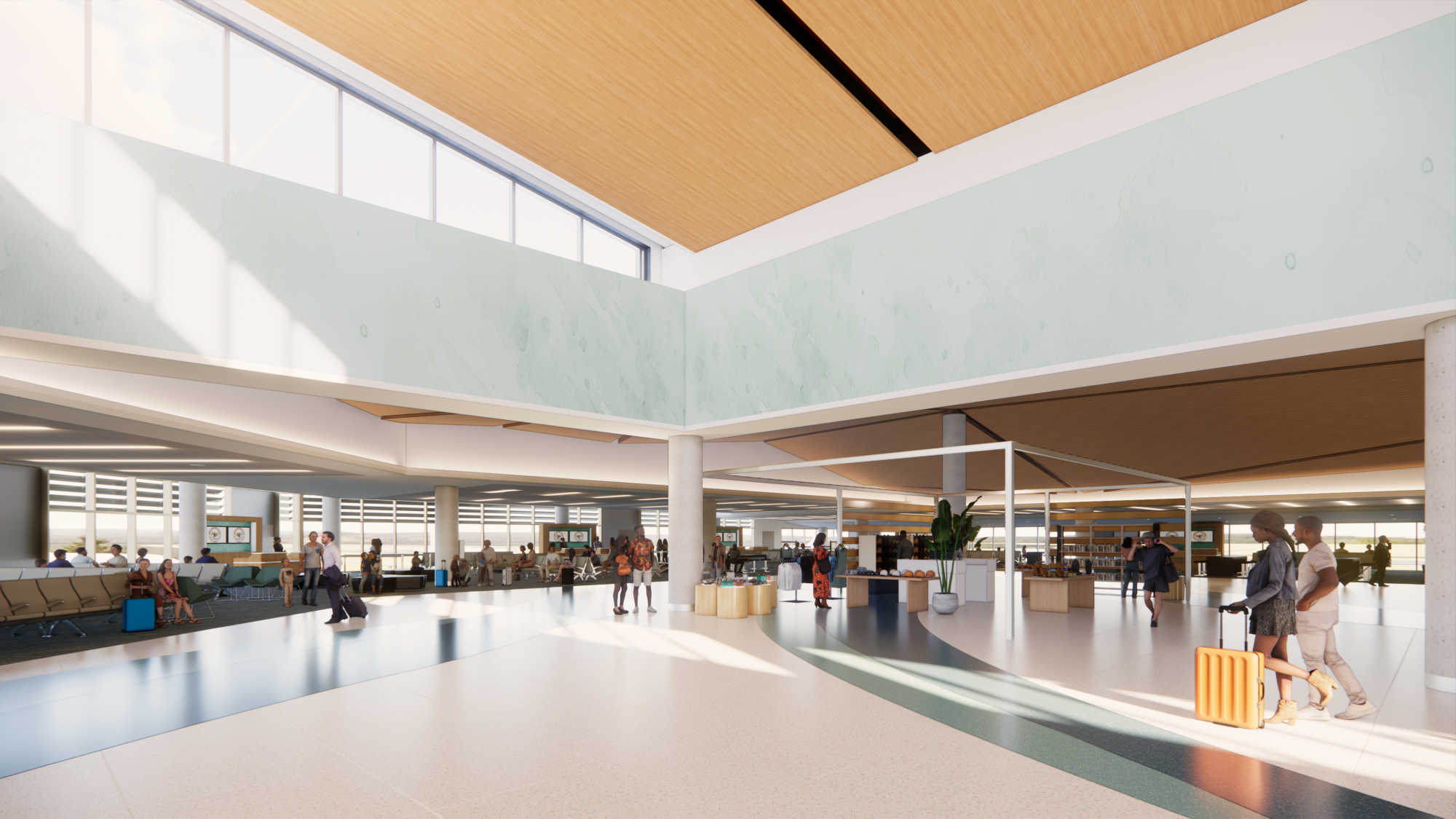
Holdroom Entrance: A rendering of the proposed holdroom entrance, with expanded seating, retail areas, open circulation and natural light leading toward the departure gates.
Aecon Concessions and Tikehau Star Infra are the equity partners. Aecon is also involved in development and construction, Benton/Consigli is the local construction partner, and Avports would manage airport operations and maintenance.
VIPA selected the consortium in March 2024 following a competitive procurement process. SkyCity representatives said the team brings experience from airport projects in Bermuda, Ecuador and Anguilla, as well as Avports’ operations at airports in the northeastern United States.
SkyCity Chairman Steve Nackan said public-private partnerships have been used for approximately 9,300 infrastructure projects globally, including more than 850 airport projects across 90 countries.
Under the proposed structure, SkyCity would raise private debt and invest shareholder equity to finance construction rather than requiring VIPA or the Virgin Islands government to borrow the full cost or provide the money upfront.
VIPA would retain ownership of both airports, continue serving as the FAA certificate holder and remain eligible for federal airport grants. SkyCity would make agreed payments to VIPA, and improvements would revert to the authority at the end of the agreement without an additional purchase price. VIPA and the FAA would retain oversight responsibilities.
The private financing, however, does not make the redevelopment free. SkyCity’s debt, equity investment, operating costs and financial return would be repaid over time through revenues generated at the airports, including the rates and charges assessed to airlines and other users.
New Tariff Would Begin With Operating Costs
VIPA’s proposed tariff methodology is intended to recover the costs of operating, maintaining and eventually improving the airports.
Penn emphasized that the charges would be imposed on airport users rather than collected by VIPA as a separate passenger levy.
“The new tariff is not a tax on passengers,” she said.
SkyCity rates specialist Ryan Yakubik said the airports were projected to incur approximately $67 million in expenses during the 11 months beginning November 1. Those expenses include airfield and terminal operations, staffing, utilities, security, firefighting, custodial services, equipment maintenance, pavement work, lighting, drainage and other operating needs.
The proposed methodology would combine eligible costs from the two airports to establish unified rates. Costs reimbursed through government grants, passenger facility charges, insurance proceeds or certain third-party payments would be excluded from the amount recovered from airlines.
Expenses would then be allocated among specific airport functions. Airlines could be charged landing fees and separate rates for ticket counters, joint-use areas, passenger holding rooms, baggage systems, commuter facilities, international facilities and, once available, passenger boarding bridges.
Retail-concession costs would not be assigned to the airlines. VIPA said those expenses would be funded through concession rents and other non-airline revenues.
Rates would be based on budgeted costs and forecast passenger and aircraft activity at the start of each fiscal year. VIPA and the operator would reconcile the projections against actual expenses and traffic at the end of the year. Airlines would receive credits if collections exceeded actual costs or additional invoices if collections were insufficient.
The initial fiscal 2027 calculations do not contain debt-service expenses for the proposed construction program. SkyCity said the first charges would primarily recover operating and maintenance costs, existing amortization and improved airport-service standards. Construction and financing costs would be incorporated later as projects are completed and placed into service.
Landing Rate Would Rise Under Initial Proposal
VIPA’s current tariff charges signatory airlines $3.83 per 1,000 pounds of aircraft landing weight and a $19.32 departing-passenger fee. Those airline rates have been in effect since April 2022, meaning the hearing record does not support a broad assertion that the principal airline charges have remained unchanged for more than 20 years.
The preliminary fiscal 2027 proposal illustrates a landing rate of $10.40 per 1,000 pounds.
Instead of relying principally on the current departing-passenger charge, the new methodology separates terminal costs according to the facilities used. The draft illustrates a $2.01 ticket-counter fee per enplaned passenger, a $14.04 joint-use fee, a $5.15 holding-room fee, a $9.02 baggage-system fee and a 19-cent passenger-boarding-bridge fee.
It also illustrates a $16.46 commuter fee, a $45.62 international-facilities fee and an allocation equal to $2.67 per passenger for exclusive airline space. Not every charge would apply to every airline or passenger because the assessments would depend on the facilities and services used.
The draft methodology is labeled preliminary, subject to revision and intended for consultation. The proposed November 1 effective date would also require approval by VIPA’s Governing Board.
Penn stressed at the end of the hearing that the tariff had not yet been adopted and that comments from the public and airlines would be considered before a final decision.
Competing Airport Comparisons
SkyCity argued that the initial charges would place the USVI near the lower end of comparable Caribbean airport costs during the first four or five years, before major construction costs are incorporated.
Nackan said “the U.S. Virgin Islands will still be at the very low end of the benchmark set of the Caribbean airports. Later on, when fees are increased to cover the capital investments, we will still be well within the Caribbean benchmarks, but a little higher.”
SkyCity’s published material similarly states that the initial cost per enplaned passenger would be below relevant Caribbean benchmarks and that later charges would remain within the regional range after the facilities are completed. The company also contends that increasing passenger traffic would distribute expenses among more travelers and place downward pressure on the per-passenger cost.
Yakubik acknowledged that Caribbean comparisons are complicated because many regional airports operate outside the U.S. Department of Transportation system. Some recover airport expenses through passenger taxes, visitor charges and other government-imposed fees rather than placing the full amount in airline operating charges.
Lorin Carr, chair of the USVI Airlines Airport Affairs Committee and an American Airlines representative, said that distinction matters to carriers. She argued that a government tax is treated differently from an airport operating expense when an airline determines whether a route is profitable.
No airport-by-airport table detailing SkyCity’s Caribbean comparison was presented during Monday’s hearing. The airlines, meanwhile, have primarily compared the projected USVI cost per enplanement with airports in the U.S. domestic system, including New York, Los Angeles, Miami, Atlanta, Las Vegas and Honolulu.
Those comparisons measure different concerns. Caribbean benchmarks reflect the cost of operating airports in island tourism markets, while U.S. airport operating charges directly influence the financial calculations carriers use when deciding where to assign aircraft.
Airlines Support Upgrades but Reject Project's Scale
Carr said the carriers unanimously support airport investment and bringing in a professional third-party operator. Their objection, she said, is to the size and financial structure of the SkyCity capital program.
“Let us begin with something we all agree on: the airports of Saint Thomas and Saint Croix need investment. The people of the Virgin Islands deserve modern, safer, and reliable airport facilities, and airlines have consistently supported that. But supporting that modernization does not mean supporting any project at any cost. A plan must remain economically viable for travelers and airlines alike,” she said.
Carr said the airlines had spent thousands of hours and more than $1.5 million of their own resources attempting to negotiate an alternative with VIPA and SkyCity.
The committee previously described its proposal as a phased $300 million capital core program intended to stabilize airport operations, complete immediate infrastructure improvements and establish a framework for later projects. The airlines also agreed that an outside operator should manage the airports.
SkyCity has rejected the carriers’ characterization of their proposal as an equivalent alternative. The consortium says the airline plan is not supported by completed designs, due diligence or market-tested construction pricing and excludes work that would eventually become unavoidable. SkyCity contends that the airlines’ construction assumptions are substantially below the cost of building in the Virgin Islands and that deferring major work would result in higher expenses later.
Carr said the SkyCity program carried an estimated overall cost of approximately $1.2 billion, with about $690 million attributed to construction. She also cited projections showing the airline cost per enplaned passenger eventually reaching more than $126 once capital expenses are incorporated.
That figure is a projected future cost after redevelopment rather than the initial amount proposed for November 2026.
The airline committee has said the $126.32 projection would be the highest cost per enplanement in the U.S. domestic airport system and multiple times higher than several major mainland airports.
Carr warned that airlines can assign their aircraft to other markets and would make rational decisions based on route profitability. She cited the departure of Frontier Airlines, the collapse of Silver Airways and the end of Spirit Airlines’ operations as factors reducing the traffic base over which future airport costs would be spread.
She also argued that travelers should not assume the airlines would absorb all of the additional expense.
“That is technically correct, but if you think costs don't get passed on to you, you are naive. All the costs will get passed on,” Carr said in response to VIPA’s statement that the tariff is not a direct passenger tax.
The carriers and SkyCity also disagreed over Bermuda. Carr urged residents to examine whether airport expenses there affected air service. Nackan described Bermuda as the Caribbean’s most successful airport P3 and said its fees had not reduced service.
Residents Question Affordability and Process
Several residents said they supported improving the airports but feared the completed facilities could become unaffordable for the people they are intended to serve.
One speaker asked how the proposed rates compared with other Caribbean airports, noting that those destinations compete directly with the Virgin Islands for visitors and air service.
Gustav James questioned whether the hearing constituted meaningful consultation when VIPA had already identified November 1 as the intended implementation date. Penn said public engagement had occurred throughout the redevelopment process and that the hearing was another required stage rather than the announcement of a final decision.
Carr disputed VIPA’s account of airline involvement, saying carriers were not included in the request-for-proposals process or allowed to participate in choosing the P3 partner. Penn maintained that the airlines had attended several meetings and had been asked to provide input, although she acknowledged that the sides had not agreed on the project’s direction.
Other speakers focused on residents who travel for healthcare, family emergencies and funerals.
Wilfred Omare, who said he had worked in aviation service for 21 years, asked officials to consider seniors, veterans and residents who travel between St. Croix, St. Thomas and San Juan for medical treatment, business and family needs.
Operations Could Transfer November 1
SkyCity said it expects to complete negotiations over the P3 agreement with VIPA by the end of August, with the transfer of airport operations targeted for November 1. SkyCity said construction is expected to begin in the first quarter of 2027, once the P3 agreement, financing and other required approvals are completed.
Officials said passengers should begin seeing operational and service changes once SkyCity assumes management, before the major construction is completed.
Penn said VIPA would continue negotiating with the airlines despite the disagreement. She also pointed to ongoing work with United Airlines on nonstop service between St. Croix and Newark scheduled to begin in October as evidence that the authority and carriers continue cooperating on air service.

Additional public hearings are scheduled for Wednesday at 6 p.m. at UVI’s 13D Research and Strategy Innovation Center on St. Thomas and Thursday at 6 p.m. at the Julius E. Sprauve School Auditorium on St. John. VIPA said comments received at all three hearings would be reviewed before the proposed methodology is presented to its Governing Board.