

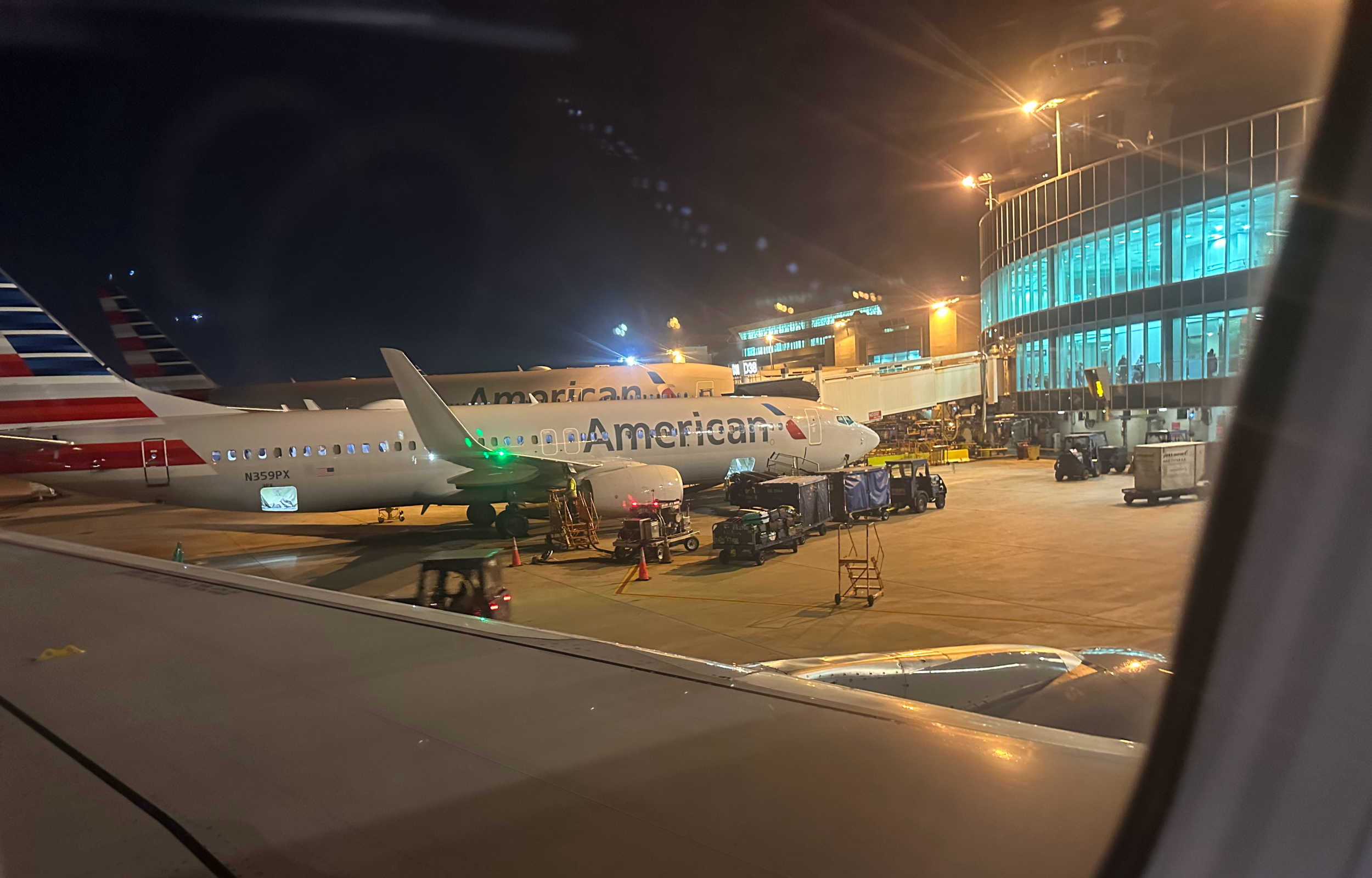
U.S. Immigration and Customs Enforcement is using passenger information collected by the Transportation Security Administration to locate noncitizens at airport check-in counters, gates and terminals, with a recently obtained federal document identifying at least 27 airport arrests across nine states.

Separate internal data reviewed show that TSA sent ICE records involving more than 31,000 travelers from the beginning of President Donald Trump’s second term through February 2026, leading to more than 800 arrests. That figure is not a count of arrests made inside airports.
The findings show that information gathered for aviation screening is being used at a larger scale for routine immigration enforcement. Airlines must transmit Secure Flight passenger data to TSA before covered flights depart, including a traveler’s full name, date of birth, sex, passport information, reservation number and itinerary.
Secure Flight was established to match travelers against federal watch lists and support aviation security and counterterrorism. Federal regulations, however, notify passengers that TSA may share the information with law-enforcement or intelligence agencies.

A 16-page agreement between TSA and ICE, made public Tuesday after a Freedom of Information Act request, establishes guidelines for exchanging and storing data. It says the information may be shared to support national security, transportation security, law enforcement, immigration and border management.
TSA has maintained that information sharing between agencies within the Department of Homeland Security is legal and is not a new policy. What appears to have changed is the scale and focus of its use to locate people for ordinary immigration arrests.
An immigration memo obtained by ABC News identified at least 27 arrests carried out at airports in nine states, stretching from California to Virginia, although it did not specify the period covered. ABC reported that some people detained had no criminal records and possessed work authorization or parole documents, according to an immigration attorney.
Recent cases have brought greater attention to the practice.
On July 20, ICE detained Chantal Morales Rojas as she prepared to board a Southwest Airlines flight from Denver to Oakland. DHS said the Ecuadorian national had remained beyond her authorized stay. Her attorney disputed the government’s account, saying she had submitted the required immigration paperwork and held valid work authorization.
At Harry Reid International Airport in Las Vegas, plainclothes agents were recorded tackling and attempting to handcuff Phu Nguyen, a 57-year-old Australian citizen. The agents left before completing the arrest, and local police removed a handcuff from his arm after finding no outstanding warrant.
DHS said ICE arrested Nguyen the following day as he prepared to depart Los Angeles International Airport and alleged that he had overstayed his authorized period.
In the San Francisco Bay Area, local rapid-response groups reported more than a dozen airport detentions since June 27. The Santa Clara County Rapid Response Network said it recorded 10 arrests involving travelers at San Francisco International and San José Mineta International airports between July 1 and July 28.
The government has described many of the targeted travelers as visa overstays, but the expiration date printed on a visa does not by itself determine whether someone has remained beyond an authorized stay.
The State Department says the controlling record is generally the admitted-until date or “duration of status” notation on the traveler’s Form I-94. A person may therefore remain within an authorized period even after the visa used to enter the country has expired.
A timely and nonfrivolous application to extend or change status may also affect a person’s immigration position while the request is pending. At the same time, USCIS states that a pending petition or employment authorization does not necessarily confer lawful immigration status. Those distinctions help explain why DHS and attorneys have offered conflicting accounts in several recent cases.
DHS has defended the airport operations as enforcement against people it considers unlawfully present. Immigration attorneys, meanwhile, say the use of flight information creates risks for people with pending cases, prior removal orders or disputed status, even when they have previously been permitted to work or travel domestically.
The CBP inspection process is separate from TSA’s sharing of passenger information with ICE. Together, however, the systems mean that noncitizens traveling from the territory may encounter more than one federal screening process before beginning a mainland-bound flight.
The available national reporting does not establish that the recent increase includes St. Thomas or St. Croix, and no airport-specific figures have been released showing a rise in ICE arrests at either Virgin Islands airport.

Federal records do not show that all of those arrests occurred at airports. They show that TSA referrals are providing ICE with travel information involving tens of thousands of people, while the separately documented airport arrests demonstrate that agents are using terminals and boarding areas as predictable locations to take targeted travelers into custody.