




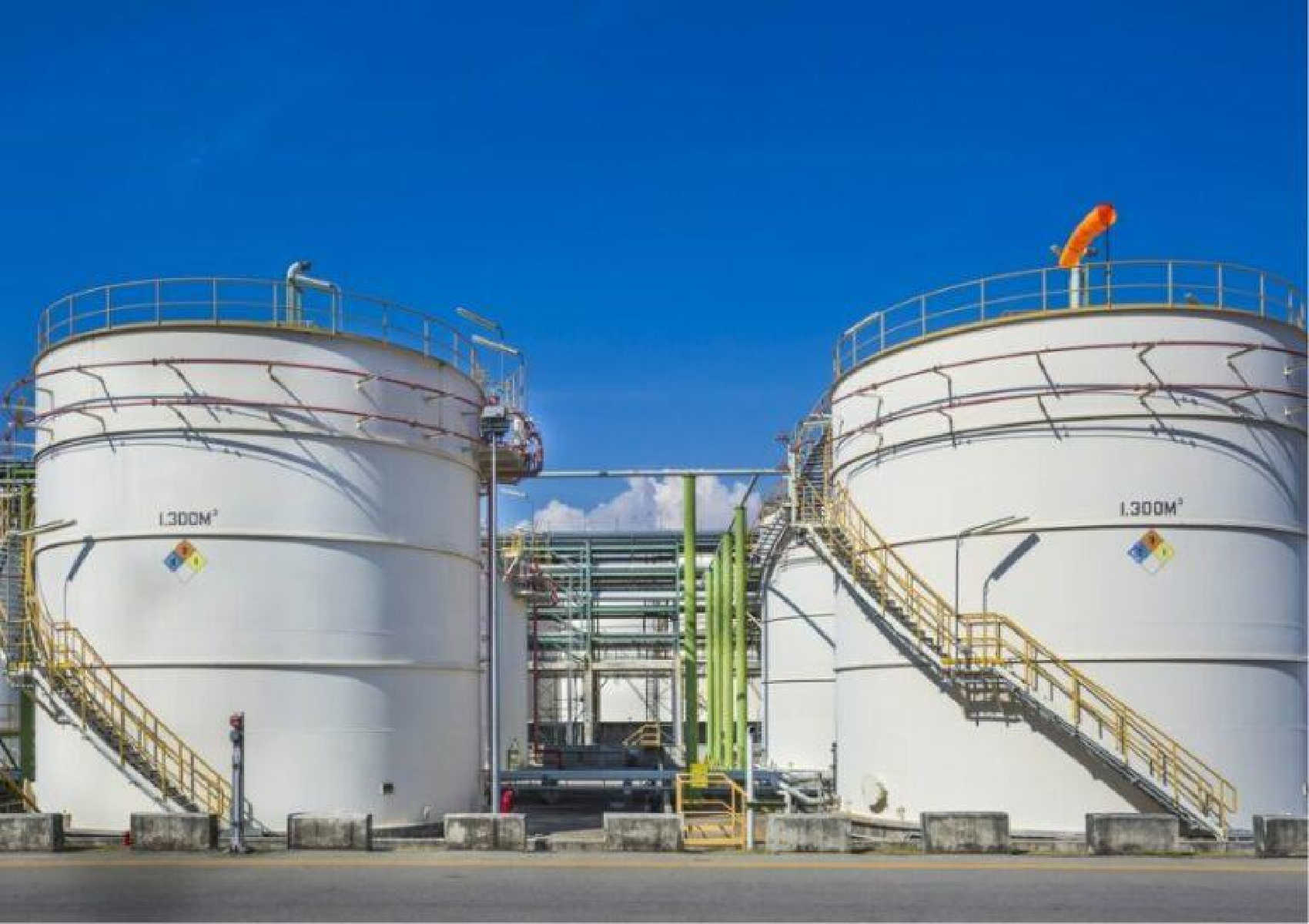
Concerns about the growing concentration of aviation fuel storage facilities along the coastline of Cyril E. King Airport dominated a recent public hearing before the St. Thomas Coastal Zone Management Committee, where regulators questioned whether another operation could increase environmental and aviation safety risks during hurricanes and other emergencies.
The proposal by Hairoun Aviation Services, Inc., which operates as ExecuJet Flight Services, would establish a 76,000-gallon aviation fuel storage facility on approximately 6,357 square feet of airport property at Estate Lindbergh Bay. It would be the third fuel farm project proposed along the same stretch of coastline in five years, according to Coastal Zone Management Director Marlon Hibbert.
Company representatives maintained that additional storage is necessary to meet demand from general aviation customers, particularly during the busy winter tourism season, when fuel supplies have sometimes been exhausted.
Hairoun president F. Britt Harrington told commissioners that the proposed facility would replace hurricane-damaged infrastructure and support the company's fixed-base operator, or FBO, services at the airport.

"I built a brand new FBO on the north side, and for that we are now wanting to build the tank farm," he explained.
Engineer Damian Cartwright of BuildTEC outlined plans for five permanent double-walled storage tanks mounted on steel supports. Three tanks would hold 12,000 gallons each, while the remaining two would each accommodate 20,000 gallons.
The design also includes a staging area for transportable ISO tanks, concrete foundations, perimeter containment, security fencing and backup power.
Cartwright described the safeguards as overlapping measures intended to minimize the potential for fuel spills.
"So we have redundant measures in place," he told commissioners.
The company's environmental assessment, filed with the Department of Planning and Natural Resources, describes the site as previously disturbed airport property. The proposed facility would be located near existing aviation fuel operations, including the Total petroleum installation and Standard Aviation's fuel farm.
Despite the proposed safety measures, Hibbert questioned the cumulative effect of placing several fuel operations immediately beside one another.
"So the area is now, for all intents and purposes, a huge fuel farm," he observed.
Hibbert emphasized that three separate entities had sought to develop fuel storage operations along the same coastal strip within five years.
"All three are competing, but all three are beside each other," he said, explaining why he considered the concentration of facilities relevant to the committee's review.
Committee Chair Jawanza Wallace-Hilaire similarly questioned whether regulators and aviation authorities had adequately assessed the capacity of the area to accommodate additional fuel operations.
"Have we ever done any type of studies considering…are we at capacity?" he asked.
His concern was not limited to competition between fuel suppliers. Instead, he questioned whether the increased concentration of petroleum storage could compound the consequences of a hurricane, accident or other emergency.
"There's more potential impact the more number of operators are within the vicinity," he said.
Operator Says Fuel Shortages Justify Additional Storage
Harrington countered that additional storage capacity is necessary because existing suppliers have not always been able to meet demand during the airport's busiest months.
"I've been at the airport over 20 years, and Total has run out of gas…many times during the busy period, which is basically November through April," he told commissioners.
During such periods, he said, shortages have prevented suppliers from selling fuel to general aviation customers.
The proposed facility would allow Hairoun to maintain its own reserves rather than depend entirely on the availability of fuel from existing operators.
Harrington also described the importance of maintaining sufficient supplies to serve the company's aviation customers and provide reserves for operations elsewhere in the region.
The company's environmental assessment identifies the project's central purpose as supplying fuel to commercial and private aircraft. It also argues that the additional operation would improve competition in aviation fuel services at Cyril E. King Airport.
Spill Containment and Hurricane Risks Questioned
Environmental safeguards were another major focus of the hearing, particularly given the facility's proximity to the shoreline.
Cartwright described the proposed double-walled tanks as an important layer of protection against leaks. The design also includes perimeter curbing, with approximately 12,000 gallons of additional containment capacity.
However, the project's environmental assessment states that its spill protection is designed to contain 110 percent of the storage tanks' capacity, while the two largest tanks would each hold 20,000 gallons.
That difference raises a question about how the various containment measures will operate together and whether the completed design will satisfy applicable requirements.
The applicants maintained that the double-walled construction provides additional containment protection beyond the perimeter curb.
Environmental consultant Amy Dempsey argued that the proposed site presents relatively limited environmental disturbance because it has already been altered by previous development.
"There's some large chunks of concrete, but the site itself does not have anything as far as you know, as far as you know, critical vegetation. It doesn't even have trees," she told commissioners.
Dempsey also emphasized that the proposed improvements would be situated at least 50 feet from the shoreline at their closest point.
The environmental assessment, prepared by Bioimpact, Inc. and BuildTEC, acknowledges the presence of sensitive marine resources in nearby waters, including corals protected under the federal Endangered Species Act.
It states that construction runoff must be prevented from carrying sediment into the sea and calls for erosion controls and spill-prevention measures to protect the surrounding environment.
Members of the public questioned whether storm surge during a major hurricane could overwhelm protective measures and carry petroleum products into coastal waters containing ecologically sensitive coral.
Dempsey pointed to ongoing efforts by the Virgin Islands Port Authority to strengthen shoreline protections near the airport. She expressed hope that additional funding for the improvements would become available during the next funding cycle.
"We are authorized for the next funding cycle," she told the committee.
Her remarks did not establish that the proposed shoreline improvements had already been completed or that the required funding had been fully secured.
Fuel Deliveries Near Active Taxiway Raise Concerns
The hearing also addressed the movement of fuel delivery vehicles within the airport's operational areas.
A member of the public questioned whether trucks transporting fuel to the proposed facility could create safety hazards near an active taxiway, particularly if vehicles must cross areas used by aircraft.
The concern raised questions about how the proposed delivery arrangements would comply with Federal Aviation Administration requirements and airport operating procedures.
Harrington said the company intended to minimize interference with aircraft movements by scheduling refueling deliveries during periods of reduced airport activity.
He said those operations would generally occur "after hours or when it’s least congested down there."
He also acknowledged that the necessary FAA approvals would have to be obtained before the proposed operation could proceed.
The environmental assessment identifies an existing access roadway serving airport infrastructure as the route intended to accommodate the fuel facility. The details of vehicle movements near active aviation areas remain an important consideration in the project's review.
Application Remains Under Review
The proposal is subject to a 30-day public comment period following the hearing, with the St. Thomas Coastal Zone Management Committee expected to consider the application at a subsequent decision meeting.
No approval was granted during the public hearing.
The application, identified as CZMJL0012-26, and its supporting environmental assessment are available through DPNR's Coastal Zone Permitting website.
For regulators, the central question is whether an additional aviation fuel facility can operate safely within an increasingly concentrated coastal industrial area. For Hairoun, the proposal represents an effort to secure reliable fuel supplies for an airport where seasonal aviation demand can exceed available inventory.

The committee must weigh those competing considerations, including fuel availability, aircraft safety, spill protection and the potential cumulative consequences of a major storm, before determining whether the project should proceed.