

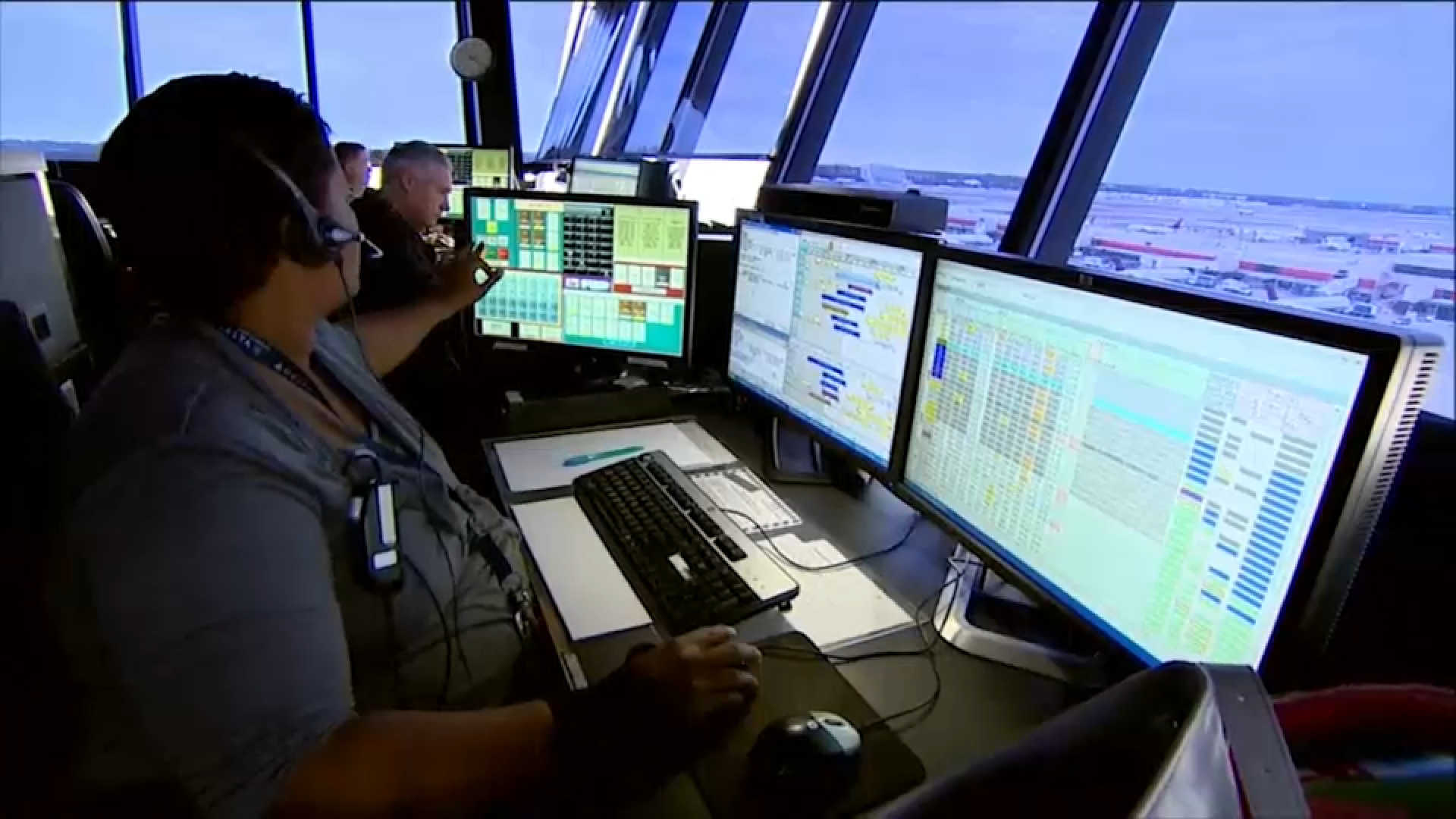
U.S. air travel faced its most severe disruptions yet on October 26, with FlightAware reporting over 8,000 flight delays by evening—an increase from 5,300 the previous day—as Federal Aviation Administration staffing shortages amid the government shutdown triggered ground stops and reduced capacity at major airports nationwide.

The agency issued advisories for 22 "triggers" indicating air traffic controller absences on October 25—one of the highest since the lapse began on October 1—leading to flow control measures at facilities in Chicago, Newark, Dallas, Atlanta, Las Vegas, and Phoenix. Transportation Secretary Sean Duffy, speaking on Fox News' "Sunday Morning Futures" on October 26, described the situation as a sign that "the controllers are wearing thin," warning that the figure was "one of the highest that we've seen in the system" and projecting further strain as the shutdown enters its 26th day.
These issues have cascaded into average delays exceeding two hours at affected hubs, stranding passengers and inflating airline costs estimated at $100 million daily in lost productivity, according to aviation analysts.
Essential air traffic controllers—numbering about 13,000—and 50,000 Transportation Security Administration officers remain on duty without pay, a legal requirement that has compounded an existing shortage of 3,500 controllers, many already on mandatory overtime and six-day weeks pre-shutdown. The FAA noted a "slight uptick" in sick calls, echoing the 2019 impasse when absences reached 10% at key towers, contributing to 20,000 daily delays and hastening resolution. Recent incidents include a temporary ground stop at Hollywood Burbank Airport on October 6, where the control tower operated without staff for hours, handing off to San Diego and causing 2.5-hour average waits; similar triggers hit Newark and Phoenix on October 19, with Philadelphia, Boston, Houston, and Nashville following suit. The agency's strategy of throttling arrivals preserves safety but amplifies ripple effects, with TSA lines averaging 6.28 minutes for standard screening and 2.65 for PreCheck as of October 9, per FAA posts.

Airlines such as Delta, United, American, and Southwest have urged passengers to check flight status and arrive three hours early, reporting 20% drops in on-time performance and no widespread cancellations but significant rebookings and hotel strains. The National Air Traffic Controllers Association, in an October 6 release, emphasized resilience, stating that "voluntary absences undermine the system we all rely on," while President Nick Daniels told reporters on October 24 in Philadelphia that controllers "got to go to work" despite the hardships. As the first full unpaid payday for October work arrives on October 29—retroactive pay guaranteed by a 2019 law but delayed in practice—unions anticipate escalating callouts, with Duffy noting controllers are "taking second jobs, they're out there looking." The FAA Academy furloughed trainees on October 3, further eroding the workforce pipeline.
These aviation woes stem from the shutdown's core dispute: Democrats' consistent rejection of a House-passed clean continuing resolution extending funding through November 21, conditioned on extensions for Affordable Care Act subsidies aiding 24 million enrollees, versus Republicans' insistence on decoupling the issues. Senate votes on the bill have failed 12 times along party lines, with Minority Leader Chuck Schumer (D-N.Y.) prioritizing healthcare protections amid rising premiums. House Speaker Mike Johnson (R-La.) has decried the approach as leveraging "essential workers," while the White House focuses reallocations on military pay rather than civilian transport. Regional flight subsidies for rural routes, Duffy added, exhausted by October 13 without renewal, threatening service in underserved areas.
Passengers at Reagan Washington National, George Bush Intercontinental in Houston, and Metropolitan Nashville International endured extended tarmac holds and gate delays, with FlightAware attributing 53% of early shutdown delays to controller shortages—well above the typical 5%. Aviation groups like Airlines for America have called for immediate contingency funding to avert a "full-blown crisis" during Thanksgiving's projected 30 million enplanements, as weather in the Northeast compounds mechanical issues. Bipartisan lawmakers, including Sen. Maria Cantwell (D-Wash.), advocate targeted FAA appropriations, but progress stalls amid recesses. Official FAA advisories detail the progression—from October 6's Burbank closure to October 26's nationwide gridlock—highlighting systemic risks without compromising safety.