




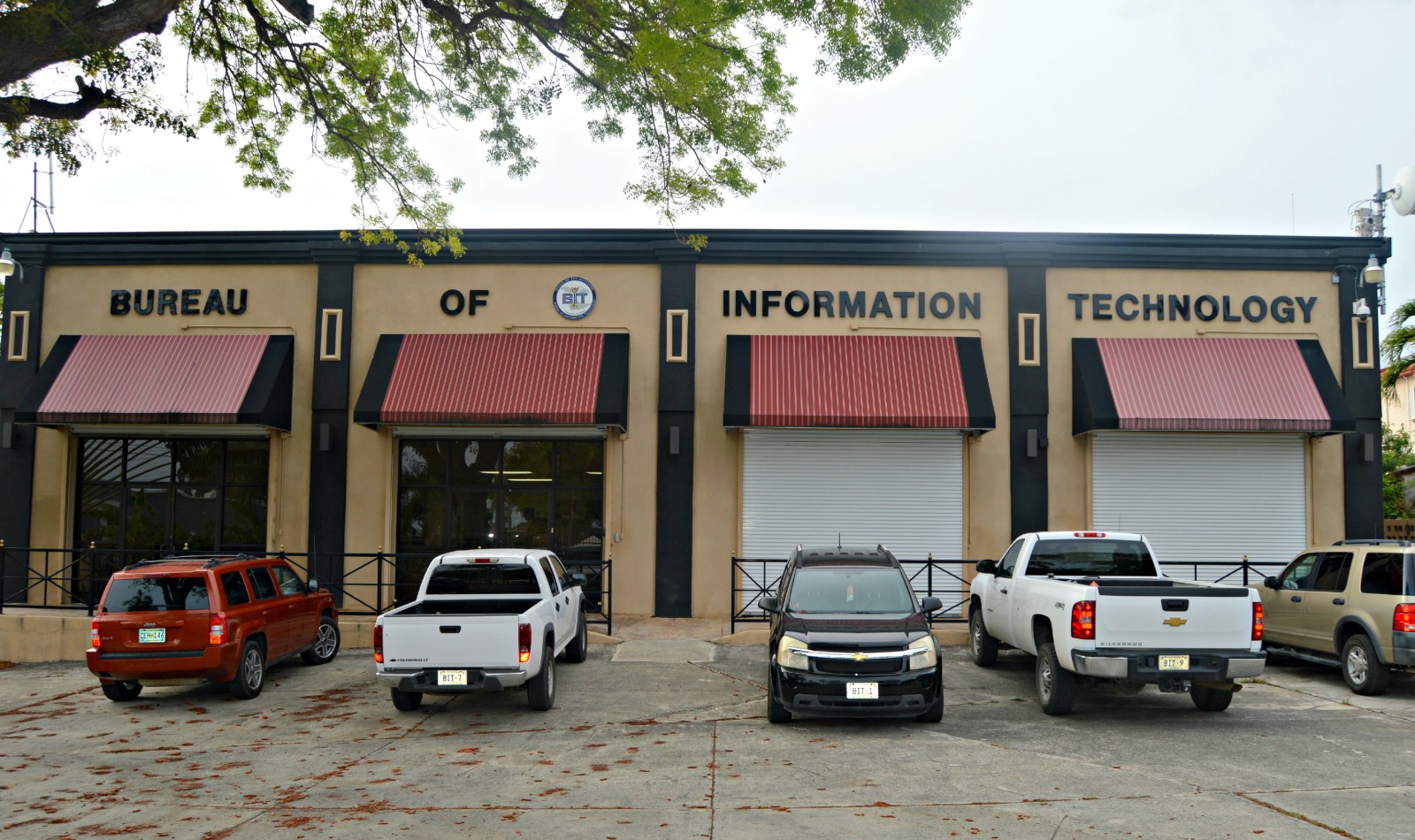
The Bureau of Information Technology is asking the Committee on Budget, Appropriations, and Finance to approve its general fund request of $12,329,386 for the upcoming fiscal year. For Rupert Ross, BIT’s director, the request is “an investment in continuity, cyber security defense and improved government service delivery.”

Mr. Ross and his executive team appeared before the committee on Wednesday as budget hearings kick into high gear.
The BIT remains focused on implementing a “proactive and strategic approach to cyber security,” noted Mr. Ross. “We built a road map to identify, protect, detect, respond to and recover from threats while maintaining strong governance across our systems.” Recent cyber attacks across several government entities have forced the Bureau to become even more hands on, providing training and expanding its cyber security budget. The budget request, Mr. Ross explained, will allow BIT to “maintain momentum and ensure we can meet the evolving needs of the government.”
“Without continued funding, we risk slowing the progress we've made and our ability to defend government systems from cyber threats,” testified Mr. Ross.

BIT’s budget breakdown includes $2,246,393 for salaries and $955,345 in related fringe benefits for 29 positions including 5 vacancies. Supplies are budgeted at $104,000 and include “procurement of hardware and equipment vital to our IT functions.” Other services “and activities critical for the efficient operation of our department" will cost an estimated $1,061,989, while $250,000 is earmarked for utility payments.
Its largest budget category is under the miscellaneous heading, budgeted at $7,711,658. Per Mr. Ross, the amount is necessary for “ancillary operations and addressing unforeseen needs.” The $7 million figure includes an allocation of $3,637,915 to renew BIT’s Microsoft support contract and enterprise licensing agreement. “Ongoing maintenance of key projects like the VIPD camera project, surveillance project and the public safety CAD RMS project” will require $3,192,562. Battery backup, IT upgrades, and infrastructure maintenance are also all covered in that portion of the budget.
“A portion of the fund is earmarked for unforeseen public safety initiatives and other emerging needs,” the director stated. Such funding is especially important as cyber breaches become more commonplace.
Understanding the key role that BIT plays in the security of all government entities, committee chair Senator Novelle Francis wondered whether these agencies should make financial contributions to the BIT. He suggested a financial mechanism “similar to our single payers utility.” Mr. Ross did not disagree. “We definitely need to continue the investment from every agency into BIT,” he said.
Lawmakers like Senator Francis and Senator Marise James were concerned about the number of vacancies at the already small agency. “The biggest thing is that I'm concerned that the team is going to overwork themselves and burn out,” Mr. Ross explained. The absence of a business relationship manager is impacting how BIT engages with other government entities and assesses their needs. That responsibility is currently being handled by BIT’s deputy director with no additional compensation. This is a growing organization. We have a lot of roles that we need to fill,” noted Mr. Ross.
“If you need more, put in a request, but it has to be where it's going to be to help the entire government,” said Senator Hubert Frederick, joining the discussion. He urged the BIT to “be the shield, the defender for these agencies that are not well-staffed.” He referenced government entities without robust IT departments or sophisticated cyber protection. Mr. Frederick suggested that these agencies be “mandated that they should come through you guys first as some kind of cursory agency to make sure they've got all the basic elements in place.”
Though lawmakers largely agreed with the need to provide BIT the requested funding to protect the government, they found the $250,000 utility allocation curious. BIT’s utility funds are deposited into the government’s single payer utility fund. However, for FY2025 year-to-date, BIT has only had to expend $81,258 in utility costs.

“How was that arrived at, that $250,000?” asked Sen. James. Mr. Ross explained that the figure is based on “historical information” assessed by the Office of Management and Budget. “Director, you're not going to spend $250,000,” observed Senator Kurt Vialet. BIT only paid $125,561 for the entire FY2024, the latest completed fiscal year. “Look like they probably using BIT to put some extra money in a single payer utility fund for other entities,” Sen. Vialet theorized. “Mister Chair, we have to correct that one. That’s a $120,000 mistake.”