

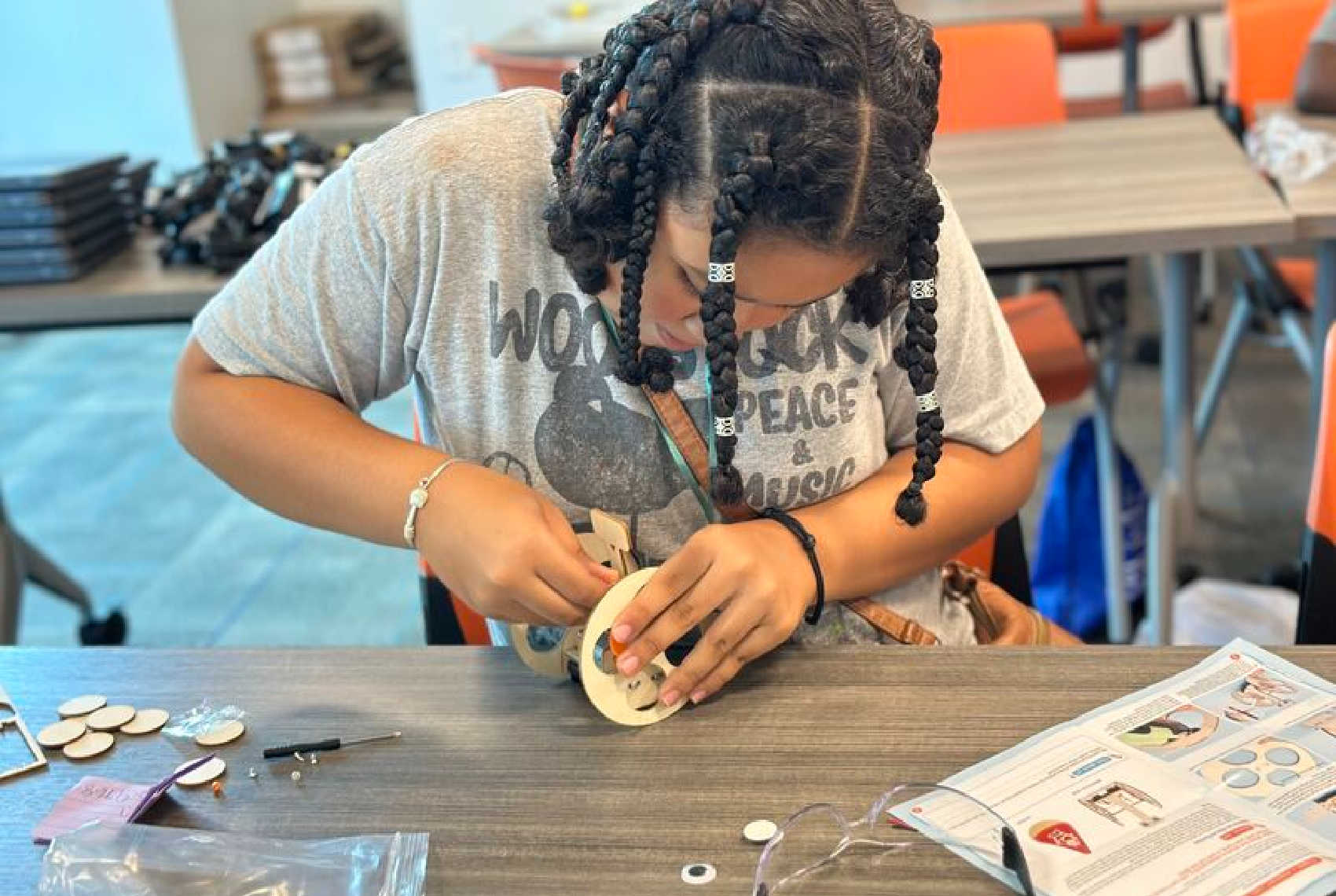
The UVI Research and Technology Park’s after-school STEM program entered the new school year nearly full, with 91 percent of its 480 available seats claimed within days and educators reporting that more students are beginning to envision careers in science and technology.

The program officially launched this week across all 14 K-8 public schools in the territory after registration opened only two weeks earlier. Capacity increased substantially from 350 seats last year to 480 this year, but demand rose with it, RTPark Chief Executive Officer Eric Sonnier told board members Tuesday.
Enrollment on St. Croix has reached 95 percent, while St. Thomas is at 98 percent. St. John remains the outlier at 43 percent, prompting plans for an RTPark representative to visit schools with lower participation and conduct hands-on demonstration projects designed to generate additional student interest.
The strong demand continues a rapid expansion of RTPark’s youth programming. Earlier this year, The Consortium reported that after-school STEM enrollment had grown from 95 students in fiscal year 2025 to 356 in fiscal year 2026 as the initiative expanded throughout the territory’s K-8 public schools. RTPark describes the program as part of a broader effort to expose young Virgin Islanders to science, technology and innovation while building a future local workforce.

Mr. Sonnier said schools are already seeing evidence that the exposure is influencing how students think about their futures. He recounted feedback from the principal of Eulalie Rivera School, who reported a noticeable increase in enthusiasm for STEM careers. “A lot more students are saying they want to do careers in STEM-related fields, and she just thought it was a great program. She hopes that we continue to grow it throughout the territory,” he told board members.
Building a Path From School to Employment
RTPark’s workforce efforts continue beyond elementary and middle school. Its Professional Pathways program has placed 16 interns, with 19 businesses requesting participants. Eleven of those businesses are current RTPark clients, according to Mr. Sonnier.
“These aren't just summer internships, so they'll continue to go throughout the school year as well, and we'll just be filling those on an ongoing basis,” he said.
The Professional Pathways initiative is designed to connect UVI students with businesses for practical workplace experience while providing training in areas including communication, networking, project management and résumé development. RTPark says the program is intended to bridge the gap between education and employment in technology and knowledge-based industries.
That creates what RTPark is attempting to build as a continuous workforce pipeline — introducing students to STEM at the K-8 level, developing professional skills during college and connecting Virgin Islanders with employers afterward.
Remote Hiring Remains a Challenge
Mr. Sonnier said another piece of that strategy remains unresolved: making it easier for mainland companies to hire people who live in the Virgin Islands for remote jobs.
One organization interested in employing local residents remotely recently encountered what he described as “hiccups” in the process. “There tends to be a lot of friction in that process, and so we think really pushing this remote worker bill will allow us to remove some of that friction and create a portal so that organizations who want to hire local Virgin Islanders can do so in a faster, much more streamlined way,” he told the board.
RTPark has been pursuing the issue for more than a year. In testimony before the Legislature in 2025, Mr. Sonnier proposed what he called a “Remote Worker Employer Facilitation Act,” arguing that mainland employers can encounter payroll, tax and administrative complications when employing people who live in the territory. His proposal called for simplifying employer registration, clarifying payroll withholding and filing requirements, and creating protections for compliant businesses.
The issue has also been raised previously by Virgin Islands residents who told The Consortium that mainland employers had been reluctant to hire them remotely because of differences in territorial employment and taxation requirements.
With the current legislative term nearing its end, Mr. Sonnier acknowledged that advancing the measure may be difficult but said RTPark intends to keep working on it.
“I just wanted to keep that on everyone’s radar because it’s important to us and allows us to create jobs without continuing to give benefits,” he said.

For RTPark, the combination of nearly full STEM programs, year-round internships and an effort to reduce barriers to remote employment reflects a broader strategy: creating more pathways for Virgin Islanders to enter technology-driven careers without necessarily having to leave the territory to find them.