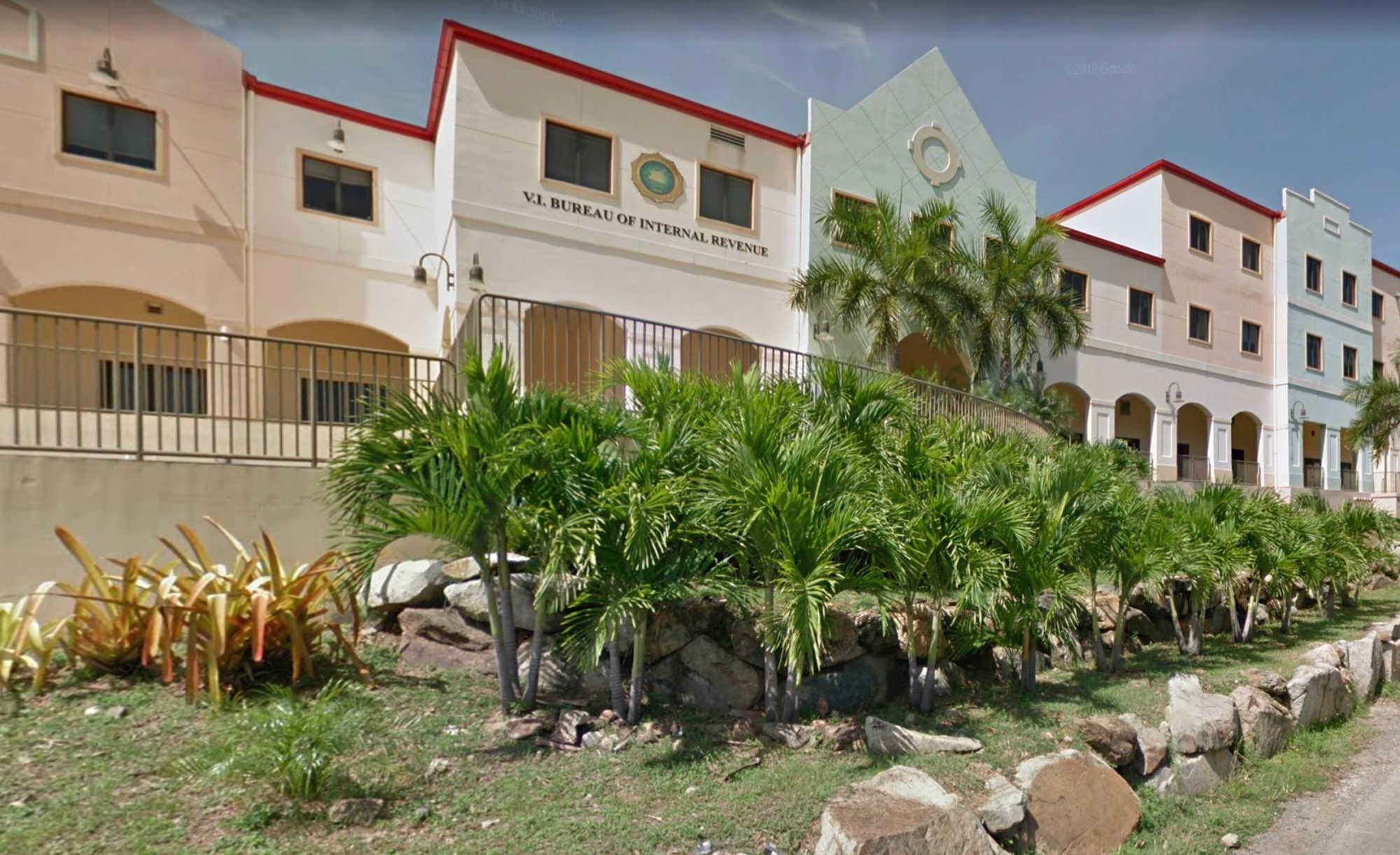
A federal magistrate judge has ruled that the V.I. Attorney General has common-law authority to appoint private attorneys as special assistant attorneys general, rejecting a challenge brought by Ocwen USVI Services LLC in a tax dispute involving nearly $13 million in contested assessments.

In a 25-page opinion issued October 3, U.S. Magistrate Judge G. Alan Teague denied Ocwen’s motion to disqualify attorney James N. Mastracchio from serving as co-counsel for the director of the V.I. Bureau of Internal Revenue.
The ruling does not decide the underlying tax dispute. Ocwen is challenging a VIBIR determination that it owes $12,948,684 in income taxes for the 2019 tax year. The company disputes the entire deficiency and contends that, instead of owing the government money, it is entitled to a $1,348,518 refund.
The October 3 decision instead resolves a significant question over who may represent the Virgin Islands government in such litigation and the extent of the Attorney General’s authority to bring private attorneys into government cases.

Teague described the central issue as one of first impression in the territory.
Mastracchio entered the case in June 2024 as co-counsel for VIBIR. He is a private attorney admitted in New York and Washington, D.C., and according to the court record, possesses experience and expertise in tax litigation.
After he entered his appearance, the governor and Attorney General executed a written designation appointing him as a special assistant attorney general. Although signed June 28, 2024, the designation was made effective retroactively to March 2 of that year.
The appointment provided that Mastracchio would represent the Virgin Islands government in various matters on a per-diem basis, including tax litigation before the District Court. He was also placed under the supervision of the V.I. Department of Justice’s Civil Division chief, who was responsible for assigning tax cases and reviewing and approving Mastracchio’s court filings.
Ocwen sought to have him removed, arguing that Virgin Islands law permits only the Attorney General and regularly appointed assistant attorneys general to represent VIBIR in tax deficiency cases. The company also pointed to territorial law prohibiting assistant attorneys general from simultaneously engaging in private legal practice.
Ocwen further argued that allowing Mastracchio access to its tax information while serving as what it viewed as an unauthorized government lawyer implicated Virgin Islands tax-confidentiality laws.
VIBIR opposed the motion, arguing that the government has long used private attorneys when specialized expertise is required and that nothing in Virgin Islands law expressly prohibits the Attorney General from appointing outside counsel to assist with government litigation.
Teague agreed with Ocwen on one important statutory point: the Virgin Islands Code does not expressly authorize the Attorney General to appoint special assistant attorneys general.
The court also rejected VIBIR’s argument that a provision allowing the Attorney General to employ “experts, scientists, technicians, or other specially qualified persons” could itself be read to include outside lawyers. Teague concluded that the language refers to non-legal professionals who assist attorneys in preparing or trying cases.
But the absence of express statutory authority did not end the inquiry.
The court turned instead to Virgin Islands common law and conducted what is known as a Banks analysis, the framework used when Virgin Islands courts are asked to determine the appropriate common-law rule where the V.I. Supreme Court has not already settled the question.
That analysis looks at prior Virgin Islands practice, rules adopted in other jurisdictions and, most importantly, which rule is best suited to the circumstances and needs of the territory.
Teague noted that outside attorneys have previously appeared alongside the Attorney General in a number of major government cases, including litigation involving JPMorgan Chase, Takata, environmental matters and other complex disputes.
The court also examined decisions from other jurisdictions recognizing an attorney general’s inherent authority to appoint special counsel where statutes do not expressly prohibit the practice.
Teague ultimately concluded that the same principle should apply in the Virgin Islands.
“The Court finds the best rule for the Virgin Islands is to adopt and recognize the common law authority of the Attorney General to designate and appoint special assistant attorneys general,” the opinion states.
The judge said prohibiting that practice could place the Department of Justice at a disadvantage when confronted with highly specialized or complex litigation requiring expertise not readily available among its regular staff.
The territory’s relatively small population and corresponding limits on the size of the Attorney General’s office also factored into the court’s analysis.
Teague wrote that restricting VIDOJ to a “one-size-fits-all” approach would be impractical, particularly when the government must litigate complex matters both inside and outside the territory.
The court was also careful to distinguish Mastracchio’s role from a situation in which a government agency bypasses the Attorney General and independently hires its own private attorney.
VIBIR remains represented by the Attorney General, as required by Virgin Islands law. Mastracchio is serving alongside the government’s lawyers as specially appointed co-counsel.
“The designation and appointment of outside co-counsel is not an opt-out,” Teague wrote.
That distinction was central to the ruling. The court said previous Virgin Islands cases restricting agencies from replacing the Attorney General with privately retained counsel did not resolve whether the Attorney General himself could bring outside attorneys into a case as co-counsel.
Teague also rejected the suggestion that the District Court’s rules governing special admission of attorneys created the Attorney General’s appointment power. Those rules provide the procedural mechanism for allowing an eligible attorney to appear before the federal court, the judge said, but they do not create the underlying government authority to appoint that attorney.
That authority, the court concluded, comes from common law.
The ruling leaves Mastracchio in place as VIBIR’s co-counsel while Ocwen’s larger challenge to the 2019 tax assessment continues.

Ocwen filed its petition for redetermination in March 2024 after VIBIR issued the nearly $13 million deficiency notice in December 2023. The merits of whether Ocwen owes the government $12.9 million — or, as the company contends, should instead receive a $1.35 million refund — remain unresolved.