




The University of the Virgin Islands has received a $616,844 continuation award from the National Institutes of Health for a biomedical research initiative aimed at strengthening the institution’s ability to study health challenges affecting island populations while building the infrastructure needed to compete for additional research funding.

Federal records show that the National Institute of General Medical Sciences issued the award on Sept. 3 for UVI’s Virgin Islands Advancing Biomedical Labs with Excellence, or VIABLE, program. The latest action is a non-competing continuation award for the program’s second budget year and follows $569,575 awarded when the project began in September 2025, bringing recorded federal funding for VIABLE to $1,186,419.
NIH records break the new $616,844 award into $489,013 in direct costs and $127,831 in indirect costs. The cooperative agreement has an overall project period running from Sept. 4, 2025 through July 31, 2030, although the current federal action funds the latest budget period rather than guaranteeing the full amount of future-year support through 2030.
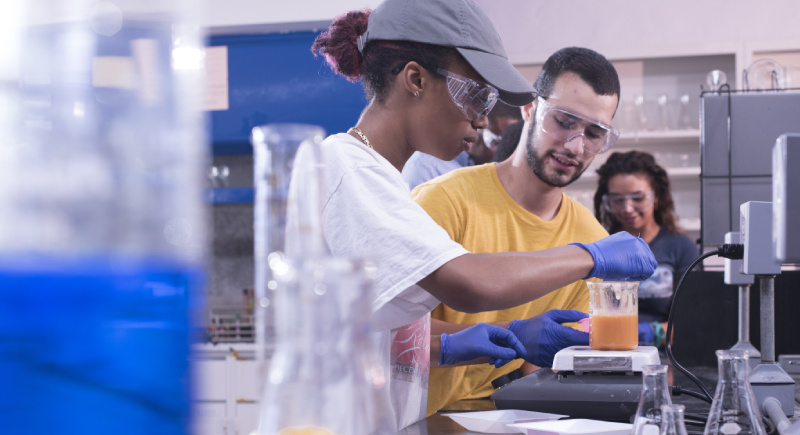
At the center of the initiative is UVI’s completed 17,000-square-foot Biomedical Research Facility, which federal records say is intended to support research addressing the health needs of small-island populations. VIABLE organizes that work around three broad areas: epidemiology, disease and health research; data-driven biomedical solutions; and health resilience and emergency medicine.

The first research area is designed to take advantage of the Virgin Islands’ Caribbean location to study how local geographic and ecological conditions affect human health. The federal project description identifies basic biomedical and pre-clinical research, laboratory analysis and monitoring for diseases and vectors moving through the region among the work contemplated under that portion of the initiative.
A second component focuses on artificial intelligence, digital technologies and data-driven approaches to health and wellness for Caribbean, remote and insular populations. The third incorporates biomedical and clinical research with public and mental health, community health and disaster medicine, including healthcare-system resilience, hazard mitigation, emergency logistics, violence prevention and health promotion.
VIABLE is funded through NIH’s Biomedical Research Environment & Sponsored Programs Administration Development program, known as BRE-SPAD. The National Institute of General Medical Sciences says BRE-SPAD is specifically designed for resource-limited institutions seeking to expand their biomedical research environments and strengthen their capacity to manage sponsored research programs. Eligible activities include grant-writing and research training, improvements to grants and contracts administration and internal pilot-research programs intended to help faculty generate data needed to compete for outside funding.
UVI’s federal project description says the initiative is intended to strengthen both the university’s research infrastructure and its sponsored-program services for faculty, students and research centers. Federal records identify Jatasha Haralson, director of UVI’s Office of Sponsored Programs, as the project’s contact principal investigator. UVI describes that office as responsible for helping faculty and staff pursue research funding, develop and submit proposals, administer awards and maintain compliance with sponsor requirements.
The biomedical infrastructure supporting the initiative is part of a larger investment UVI has made in medical research and training. The university formally opened its School of Medicine Classroom Building and Biomedical Laboratory on St. Thomas in July 2024 as part of its Medical Research and Training Center. UVI said construction of that center and its Medical Simulation Center on St. Croix was supported by $34.6 million from the U.S. Economic Development Administration, along with territorial and philanthropic support.
The new NIH continuation award comes against the backdrop of significant federal grant losses at UVI. In April 2025, the university announced that federal policy changes had terminated two grants, including a five-year, $2.2 million NIH Undergraduate Research Training Initiative for Student Enhancement grant, known as U-RISE, which supported students preparing for careers in biomedical research. UVI said at the time that $1.4 million remained on that award when it was terminated.
By July 2025, UVI President Safiya George told lawmakers that the university had lost $3.5 million across six federal grants, affecting areas that included biomedical research, STEM leadership, faculty development, international exchange and climate resilience. The losses resulted in staff reductions and prompted the university to pursue a wider mix of federal and non-federal funding opportunities.

The VIABLE award is separate from those terminated programs and is directed primarily toward building UVI’s long-term biomedical research capacity. NIH says BRE-SPAD funding is intended to help participating institutions develop lasting research infrastructure and become more competitive for future external funding, rather than simply supporting one discrete research study.