



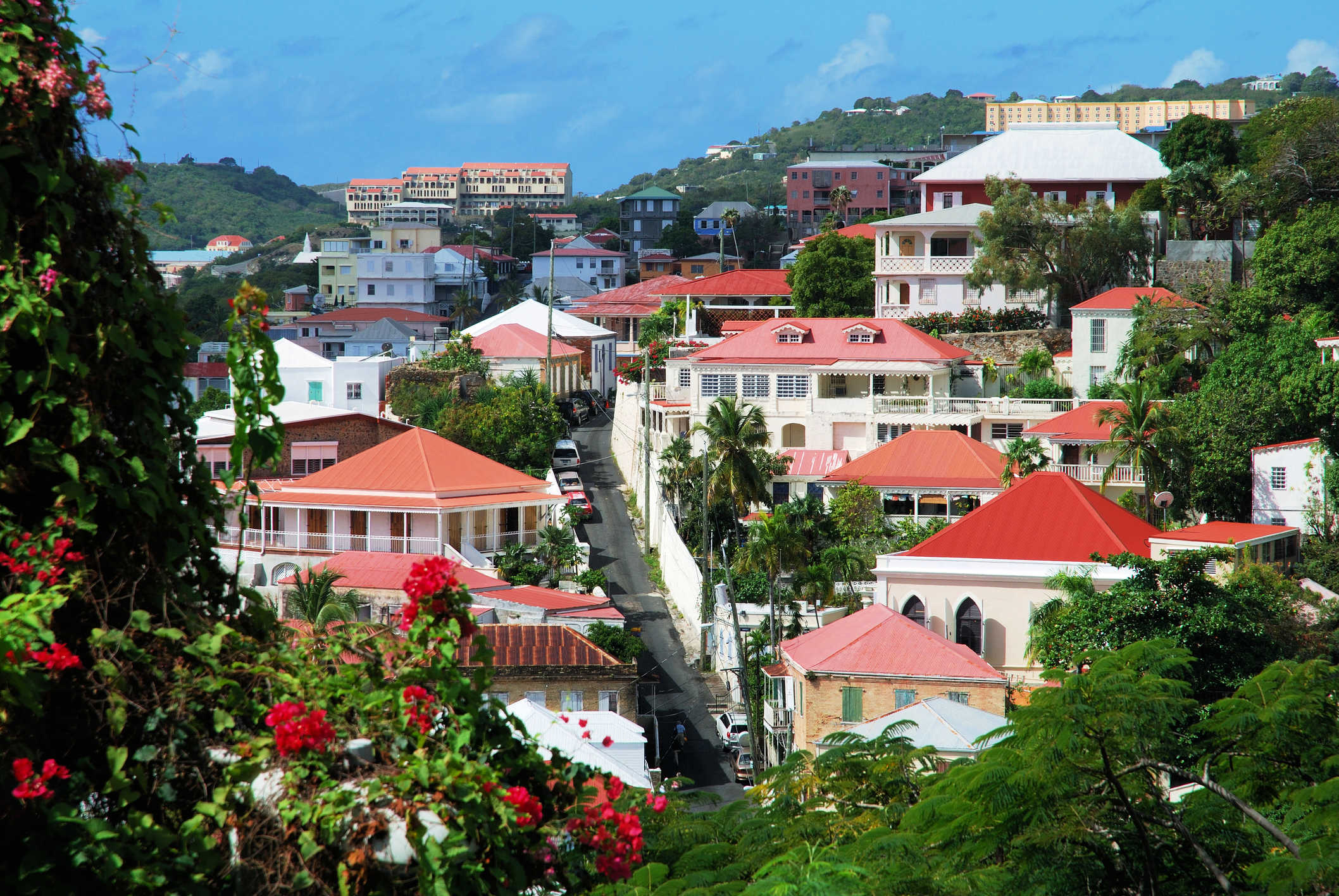
Staff of the Office of the Lieutenant Governor’s Office working on the Street Addressing Initiative (SAI) are seeing the proverbial light at the end of the tunnel as the project enters its final phase.

The program that intends to create a street addressing system throughout the territory that is consistent with national standards has been in the works for over a decade, but is now expected to be completed by mid-2025.
On Monday Christopher George, SAI project manager, provided a comprehensive update on the status of the project before the Committee of the Whole. He explained that the lack of a proper addressing system can negatively impact several services, including emergency response services, postal services, and food delivery. The SAI, he revealed, “is the largest infrastructure project to be set upon since the USVI’s road systems were built.”
The upcoming work, which involves completing addressing work across the territory, selecting street names, and operationalizing a Master Address Repository System, is expected to cost approximately $390,000. “St. John will be the first island to be fully addressed,” announced Mr. George.

Once that system is finalized across the territory, the Legislature will be required to “formally legislate that the U.S. Virgin Islands has a fully functioning street address system.” Subsequently, the U.S. Department of Transportation will include it in the national address database “and all relevant federal entities must utilize it.” That includes the U.S. Postal Service and the U.S. Census Bureau. Similarly, commercial mapping engines like Apple Maps and Google Maps must then adopt the local addresses.
The SAI team will also maintain a focus on street naming and signage, a component that commenced under the previous project phase. “Our goal is to have a street sign for every named street throughout the duration of this project,” Mr. George explained. He revealed that although the SAI team had been working with communities to select names for their roads, an estimated 40 percent of roads across the territory remain nameless.
Legislators agreed that the project is a necessary one, as it creates ease of access for not just the aforementioned service providers, but locals and visitors trying to traverse the islands. Mr. George has promised the public that one of the first visible components of the project will be backlit highway signs featuring “icons approved by the Department of Planning and Natural Resources.” One suggested icon is the moko jumbie.
With nearly half of the territory’s roadways unnamed, the Office of the Lieutenant Governor has begged for the support of the Legislature “to play a part in the project in naming some of these roads.” Whereas their own Community Naming Protocols require much dialogue and consultation that would extend the time needed to name “long roads” - often with both residential homes and businesses - the Legislature boasts a more “timely” process and so could expedite matters considerably.
Meanwhile, as the project progresses, Mr. George confirmed that public awareness will be a key focus to encourage an “understanding of the SAI and its purpose.” The public will also be encouraged to work with the SAI team to select names for the 40 percent of roadways currently unnamed.
The near-completion of the Street Addressing Initiative is seen as a major win for the Virgin Islands, especially after convincing “federal partners of the viability of it.” According to Mr. George, other territories had embarked on similar projects but “have not been successful.”