




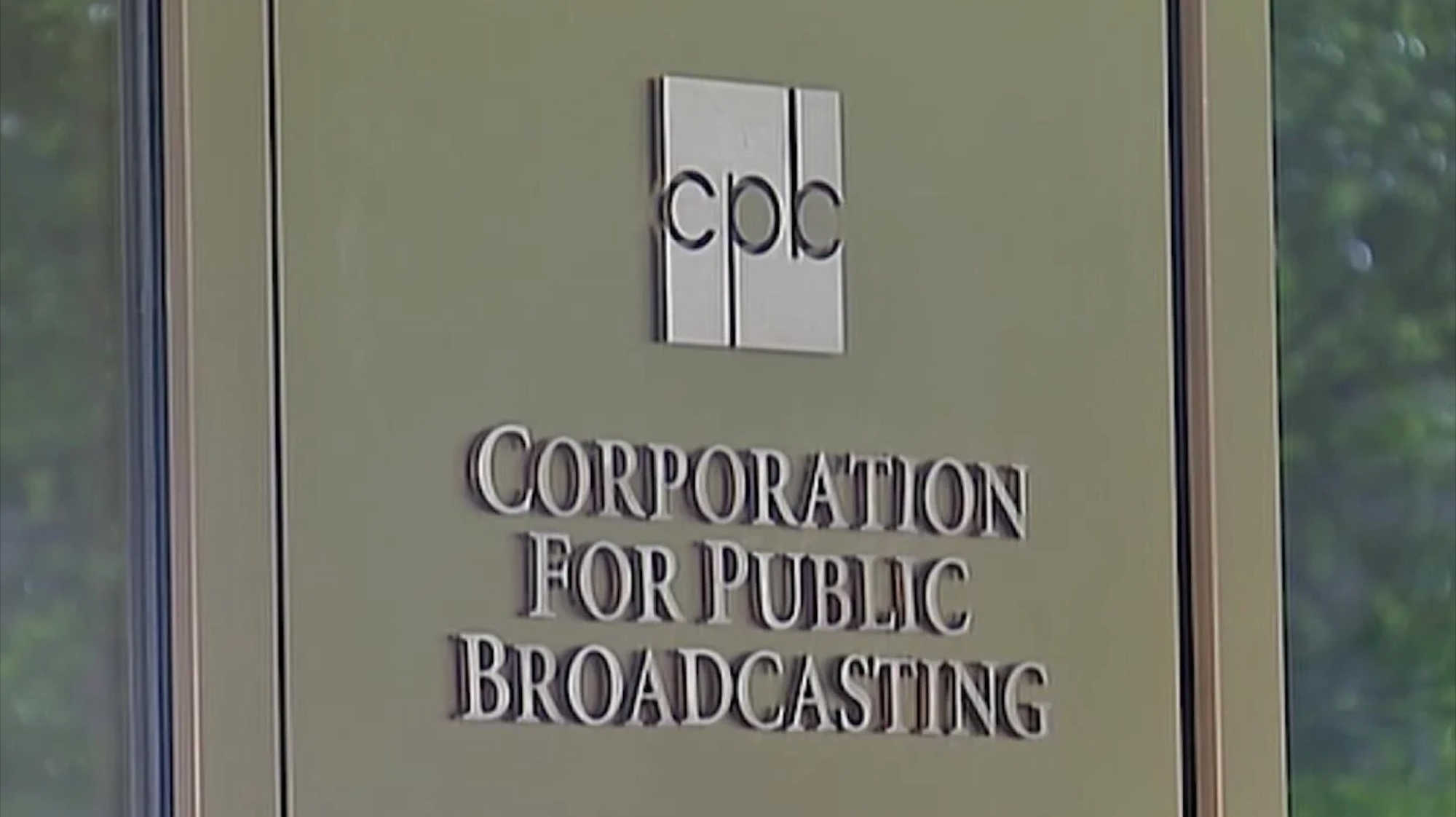
The Corporation for Public Broadcasting announced Monday that its board of directors has voted to dissolve the organization after 58 years, following Congress’s decision to eliminate all federal funding for the entity, a move that effectively ends the CPB’s role as the primary distributor of federal support for public media.

Founded in 1967 under the Public Broadcasting Act, the Corporation for Public Broadcasting has operated as a private, nonprofit corporation responsible for allocating federal grants to public television and radio stations nationwide. Those funds have long supported educational, cultural, and journalistic programming carried by outlets affiliated with PBS and NPR, among others.
The decision to dissolve follows congressional action in the fiscal year 2026 appropriations bill, which rescinded all funding for the CPB and was signed into law by Donald Trump in December 2025. The legislation zeroed out the organization’s roughly $535 million annual budget, removing the financial foundation on which it operated.
Trump administration officials had criticized the CPB and public broadcasting more broadly, arguing that taxpayer dollars should not support content they viewed as partisan or ideologically biased. The defunding was part of a wider set of budget cuts targeting federal support for arts and humanities programs, reflecting campaign promises to reduce spending on initiatives deemed non-essential.

In a press release announcing the board’s decision, CPB President and CEO Pat Harrison said dissolution was chosen over what she described as prolonged uncertainty. She noted that without federal funding, the organization could no longer fulfill its mandate to promote diverse, high-quality public media across the country.
According to the CPB, the organization has already begun winding down operations and plans to complete the dissolution process by March 2026. That process includes distributing remaining assets and assisting staff with transitions. Once dissolved, public broadcasters will lose a significant and centralized source of revenue, though individual stations may continue operating through a combination of private donations, corporate underwriting, and state or local support.
Reaction to the announcement has been sharply divided. Conservative groups welcomed the move, characterizing it as an end to what they described as government-funded propaganda. Media advocates and public broadcasting supporters, however, warned that the loss of CPB funding could reduce access to educational programming and local journalism, particularly in rural and underserved communities.
PBS and NPR affiliates have expressed concern about potential long-term impacts, emphasizing their role in providing non-commercial, fact-based journalism and educational content. The American Public Media Group described the dissolution as a “devastating blow” to independent media.
Congressional Democrats, who opposed the funding cuts, have said they plan to introduce legislation aimed at restoring support for the CPB. However, prospects for passage appear limited given the current Republican control of Congress.
The White House defended the decision, with Press Secretary Karoline Leavitt saying the move aligns with administration priorities to redirect federal funds toward national security and economic growth.
The CPB’s legacy spans decades of support for widely recognized programming, including Sesame Street and Frontline, which reached millions of viewers with educational and investigative content.

While no immediate disruptions to PBS or NPR programming are expected since stations operate independently and draw from multiple funding sources, industry observers caution that the long-term effects could include reductions in local news coverage and children’s educational programming.