

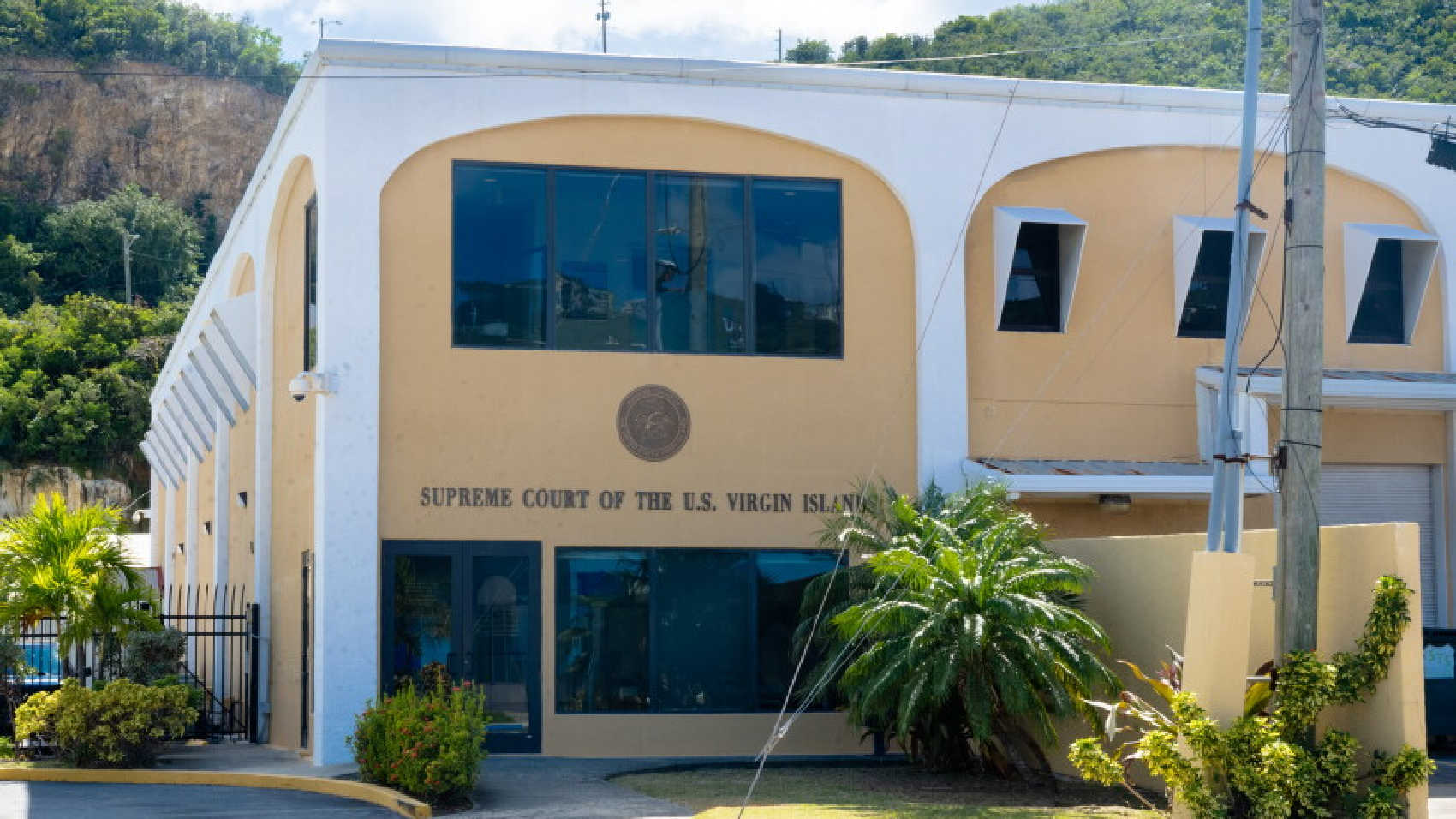
Attorneys representing plaintiffs in 13 tobacco lawsuits have asked the V.I. Supreme Court to take control of the consolidated litigation long enough to resolve legal questions they say have left the cases unable to meaningfully advance toward trial in Superior Court.

The request adds another procedural layer to the sprawling litigation against R.J. Reynolds Tobacco Company, Philip Morris and other defendants, part of the wave of tobacco cases previously reported by the Consortium.
The master proceeding consists of three groups — A, B and C — covering 13 individual cases, according to the petition. Attorneys say the need for a resolution has become increasingly urgent because many of the plaintiffs are gravely ill. Three — Carlos Schuster, Hayden Barry and Elminio Soto — have died since their cases were filed, leaving their individual matters caught in the broader procedural impasse, the petition states.
At the center of the transfer request are two questions the plaintiffs want the Supreme Court to decide. The first concerns the legal standard governing whether Virgin Islands courts may exercise personal jurisdiction over Reynolds and Philip Morris on claims alleging fraud and civil conspiracy. The second asks whether the territory's 1998 tobacco settlement with major cigarette manufacturers prevents individual plaintiffs from recovering punitive damages for their own injuries.

“Both questions are fully briefed…no further factfinding is necessary,” the petition declares.
Different Treatment Among Consolidated Cases
The jurisdictional dispute can be traced to Mr. Barry's lawsuit against Reynolds and several local defendants. In 2023, the Superior Court dismissed his fraudulent concealment and misrepresentation and civil conspiracy claims after concluding that he had failed to establish sufficient Virgin Islands contacts by Reynolds to support personal jurisdiction over those claims. The court concluded, among other things, that Barry had not sufficiently shown that his claims arose from contacts Reynolds purposefully directed toward the territory.
The Superior Court's own master-case opinion confirms that Barry's fraud and conspiracy counts were dismissed and that the court did not hold an evidentiary hearing before reaching its jurisdictional determination. The consolidated proceeding at that time included the cases brought by Mr. Barry, Mr. Soto, Mr. Schuster and Austin R. Georges.
According to the new petition, the Superior Court subsequently applied the same jurisdictional reasoning to three other Group A cases. But attorneys say Groups B and C developed differently: evidence bearing on jurisdiction was admitted following a full evidentiary hearing, creating uncertainty over which standard should ultimately govern all of the related cases.
The plaintiffs argue that consolidating the cases has therefore produced an unusual procedural deadlock. “The common issue determines what claims may be tried; without a ruling, the later cases cannot realistically progress to final judgment, and without final judgment, there is no ordinary route for this Court to review the controlling legal rule.”
Virgin Islands law does provide the Supreme Court with an unusual mechanism for intervening before the ordinary appellate process is complete. Under 4 V.I.C. § 32(d), the Supreme Court may transfer to itself a matter pending in another local court when doing so would promote the administration of justice. The court used that authority in 2024 in In re 35th Legislature of the Virgin Islands, explaining that transfer may be appropriate where a case presents purely legal questions, issues of public importance and urgency that makes the normal appellate process inadequate. The justices stressed, however, that use of that authority should be “extraordinarily rare.”
The tobacco plaintiffs are essentially asking the justices to employ that mechanism for a limited purpose: settle the legal questions preventing the consolidated cases from progressing and then return the matters to Superior Court for further proceedings.
1998 Tobacco Settlement Emerges as Second Roadblock
The second major dispute centers on the 1998 Master Settlement Agreement, or MSA, and related settlement documents between the Virgin Islands, other states and territories, and major tobacco manufacturers including Philip Morris and Reynolds.
The Virgin Islands signed the MSA on November 23, 1998. Territorial law describes the agreement as requiring manufacturers to make substantial payments to the government and change certain advertising and marketing practices in exchange for the release of past, present and certain future claims described in the agreement.
Reynolds now argues, according to the petition, that the settlement permanently prevents individual Virgin Islands plaintiffs from obtaining punitive damages. Plaintiffs dispute that interpretation, contending that the agreement resolved claims pursued by governments on behalf of the public and did not extinguish the rights of individual smokers to seek damages for their separate personal injuries.
That distinction has textual support in the MSA itself, although whether it resolves the punitive-damages question presented in these particular cases is now for the courts to determine. In defining parties whose claims were released, the agreement refers to governmental and other entities acting in sovereign or general-public capacities, contrasting those claims with actions seeking solely private or individual relief for separate injuries.
The plaintiffs also point to a major 2022 Virgin Islands tobacco decision. In R.J. Reynolds Tobacco Company v. Gerald and Brown, the Supreme Court reviewed judgments involving two smokers' estates after juries awarded substantial compensatory and punitive damages. The Gerald jury awarded $30 million in punitive damages, while the Brown jury awarded $12.3 million. The Supreme Court ultimately reduced the Gerald punitive award and ordered a new trial concerning Brown's compensatory damages, but did not rule that punitive damages were categorically unavailable under the 1998 settlement.
The current petition argues that Reynolds did not raise the Master Settlement Agreement as a bar to punitive damages in that appeal. The published 2022 opinion identifies Reynolds's appellate challenges as involving closing arguments, the size of Brown's compensatory award, the size of Gerald's punitive award, comparative fault and prejudgment interest; it does not list the MSA as one of the issues presented.
That history, plaintiffs contend, further supports having the Supreme Court now decide whether Reynolds's new interpretation of the 1998 agreement prevents the current litigants from pursuing punitive damages.

For now, the 13 cases remain tied to the unresolved threshold questions. The petition says that once the Supreme Court determines those issues and related subordinate matters, the cases can be returned promptly to Superior Court so the litigation can resume its path toward trial.