

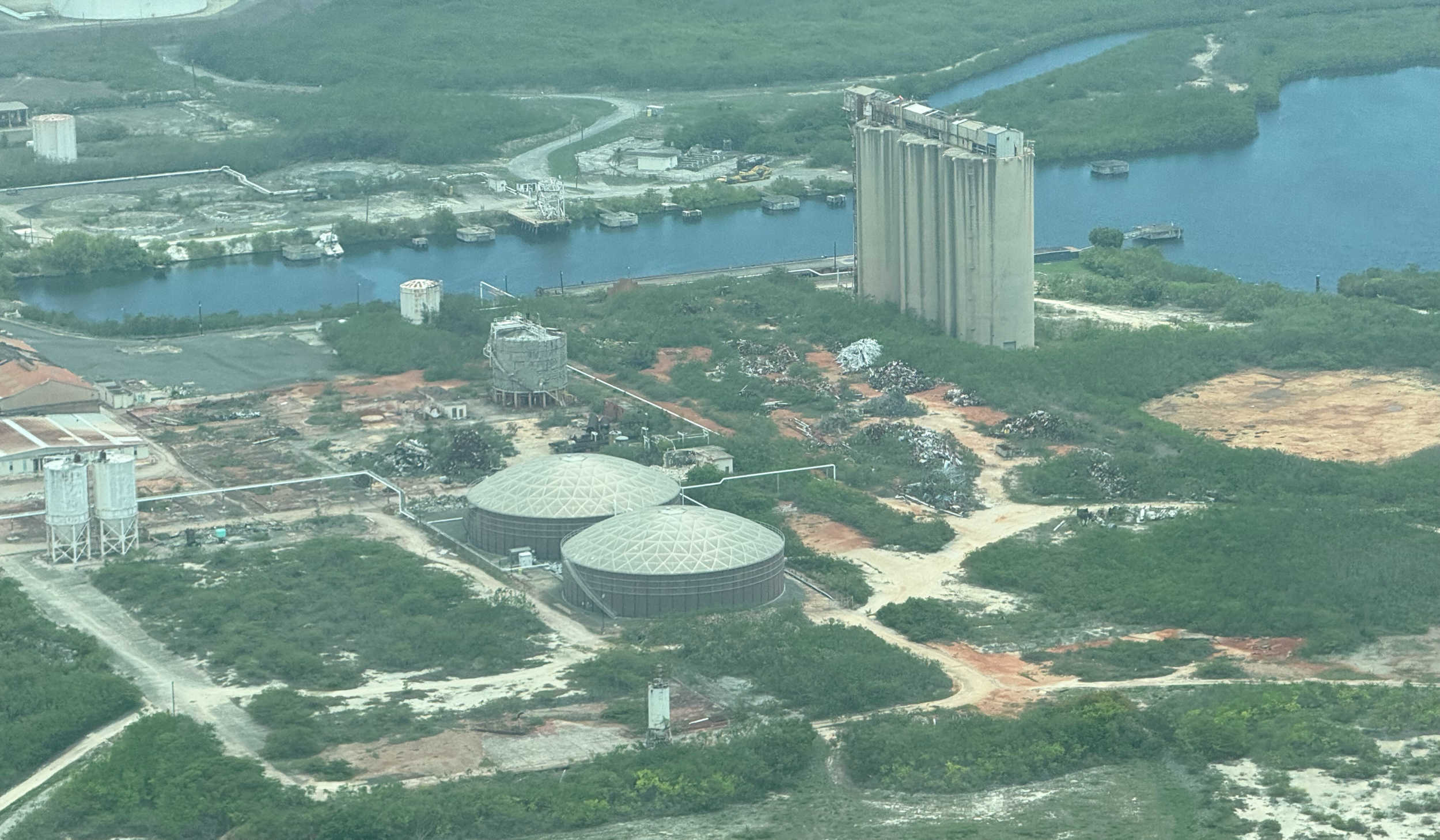
ST. CROIX — The sister of a man who died in 2024 is suing Lockheed Martin, alleging that health problems that ultimately caused his death were the result of dangerous conditions he endured while working decades earlier at St. Croix’s now-shuttered alumina refinery.

According to the civil complaint filed in Superior Court, Ludrick Donovan worked for Martin Marietta Aluminium at the refinery from 1977 to 1984, where he was allegedly exposed to dust from bauxite ore and alumina, asbestos-containing materials and chemicals used in the refining process, including caustic soda. Despite those conditions, the lawsuit alleges that Mr. Donovan worked with “no or substandard respiratory protection,” resulting in exposure-related pneumoconiosis, a group of lung diseases caused by the chronic inhalation of certain dusts.
The complaint paints a broader picture of what it describes as an inadequate occupational health and safety operation at the refinery. The safety department was allegedly “chronically understaffed” and, critically, lacked an industrial hygienist — a position the lawsuit describes as “crucial to ensure compliance with government regulations and good safety practices.” Other safety employees, according to the complaint, “lacked the requisite education, knowledge, and experience to anticipate, recognize, evaluate, and control the hazards posed by fugitive dusts,” referring to tiny airborne particles generated during industrial activity.
While the refinery was capable of responding to immediate workplace injuries such as “lacerations and burns,” the lawsuit argues that it was far less equipped to “guard against and detect latent health issues, such as lung diseases caused by the chronic inhalation of fugitive dusts.” Responsibility for protecting against those longer-term occupational hazards rested with parent company Martin Marietta Corporation, referred to in the complaint as M/M Corp, the lawsuit contends.

According to the complaint, M/M Corp had its own safety policies applicable to the alumina refinery, but those standards were not shared with local management. The corporate policies were allegedly “much more robust than any policies that were issued and in effect locally,” yet were not implemented at the St. Croix facility. The lawsuit further alleges that local personnel were led to believe that bauxite posed little health risk, mistakenly regarding it as “merely a nuisance dust because they lacked the technical expertise to understand that the term…did not mean that the dust was inert if inhaled.”
The complaint also alleges that formal occupational safety and health programs mandated by M/M Corp for its subsidiaries were never implemented at the refinery, “whether for budgetary reasons or otherwise.” Required job safety analyses from the St. Croix facility allegedly never reached the parent company, while M/M Corp failed to investigate why they had not been submitted. Required twice-yearly safety audits and inspections similarly failed to correct what the lawsuit characterizes as “glaring deficiencies” at the refinery.
Central to the complaint are two surveys that the plaintiff argues should have alerted the company to serious occupational hazards years before Mr. Donovan stopped working at the facility. A 1976 survey found “airborne silica in excess of safe levels,” findings that the lawsuit says should have prompted ongoing air sampling, additional dust controls and medical surveillance of workers.
“Despite the obvious warning signs, M/M Corp neither shut down the alumina refinery, nor demanded immediate upgrades, nor ensured that the local staff was immediately educated on how to better protect its workforce,” the lawsuit states.
A second assessment, described in the complaint as the “one and only industrial hygiene survey” conducted at the refinery, took place in 1981. It recommended that the facility establish a “robust” dust-sampling program and conduct pulmonary-function testing of employees as well as testing to ensure their respirators fit properly.
“M/M Corp knew that these critical safety policies should have been in place for years, and yet still it failed to adequately follow up on and ensure that the alumina refinery implemented these recommendations,” the complaint alleges. Even after air-sampling equipment was eventually purchased, the lawsuit claims it remained largely unused.
The lawsuit argues that Lockheed Martin, as a successor to Martin Marietta Corp., is liable for the harm Mr. Donovan allegedly suffered as a result of his workplace exposure to hazardous dusts and chemicals.
The case is the latest effort by local attorney Russel Pate to pursue claims against corporations that operated industrial facilities along St. Croix’s south shore on behalf of Virgin Islanders and immigrants who later developed cancers and lung diseases allegedly connected to workplace exposure to toxic substances.

Similar litigation is already underway involving the former oil refinery. Earlier this year, at least 90 lawsuits against companies associated with the facility during its Hess/HOVIC era were consolidated into a single master case in Superior Court. Those plaintiffs likewise allege that illnesses developed years later were connected to hazardous exposures during their employment at the industrial complex. That litigation remains pending.