





Superior Court Judge Yvette Ross-Edwards has recused herself from presiding over the criminal case of Daryl Jean-Baptiste, who was convicted in July of involuntary manslaughter in the 2019 crash that killed 24-year-old Davindra Ramsundar Jr. The order, issued on Tuesday, cited “an immediate conflict of interest,” disqualifying her from continuing as the trial judge and returning the file to the Clerk of Court for reassignment.

The recusal comes weeks after Jean-Baptiste’s attorney, Kye Walker, filed motions challenging the judge’s impartiality. Walker argued that Judge Ross-Edwards should have been disqualified because her former law firm represented the Ramsundar family in a wrongful death lawsuit against Jean-Baptiste stemming from the same incident. That lawsuit, filed in November 2020 on behalf of Ramsundar’s relatives and estate, accuses Jean-Baptiste of negligence, gross negligence, wrongful death, negligent infliction of emotional distress, and property damage, and seeks both compensatory and punitive damages.
Although Judge Ross-Edwards previously denied the disqualification motion, stating she had no personal involvement in the civil case and criticizing the timing of the filing, defense counsel pressed forward. Walker asserted that Virgin Islands law and judicial ethics rules require recusal when impartiality might reasonably be questioned, even if no actual bias is proven. She stressed that the overlap between the civil and criminal matters, combined with the judge’s history at the law firm, could erode public confidence in the fairness of proceedings.
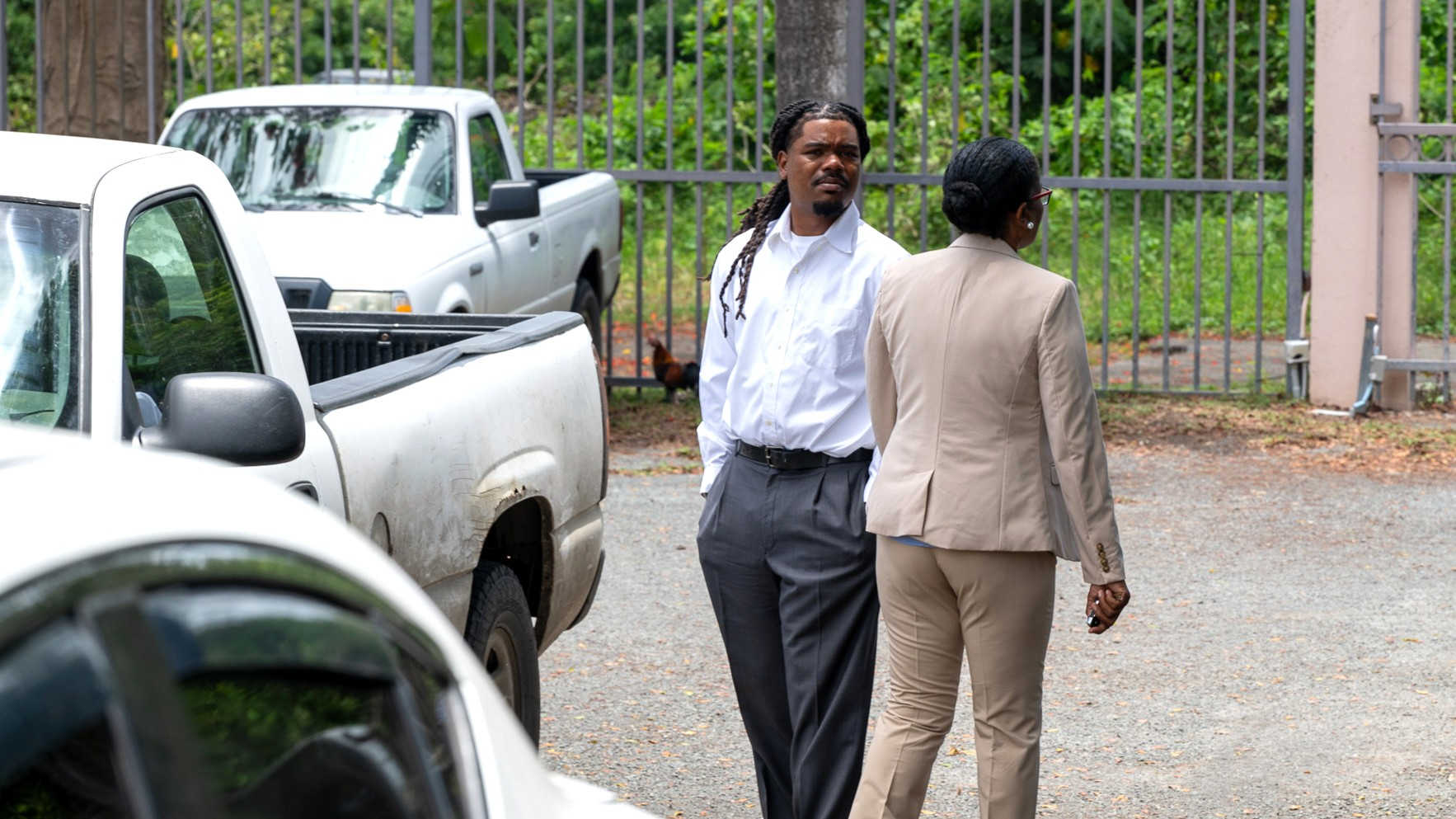
Daryl Jean-Baptiste, seen in the Superior Court parking lot, faces up to five years in prison after a jury convicted him of involuntary manslaughter on Wednesday for a 2019 fatal car crash, following roughly two hours and 45 minutes of deliberation. (Photo Credit: WTJX)

Walker also accused the court of applying the wrong legal standard when initially rejecting disqualification. She argued that the judge relied on her own subjective review of impartiality instead of using the “objective standard” established under Virgin Islands law and U.S. Supreme Court precedent. According to Walker, judicial bias is not an issue that can be waived, particularly when the same judge is tasked with ruling on post-trial motions and sentencing.
In addition to raising concerns about impartiality, Walker filed a separate motion challenging the August 12 order that scheduled sentencing before transcripts were made available and before post-trial motions could be properly prepared. She said moving forward under those circumstances risked “manifest injustice” by impairing Jean-Baptiste’s ability to preserve issues for appeal.
Jean-Baptiste, now 26, was found guilty on July 23 of involuntary manslaughter but acquitted of negligent homicide by means of a motor vehicle. The conviction carries a maximum penalty of five years in prison. Sentencing had not yet occurred when Judge Ross-Edwards issued her order of recusal.

The case will now be reassigned to another Superior Court judge, who will take up the pending motions, sentencing, and any further proceedings.