



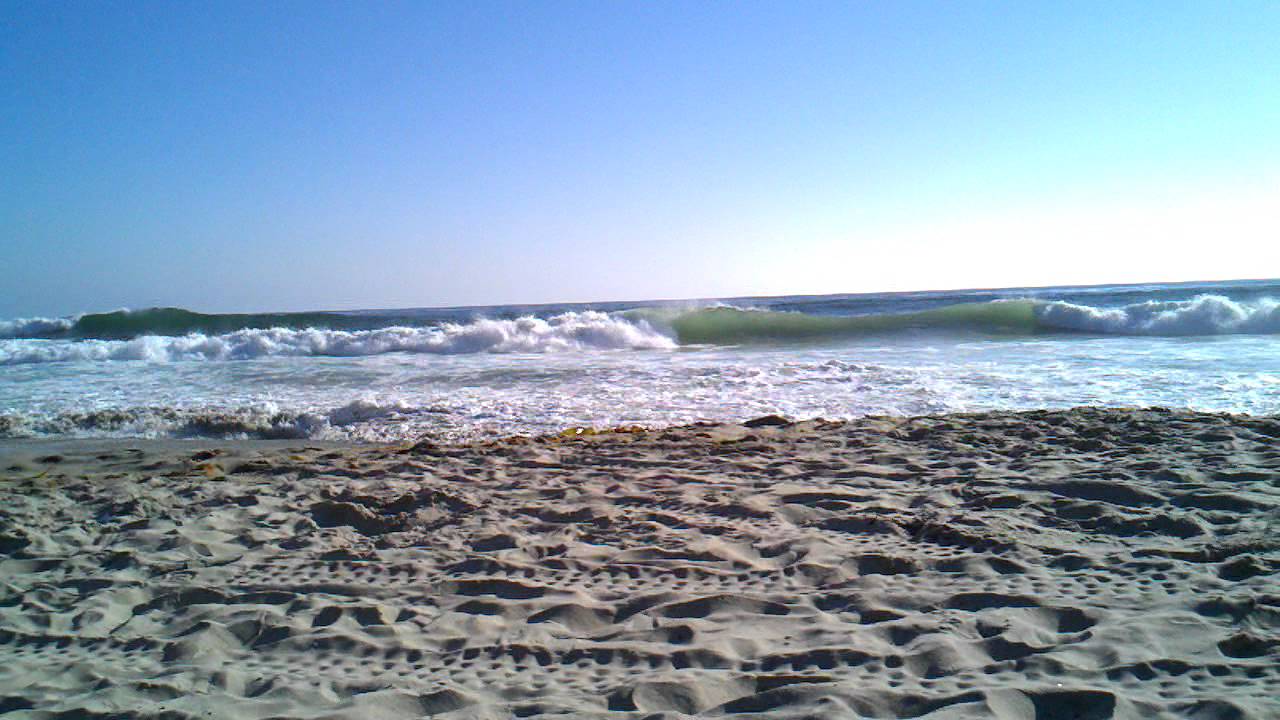
The Department of Planning and Natural Resources has announced that in anticipation of the approaching weather system, the Division of Environmental Protection (DEP) is expecting negative environmental impacts caused by storm-water runoff.

To that end, DPNR has advised the public to refrain from using the coastal waters throughout the territory until further notification. DPNR is also advising parents to instruct their children to keep away from storm water-impacted beaches as well as areas with manholes and storm water flooding. There may be an elevated health risk to anyone swimming in storm water-impacted areas as a result of increased concentrations of bacteria, oil and chemicals.
All persons should also be aware that storm water runoff may also contain contaminants or pollutants harmful to human health and therefore all persons should avoid areas of storm water runoff (i.e. guts, puddles, and drainage basins). DPNR will continue to monitor the impacted areas and waters.
DPNR urged the public to complete the following tasks to protect your drinking water resources in preparation for an impending hurricane disaster and the resulting potential water resources emergency:

- Downspouts leading to cisterns should be completely disconnected or blocked securely to protect the water source.
- A two-week supply of potable water should be stored in a safe weatherproof place, preferably indoors. This water supply will provide water for drinking, cooking, and bathing. To figure out how much water you will need for a two (2) week supply: multiply the number of residents by 20 gallons per person per day and then multiply that number by 14 days. For example, a family of four should store 1120 gallons of water. (Example: 4 people x 20 gallons/person/day x 14 days = 1120 gallons)
- An adequate supply of disinfecting agents [liquid chlorine containing 5.25% sodium hypochlorite (i.e. Clorox), powdered chlorine (active ingredient calcium hypochloride) or iodine] should be on hand and stored in a safe place.
- A supply of sterile potable water bottles and other suitable containers should be secured to store water.
- A list of emergency water supplies may be obtained from the Division of Environmental Protection of DPNR on St. Thomas or on St. Croix.
As a reminder, these precautions should be taken only if a major storm or hurricane is imminent and poses a severe threat to your water supply, D.P.N.R. said.
The government agency further advised that all contractors, developers, and home builders to immediately maintain and implement additional erosion and sediment control measures at all areas where property is cleared, graded, filled, or otherwise disturbed.
This opportunity should also be taken to locate areas that may need additional erosion and sediment control measures and install them. Measures include, but are not limited to the following:
- Preservation of natural vegetation
- Clean / Clear Drainage Swales / Diversions
- Install Temporary & Permanent Seeding
- Add Soil Sealers / Binders
- Install Erosion Control Mats
- Add / Build Soil Retaining Walls
- Assess Construction Entrances / Exits
- Install / Fix Silt Fencing
- Clear Sediment Traps
- Add Mulch, Mats & Geotextiles
It is also advised that all construction materials and equipment be removed from sites or be properly secured. This includes all items likely to become airborne objects that may cause damage to yours or an adjacent property.

To report any areas of concern, contact the Division of Environmental Protection Earth Change Program at 774-3320 or 773-1082.