



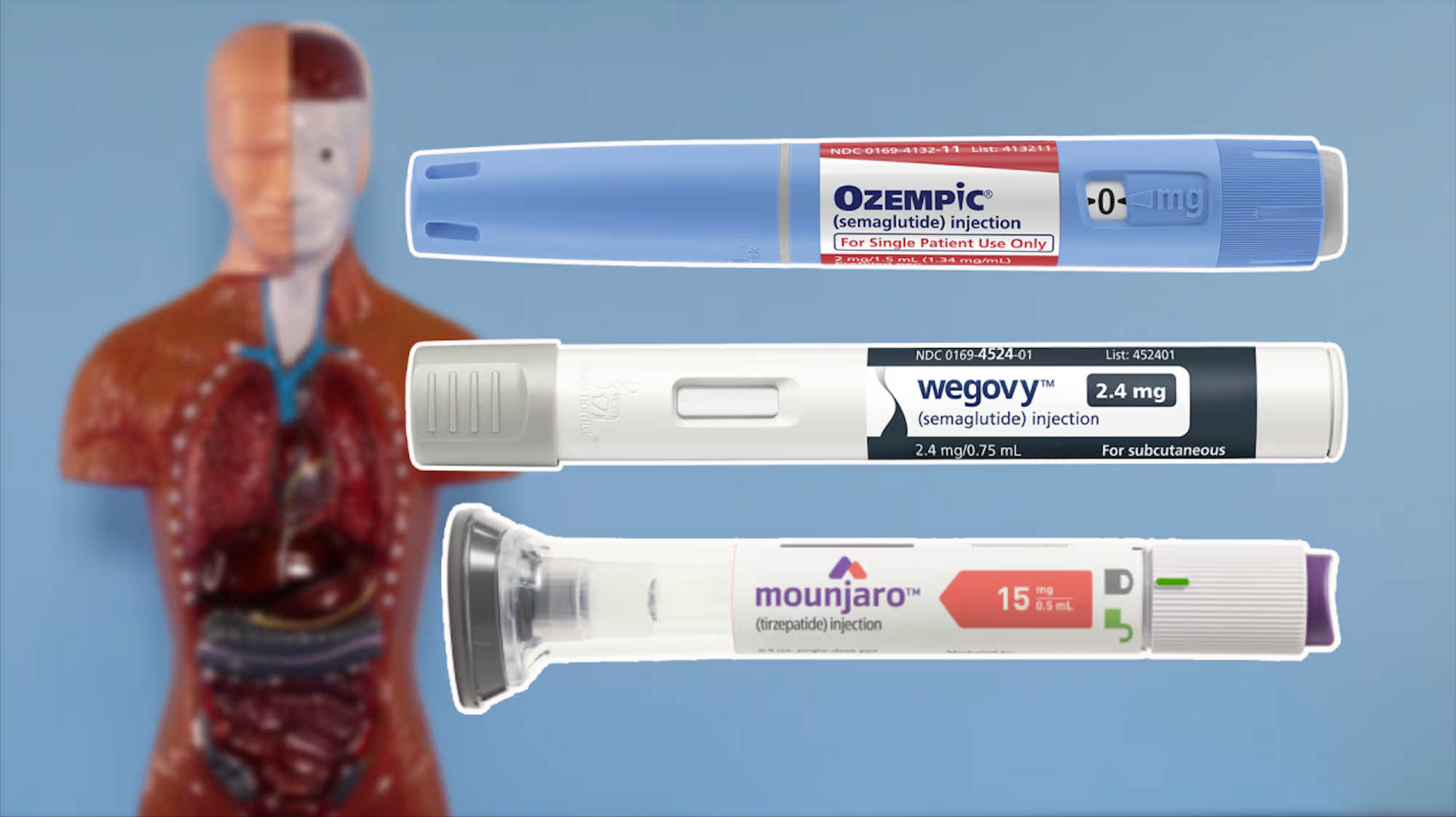
The makers of Ozempic, Wegovy and Mounjaro are confronting a growing wave of lawsuits from patients who allege the widely used diabetes and weight-management medications caused a rare form of sudden vision loss and that the drug companies failed to adequately warn users about the potential risk.

The federal litigation has expanded substantially. As of September 1, 2026, the U.S. Judicial Panel on Multidistrict Litigation reported 216 pending actions in a proceeding devoted specifically to non-arteritic anterior ischemic optic neuropathy, or NAION, before U.S. District Judge Karen S. Marston in the Eastern District of Pennsylvania. The 216 figure covers the centralized federal litigation and does not include every case pending separately in state courts.
The federal proceeding includes claims involving Ozempic and Wegovy, made by Novo Nordisk, as well as Mounjaro, made by Eli Lilly. Other products named in the litigation include Rybelsus, Saxenda, Trulicity and Zepbound. Plaintiffs allege they developed NAION after taking one or more of the medications and have asserted claims including failure to warn, defective design and breach of warranty. Those allegations have not been proven, and the consolidation of the lawsuits does not constitute a finding that any of the medications caused the patients' injuries.
Judge Marston in July ordered early discovery and motion practice focused on two issues that could shape the litigation: whether the drugs are capable of causing NAION generally, and questions involving federal preemption and the adequacy of the manufacturers' warnings. In other words, one of the central disputes now before the court is the same question at the center of the public-health debate — whether the scientific evidence establishes a causal relationship and, if so, whether patients should have been warned differently.
NAION occurs when blood flow to the front portion of the optic nerve is reduced, producing sudden and typically painless loss of vision, usually in one eye. The damage can be permanent, and there is currently no established treatment that reliably restores the lost vision. The World Health Organization has described NAION as a serious but very rare adverse event associated with semaglutide, the active ingredient in Ozempic and Wegovy.
The issue is especially significant because of the enormous and still-growing use of GLP-1-based medications for type 2 diabetes and obesity. Ozempic and Wegovy contain semaglutide, while Mounjaro contains tirzepatide, which acts on both the GIP and GLP-1 receptors. The drugs have demonstrated important benefits for appropriately selected patients, meaning the emerging vision-loss concern is being evaluated against substantial evidence of benefit rather than in isolation.
FDA Is Investigating, but U.S. Labels Still Do Not Specifically Warn About NAION
The U.S. Food and Drug Administration has formally identified NAION as a potential safety signal for the GLP-1 drug class. Its list specifically includes Ozempic, Wegovy and Mounjaro, among other medications, and the agency says it is “evaluating the need for regulatory action.” An FDA Sentinel study designed to investigate the possible relationship remains listed as in progress.
Yet NAION is not presently identified as a specific risk in the warnings and precautions sections of the current U.S. prescribing information reviewed for Ozempic, Wegovy or Mounjaro. Ozempic and Wegovy labels do contain warnings involving diabetic retinopathy complications, which are distinct from NAION, and Mounjaro's current label likewise addresses diabetic retinopathy in patients with a prior history of the condition.
That distinction is central to the lawsuits. The plaintiffs contend that manufacturers had sufficient information to provide a specific NAION warning sooner. Novo Nordisk and Eli Lilly dispute the allegations. Novo told ABC News that it considers the U.S. personal-injury lawsuits to be without merit and is defending them, while Lilly said it continually evaluates and reports safety information to the FDA and is reviewing data involving ophthalmic issues.
Other Countries Have Already Changed Their Warnings
Regulators outside the United States have moved further.
After reviewing clinical trials, post-marketing reports and medical literature, the European Medicines Agency concluded in 2025 that NAION should be classified as a very rare side effect of semaglutide, potentially affecting up to one in 10,000 users. WHO subsequently issued an alert involving Ozempic, Wegovy and Rybelsus.
Britain's Medicines and Healthcare products Regulatory Agency followed in February 2026, updating semaglutide product information and advising that patients who experience sudden loss of vision or rapidly worsening eyesight should receive urgent ophthalmological evaluation.
Australia went further in July, announcing updated warnings across the GLP-1 class because of the potential for rare but severe NAION. Its action covers Ozempic, Wegovy and Mounjaro, among other drugs. Australia's regulator separately reported that Mounjaro's product information had been updated to state that NAION events had been reported in patients treated with products having GLP-1 receptor activity.
The Science Remains Mixed
The evidence has not produced a uniform answer.
A Danish-Norwegian study published in 2025 found that semaglutide use among patients with type 2 diabetes was associated with a higher rate of NAION compared with another class of diabetes medication. Researchers calculated an adjusted hazard ratio of 2.81, but the absolute difference was only about 1.4 additional cases per 10,000 person-years, underscoring how uncommon the condition remained.
A large multicenter study published in JAMA Ophthalmology, drawing on databases containing 37.1 million adults with type 2 diabetes, also found evidence of a small increased incidence associated with semaglutide, but several comparisons with other diabetes drugs did not reach statistical significance. The researchers said their results supported further investigation rather than establishing causation.
More recent reviews have underscored the uncertainty. A 2026 systematic review and meta-analysis involving nearly 4.9 million people concluded that the pooled evidence did not demonstrate a consistent overall increase in NAION with semaglutide. Researchers rated much of the evidence as low or very low certainty because of differences among the studies, possible confounding and other limitations, and said causation could not be established.
Evidence involving tirzepatide, the ingredient in Mounjaro, is even less settled. A 2025 JAMA Network Open study grouped patients using either semaglutide or tirzepatide and found NAION in 0.04 percent of treated patients over two years, compared with 0.02 percent among matched patients taking other diabetes drugs. The study found an association, but because the two medications were analyzed together, it did not establish that Mounjaro itself causes NAION.
Why the Issue Matters in the Virgin Islands
The developing safety question has particular relevance in the U.S. Virgin Islands because diabetes and obesity — two of the principal conditions for which these medications are prescribed — affect a substantial share of the territory's adult population.
A CDC analysis of 2021-2022 Virgin Islands Behavioral Risk Factor Surveillance System data estimated adult diabetes prevalence at approximately 16 percent territory-wide. The model estimated prevalence at 16 percent on St. Croix, 17 percent on St. Thomas and Water Island, and 9 percent on St. John, with considerable variation among individual subdistricts.
More recent CDC data show that in 2024 the Virgin Islands was among the U.S. jurisdictions where 35 percent to less than 40 percent of adults had obesity, based on self-reported height and weight. Those statistics do not establish how many Virgin Islanders currently take Ozempic, Wegovy, Mounjaro or related medications, but they demonstrate that the conditions driving demand for the drugs are widespread locally.
For Virgin Islands patients already taking one of the medications, the existence of the lawsuits does not establish that they will develop NAION, nor does the current scientific evidence support abruptly discontinuing a prescribed medication solely because litigation has been filed. Medical specialists interviewed by ABC News advised patients taking the drugs without vision symptoms to continue following their physicians' instructions while discussing any concerns with their healthcare providers. Regulators in Europe, Britain and Australia advise that sudden, painless loss of vision or rapidly worsening eyesight should receive urgent medical evaluation.