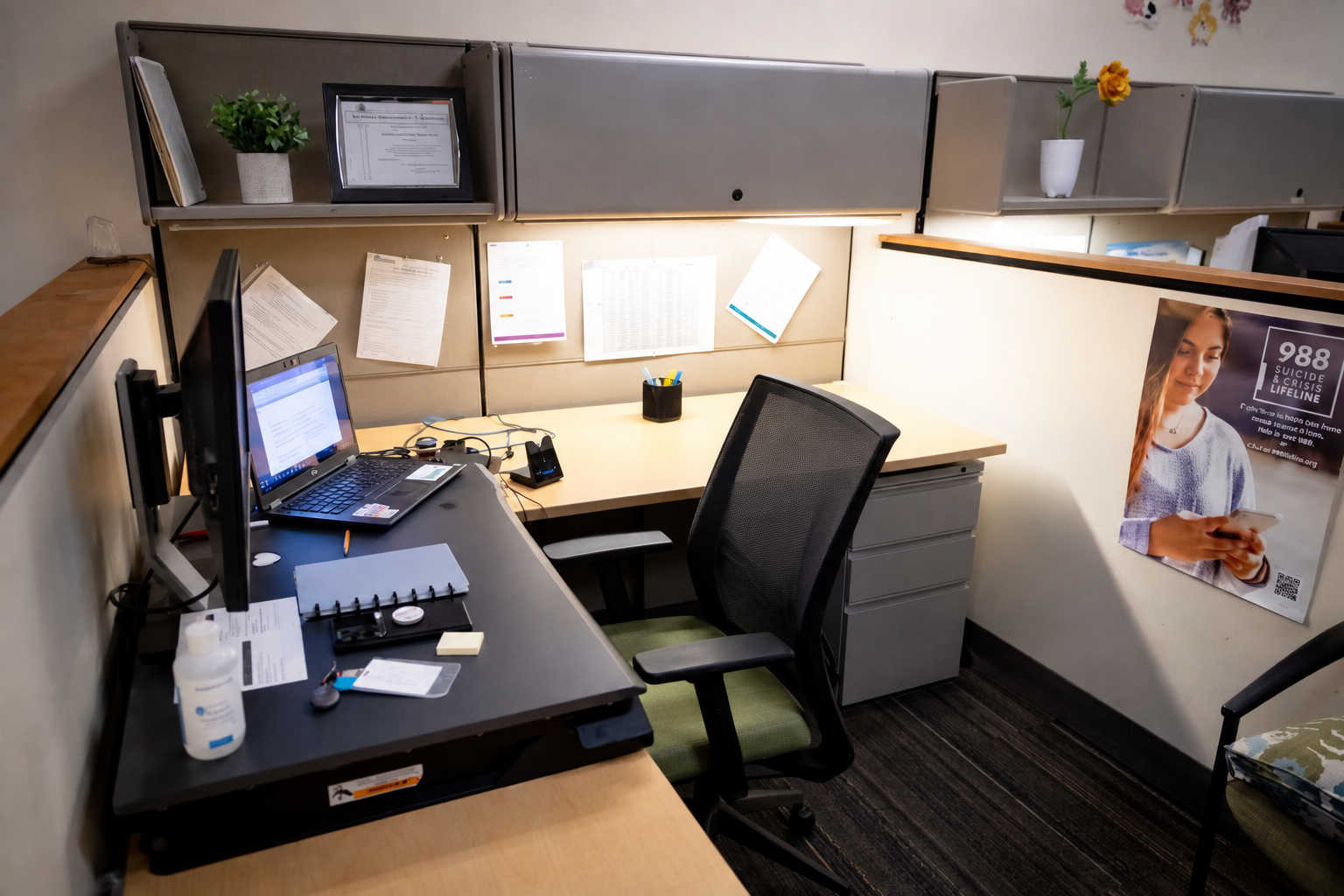
The V.I. Department of Health has received a new $582,969 federal award to strengthen the territory's 988 crisis-response system, with federal records identifying continuing needs involving behavioral-health staffing, after-hours crisis response, referrals and follow-up, coordination between 911 and 988, and performance monitoring.

The Substance Abuse and Mental Health Services Administration recorded the award on September 7 — one day before the territory formally launched its dedicated 988 crisis call center and ended its reliance on the national backup network for locally originating calls and texts.
The new award, listed under the federal government's "988 State and Territory Local Capacity Building" program, begins a three-year project period on September 30 and runs through September 29, 2029. Federal grant records classify the $582,969 as a new Budget Year 1 award. Future continuation funding under the program is contingent on federal funding availability, progress toward project goals, reporting and compliance requirements.
The timing also marks a transition from the federal funding that helped build the territory's 988 system in the first place. The Consortium reported earlier this month that DOH had received approximately $1.29 million through a separate SAMHSA cooperative agreement beginning in September 2023. That grant expires September 29 — one day before the new capacity-building project begins.
Under the earlier award, DOH received $634,202 in 2023, another $634,202 through federal funding actions in 2024 and a $25,000 expansion award in 2025. Those funds supported the territory's years-long effort to improve its response to 988 calls, texts and chats and ultimately establish a dedicated crisis center serving Virgin Islands residents.
The newly awarded money is aimed at the next stage of that system.
According to the federal project description submitted for the new award, DOH's Behavioral Health Division plans to use the funding to strengthen 988 infrastructure and improve coordinated behavioral-health crisis services across St. Croix, St. Thomas and St. John.
The project description identifies several areas that remain in need of improvement, including limited behavioral-health staffing, insufficient after-hours crisis response, inconsistent referral and follow-up procedures, limited coordination between the 911 and 988 systems, inadequate performance-monitoring infrastructure, and broader geographic and workforce challenges associated with serving the territory.
Those descriptions represent needs identified in connection with DOH's federally funded project rather than findings from an independent federal audit. They nevertheless provide a more detailed picture of the work that remains as the territory moves beyond simply establishing a local 988 call center and toward building a broader crisis-response network around it.
The grant identifies five primary goals: strengthening the 988 workforce and response capacity; improving referrals, follow-up and continuity of care; strengthening coordination among 911, 988, healthcare providers, behavioral-health services and public-safety agencies; establishing quality-assurance and performance-monitoring systems; and building a sustainable territorial behavioral-health crisis system.
Planned activities include assessing the behavioral-health workforce, developing recruitment and retention strategies, providing specialized crisis-response training, establishing standardized follow-up and "warm handoff" procedures, creating a centralized inventory of behavioral-health resources and developing formal interagency coordination procedures.
DOH also proposes establishing continuous quality-improvement processes along with procedures for performance monitoring, review of serious incidents and cybersecurity. Federal records say the department will track measures including workforce development, 988 response capacity, referral completion, follow-up engagement, coordination among partner agencies, service utilization and system performance.
Some of those priorities overlap directly with issues discussed publicly when the local 988 center went live on September 8.
The new center, operated through an agreement with Protocol Services Inc., now allows Virgin Islanders calling or texting 988 to reach a dedicated service for the territory instead of being routed to national backup centers. Health officials said the service is designed to assist people experiencing emotional distress, mental-health or substance-use concerns, suicidal thoughts, or concern about someone else.
However, officials acknowledged during the launch that the direct connection between 988 and the territory's 911 emergency-response system was still under development.
Deputy Health Commissioner Renan Steele said DOH and the V.I. Territorial Emergency Management Agency were working on protocols governing transfers when a person contacting 988 requires immediate emergency assistance.
“We will be developing the protocols that will guide those handoffs, and we will not consider that connection fully operational until the process has been fully tested,” Mr. Steele said at the September 8 launch.
The new federal grant specifically identifies improved integration between 911 and 988 as one of its central objectives. It also calls for stronger coordination with healthcare providers, behavioral-health agencies and public-safety partners, along with standardized procedures for follow-up and continuity of care after an initial crisis contact.
The federal description also ties the initiative to Act No. 8957, the Virgin Islands law establishing the territory's 988 framework, Crisis Intervention Team structure, interagency responsibilities and 988 Trust Fund. The law created a dedicated funding mechanism intended to help sustain crisis services locally rather than relying indefinitely on federal grants.
Nationally, the Virgin Islands award is part of a broader round of federal investment in 988 and behavioral-health services. The U.S. Department of Health and Human Services announced on September 8 that approximately $205.8 million was being awarded through the state and territory local-capacity program to improve responses to 988 calls, chats and texts and strengthen services for people at increased risk of suicide and overdose.
For the Virgin Islands, the latest grant begins just as the territory reaches a significant milestone: residents now have a dedicated 988 service, but the federal funding plan shows that launching the center is only one part of the broader effort.
The next phase will focus on whether the territory can build the staffing, after-hours response, emergency-system coordination, referral networks, follow-up procedures and accountability infrastructure necessary to turn the new local call center into a fully integrated behavioral-health crisis-response system.