




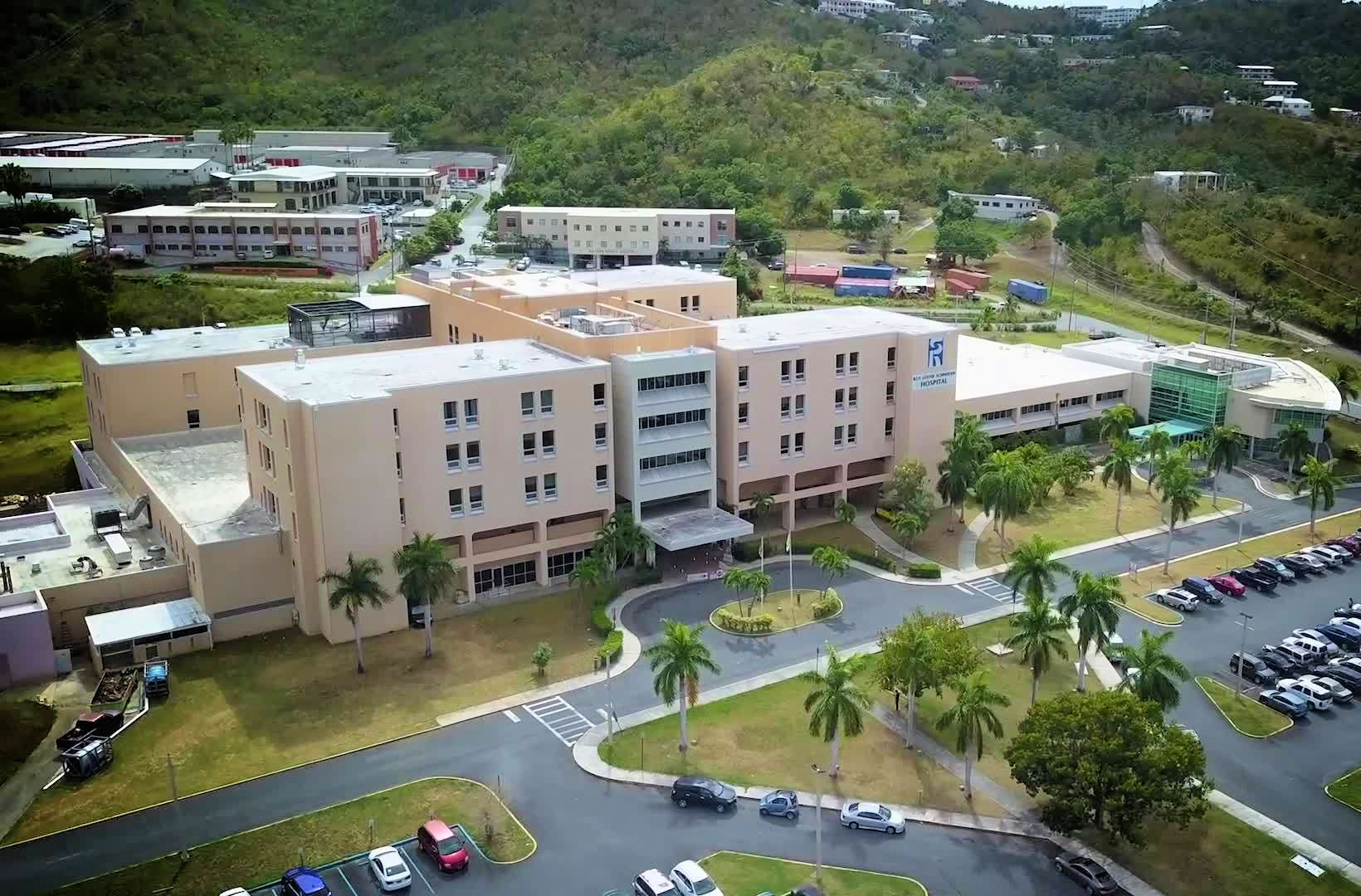
Patients who no longer require hospitalization but have nowhere else to go are continuing to occupy costly hospital beds in the Virgin Islands, prompting Health Commissioner Justa Encarnacion to call for more frequent coordination among the hospitals, Human Services and long-term care providers as nursing-home capacity remains limited.

The issue emerged Wednesday during a meeting of the Government Hospitals and Health Facilities Corporation board, where officials revisited the territory’s uncompensated-care burden but also focused on the difficulty of discharging long-stay patients who no longer need acute hospital care.
“Those are conversations I think we’ve been having over and over again with the Department of Human Services,” Ms. Encarnacion said. “Everyone right now is challenged in terms of having to open rooms up at the nursing homes that we have,” she continued.
The commissioner suggested more regular meetings among the agencies and institutions involved so that updated information can be shared and potential placements addressed more quickly.

Apart from the pressure on available hospital beds, Ms. Encarnacion noted that caring for patients in other long-term settings is itself expensive.
“The costs of care is actually expensive,” she said.
She suggested that greater outreach to relatives could help in some cases by encouraging families to assume a larger role in caring for patients who no longer require hospitalization.
“See if we could create a different mentality of caring for those that we have that have been hospitalized,” Ms. Encarnacion said. “Some of them have families, some of them don’t, and so maybe we need to try to change our culture from that perspective,” she opined.
The discussion took place against the broader financial challenge of uncompensated care at Schneider Regional Medical Center and Juan F. Luis Hospital. Chief Executive Officer Darlene Baptiste said the two facilities are projecting “a total of $93.6 million, which accounts for about 48.7% of our budget. That’s projected for fiscal year 2027.”
Those figures were previously presented by Ms. Baptiste earlier this month during testimony before the Senate Committee on Budget, Appropriations and Finance, when lawmakers examined hospital billing, collections and other financial pressures.
Some of the uncompensated-care balance accumulated before 2023 has since been written off as bad debt. The hospitals have also begun sending bills directly to patients responsible for paying their own accounts.
“We started off with 2026 fiscal year, and we are working our way back 2025 and then 2024,” said Kenisha Angol, director of financial services for SRMC.
Additional amounts could potentially be recovered if Medicaid undercompensation is addressed, but officials do not yet know when that could happen or how much the territory’s healthcare facilities might ultimately receive.
Ms. Encarnacion said the magnitude of the uncompensated-care burden makes more frequent monitoring necessary.
“I think that on a monthly basis we need to look at the cost…and that would give us a good vantage point as to where [we are].”
She asked Ms. Baptiste to return to the next territorial hospital board meeting with additional data on uncompensated care so board members can examine trends and develop a clearer understanding of how the situation is changing.

“This is something that we definitely need to work on,” Ms. Encarnacion said.