
Federal funding requests submitted on behalf of the Virgin Islands' two public hospitals reveal significant gaps in diagnostic services, including the absence of an MRI scanner at the Juan F. Luis Hospital on St. Croix and the lack of PET/CT cancer imaging equipment anywhere in the territory.

The disclosures appear in fiscal year 2027 Community Project Funding requests submitted to Congress by then-Delegate Stacey Plaskett, who sought federal assistance for medical equipment and infrastructure improvements at JFL and Schneider Regional Medical Center.
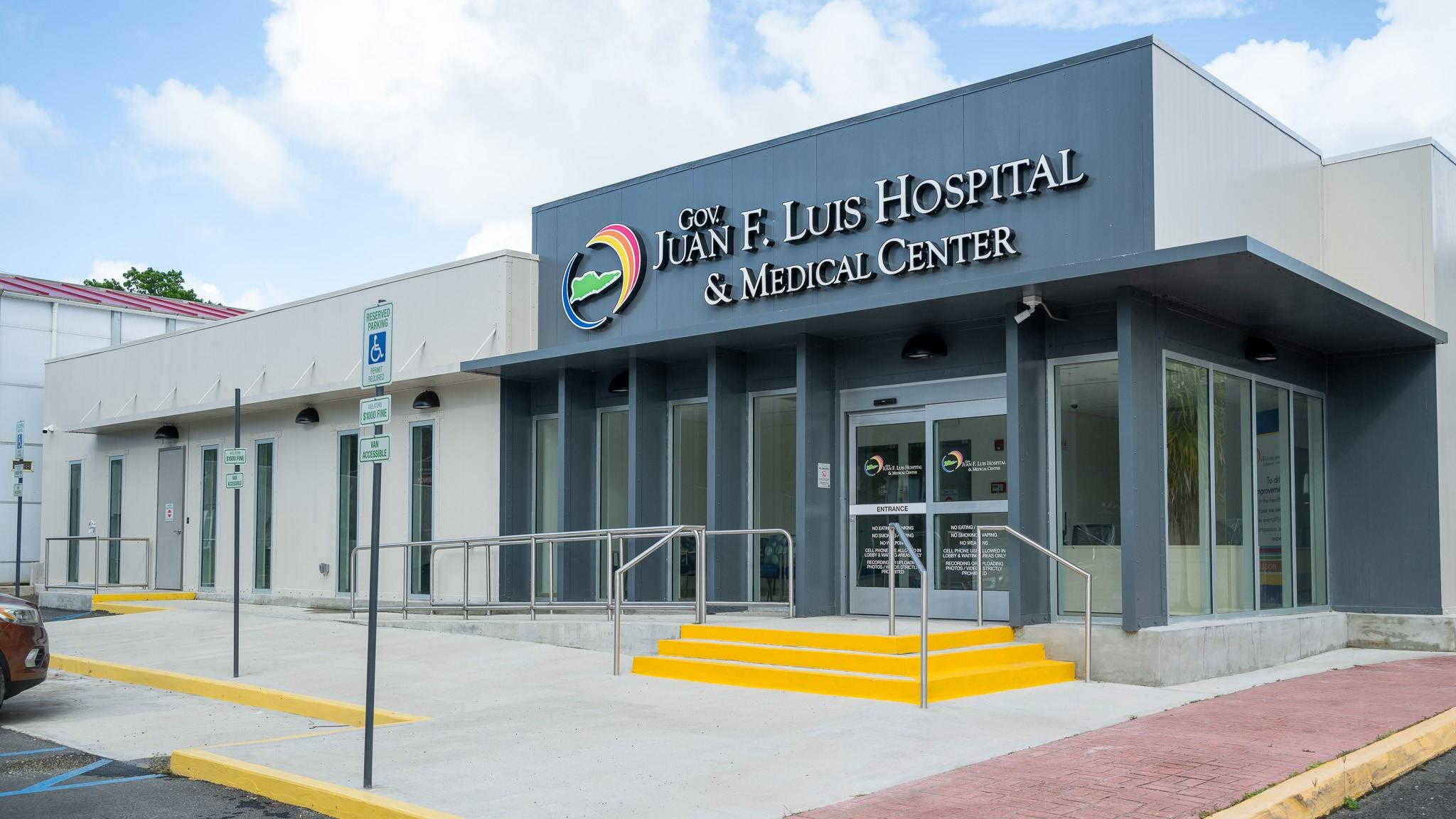
According to the official funding submissions, JFL requested $3 million to purchase and install a 3.0 Tesla magnetic resonance imaging system.
The application states that despite operating as St. Croix's only acute-care hospital, JFL does not have an MRI scanner on its premises.

When hospitalized patients require MRI examinations, they must be transferred to a private imaging facility elsewhere on the island, a process the funding request says can delay diagnoses, increase costs and complicate emergency and inpatient treatment.
The requested MRI system would provide advanced imaging capabilities used in evaluating neurological conditions, cancers, cardiovascular problems and musculoskeletal injuries.
Cancer Patients Must Travel Off-Island for PET/CT Imaging
The situation is different for PET/CT imaging, which is not available anywhere in the Virgin Islands, according to the congressional funding documents.
Schneider Regional Medical Center requested $2 million to purchase a PET/CT scanner for the Charlotte Kimelman Cancer Institute on St. Thomas, describing the equipment as an essential component of advanced cancer diagnosis and treatment.
PET/CT combines positron emission tomography and computed tomography to help physicians detect cancer activity, determine how far a disease has spread, guide treatment decisions and monitor whether cancer has returned.
Without that capability locally, patients requiring the examination must travel to Puerto Rico or the continental United States.
The application states that those trips create delays in diagnosis and treatment planning, along with additional financial and emotional burdens for patients and their families.
The proposed equipment would establish the territory's first local PET/CT imaging service, potentially reducing the need for patients to leave the islands for that specific procedure.
Schneider Seeks Emergency and Laboratory Equipment
Beyond the two major imaging projects, Schneider sought another $2 million for emergency medical equipment and laboratory upgrades.
A $1.05 million request proposed purchasing 16 ZOLL X Series defibrillators, three Abbott i-STAT blood analyzers, 15 patient transport stretchers, 30 stretcher mattresses and telemedicine equipment.
The hospital said the purchases would strengthen emergency response, allow faster bedside diagnostic testing and improve access to remote specialty consultations.
A separate $950,000 request would replace aging laboratory equipment and expand testing capabilities in microbiology, pathology, blood banking and routine clinical diagnostics.
The application says the upgrades would reduce the number of specimens that must be sent outside the territory for testing and improve turnaround times for critical results.
The proposed purchases reflect broader equipment and infrastructure needs at the hospitals.
During March 24 testimony before the V.I. Legislature, hospital chief executive Darlene Baptiste disclosed that JFL and Schneider had submitted approximately $13.6 million in federal funding proposals covering medical equipment and infrastructure.
Those proposals included imaging systems, operating room equipment, anesthesia systems and laboratory improvements.
House Funding Proposals fall Short of Requests
Although the four hospital projects collectively sought $7 million, the amounts announced for inclusion in the House appropriations proposals were substantially lower.
In a June 9 announcement, Ms. Plaskett reported that $750,000 had been included for JFL's MRI project, compared with the original $3 million request.
Schneider's three projects, which initially sought a combined $4 million, were listed for a combined $2 million.
The result was $2.75 million in proposed federal funding for projects originally seeking $7 million, a difference of $4.25 million.
The proposed appropriations do not establish how the hospitals would cover the remaining costs, whether the projects could proceed in phases, or whether other financial resources would be used.
They also do not constitute final federal awards.
The congressional funding process requires additional legislative action, including approval of the relevant spending measures, before money can become available.
The documents nevertheless provide a detailed account of equipment needs identified by both hospitals, particularly the absence of advanced diagnostic capabilities that many mainland medical facilities routinely provide.

They also raise questions about the timeline for acquiring the equipment, how the hospitals intend to finance any shortfall, and when patients could begin receiving the proposed services locally.