
The territory’s public hospitals have gone months without their regular government allotments or Medicaid payments, forcing administrators to defer vendor payments, equipment purchases and maintenance even as revenue collections improve, hospital board chairman Dr. Jerry Smith told lawmakers Tuesday.

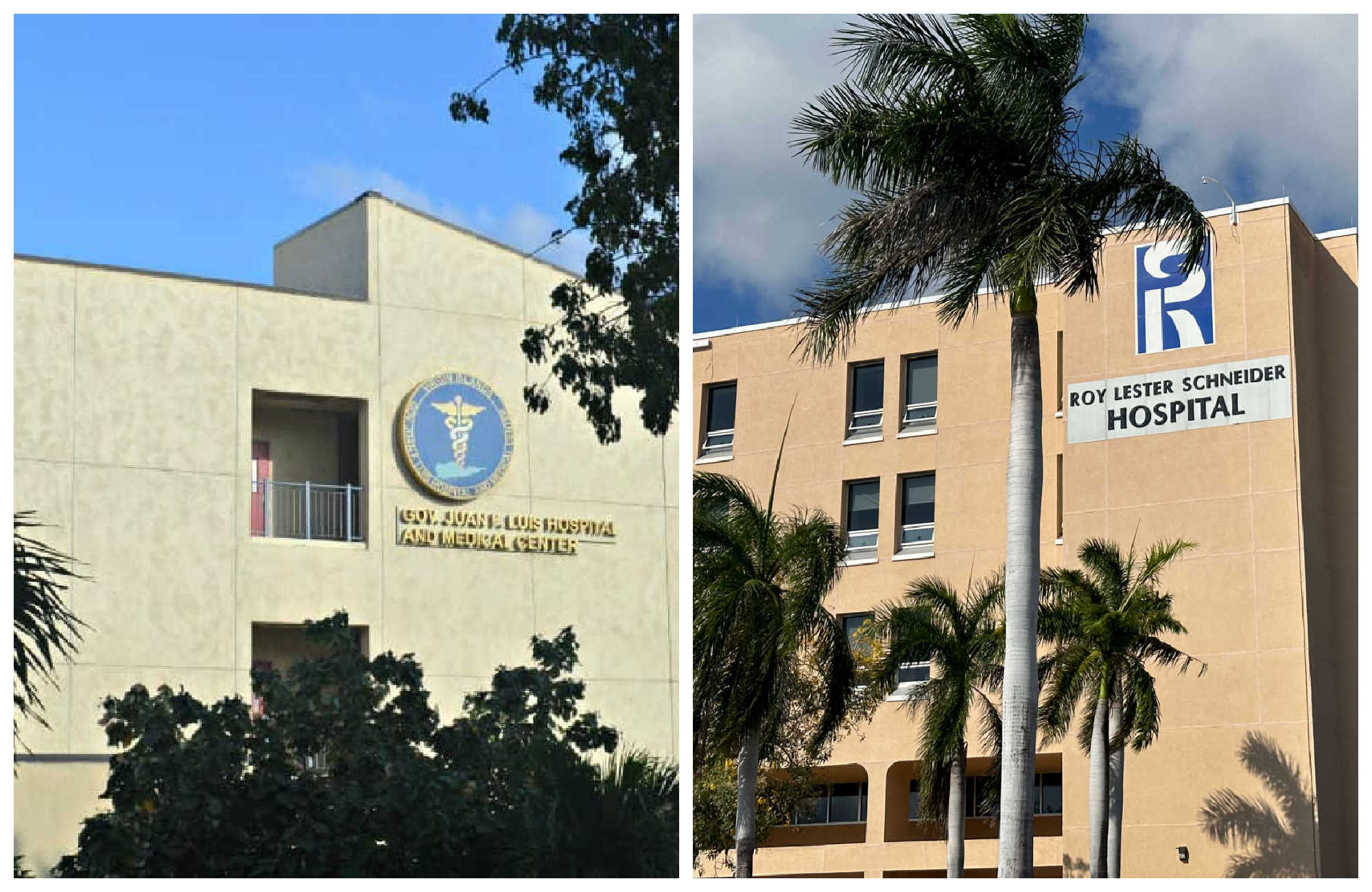
Appearing before the Committee on Health, Hospitals, and Human Services, Dr. Smith said Schneider Regional Medical Center had not received its $1.2 million monthly allotment since July, while the Governor Juan F. Luis Hospital and Medical Center had not received its $800,000 monthly allocation since August. Neither hospital had received Medicaid payments since July, he said, leaving millions of dollars in outstanding receivables.
Government agencies separately owe the hospitals approximately $5.3 million for services, including $3.4 million attributed to the Bureau of Corrections, according to his testimony.
Dr. Smith, who chairs the V.I. Government Hospitals and Health Facilities Corporation board, said improved collections had allowed the facilities to continue meeting payroll and purchasing basic supplies. That ability, however, has not resolved their other obligations.
“It means that management has been forced to make difficult decisions about which obligations can be satisfied and which must be deferred,” he said.
Senator Kurt Vialet challenged why questions about the release of government funding remained unresolved when the Office of Management and Budget director serves on one of the corporation’s subcommittees.
Referring to questions in Dr. Smith’s testimony, including why appropriated funds were not being released consistently, Vialet responded: “The answer to the ‘why’ sits on the board.”
Dr. Smith maintained that any assessment of the hospitals’ unpaid obligations must also account for money owed to them. He described a “healthcare financing structure that continues to deprive the institutions of the cash necessary to translate improved financial performance into visible operational improvements.”
His testimony identified approximately $965,000 in realized savings through consolidation of executive leadership, reductions in administrative duplication, other mergers and terminated service contracts.
Dr. Smith also pushed back against claims that the hospitals were simply failing to bill patients and collect revenue. While acknowledging room for improvement, he credited Firstsource and the hospitals’ financial and administrative teams with strengthening billing, claims management and collections.
Monthly collections at JFL increased from $1.1 million to $2.7 million following the ransomware attack, he said, while Schneider’s collections increased from $3.8 million to $4.6 million.
Improvements in collections have been part of the hospitals’ financial recovery efforts for months. During an August budget hearing, officials had already reported approximately $2.7 million in average monthly collections at JFL. That hearing also identified billing backlogs, delayed entry of physician charges and documentation problems requiring further attention.
For Dr. Smith, the question now extends beyond whether bills are being issued to whether the entities responsible for paying them are doing so. Meanwhile, vendors continue to face payment delays, equipment needs remain unmet, maintenance is deferred and opportunities to improve staff compensation remain constrained, he said.
Medicaid presents additional reimbursement problems beyond the delayed payments. Dr. Smith said the hospitals have repeatedly sought a State Plan Amendment or other changes that would establish an appropriate mechanism for separately billing professional services provided by physicians employed directly by the institutions.
The hospitals also pay temporary physicians, known as locum tenens, but encounter barriers to obtaining separate professional-fee reimbursement under existing Medicaid arrangements, he said.
Vialet questioned whether the corporation had formally submitted its request to the Department of Human Services. Dr. Smith said it had not, maintaining that “no formal request is required” and that the issue had been discussed repeatedly in meetings.
The senator urged him to put the request in writing and involve the governor.
“You write it, you copy the governor. The governor has a meeting with his cabinet. You copy everybody that need to be copied because it hasn't been done,” Vialet said.
Dr. Smith also cited a decline in Medicaid enrollment from 37,092 in 2022 to 16,350 in 2026, warning of potential increases in uncompensated care as fewer residents have coverage.
Another continuing burden is the cost of caring for boarders — patients who no longer require acute hospital treatment but cannot be safely discharged because an appropriate placement is unavailable.
Dr. Smith put the financial impact of boarder care at approximately $16.2 million across the two hospitals in fiscal year 2025. As of Tuesday, each hospital had 15 boarders, he said.
The situation had deteriorated to the point that patients awaiting placement were occupying beds in emergency departments, Dr. Smith told the committee. He warned that the number could increase further as Christmas approaches.
The figures follow last week’s warning from JFL officials that boarders were contributing to longer emergency room waits. At that time, CEO Darlene Baptiste reported that their number had risen from five to 12 over the preceding month, occupying nearly a quarter of the hospital’s 52 beds.
Resolving the placement problem requires coordinated action by Human Services, the Department of Health and other government and community partners, Dr. Smith said.
He also urged the government to examine whether its employee and retiree health insurance program could better support the public hospitals by encouraging beneficiaries to use services already available locally. Appropriate incentives could increase hospital revenue and improve the return on public healthcare spending, he argued.
Dr. Smith separately questioned whether the Certificate of Need process adequately considers the effect on public hospitals when private providers receive authorization to offer services the hospitals already provide.

“We can spend considerable time examining the consequences of financial distress, but unless we address its underlying causes, we will continue to return to these chambers discussing the same problems,” he said.