




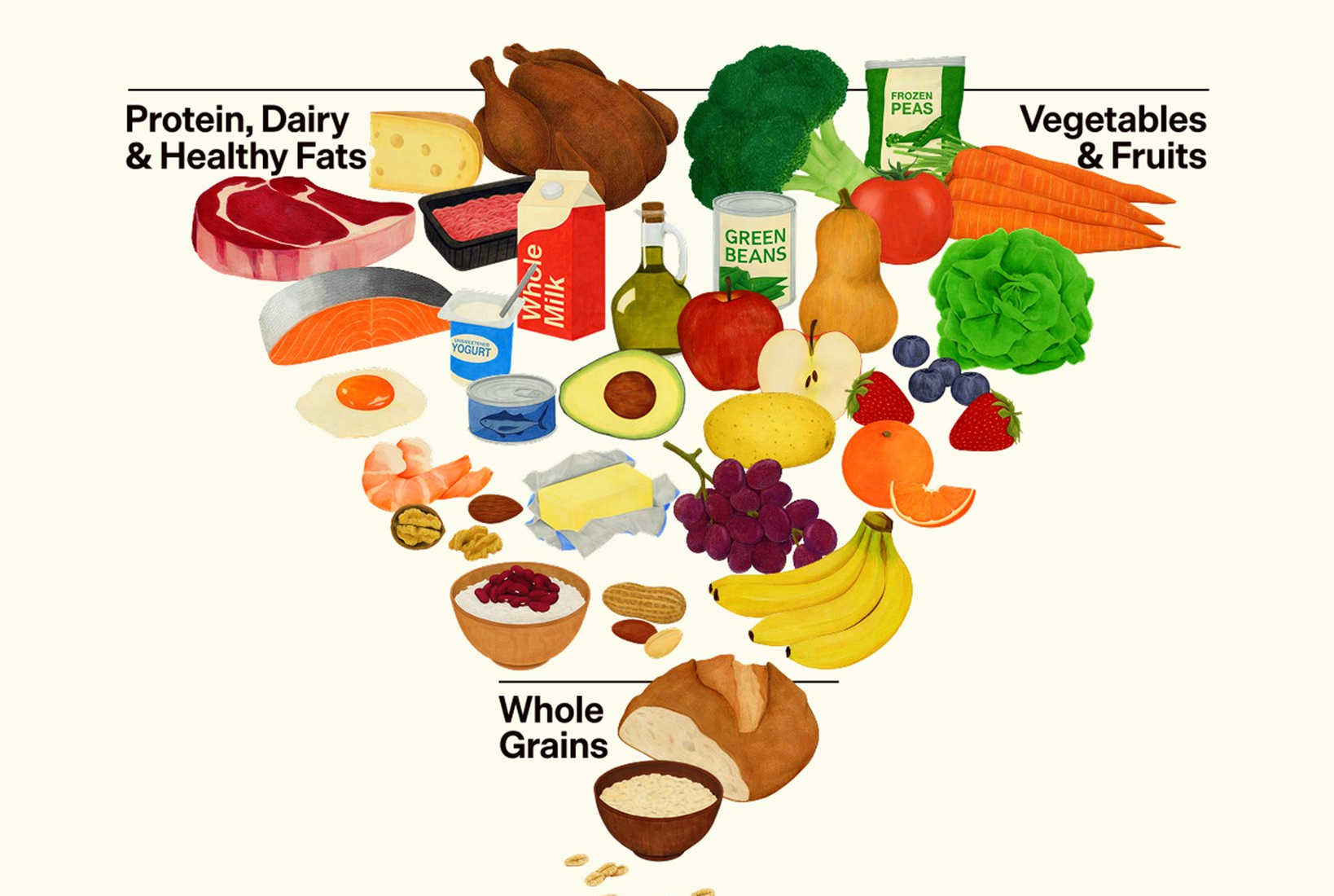
The U.S. Department of Health and Human Services on Wednesday introduced a revised food pyramid that places greater emphasis on whole foods, reduced sugar intake, hydration, and physical activity, marking a shift from the previous MyPlate model as federal officials seek to address rising obesity and chronic disease rates.
The updated guidelines, developed in collaboration with the U.S. Department of Agriculture, restructure dietary priorities by recommending a foundation of vegetables and fruits, followed by proteins, grains, and dairy. Compared with earlier guidance, the new pyramid calls for a sharper reduction in processed foods and added sugars and incorporates personalized nutrition approaches rather than uniform recommendations.
HHS Secretary Robert F. Kennedy Jr. described the redesign as a “return to common-sense eating,” saying it centers on nutrient-dense foods to counter what he called “the toxic food environment” contributing to national health crises. Speaking at a press conference in Washington, D.C., Kennedy said the update draws on recent scientific reviews indicating benefits from diets rich in unprocessed meats, vegetables, and healthy fats, while limiting ultra-processed foods associated with diabetes and heart disease.
Kennedy also emphasized the pyramid’s flexibility, noting it allows for cultural and regional dietary preferences, including plant-based protein options. He said the guidance is being integrated into school lunch programs as part of an effort to improve childhood nutrition nationwide.

USDA Secretary Tom Vilsack said the revised framework is intended to provide Americans with “evidence-based tools” to support long-term health, rather than imposing what he characterized as one-size-fits-all mandates. He echoed the focus on empowering individuals to make informed choices over their lifetimes.
The new pyramid visually expands its base to include water intake and physical activity, highlighting hydration and exercise as foundational components of health. Officials said the guidance recommends at least 60 minutes of daily movement for adults. Federal health leaders cited data from the Centers for Disease Control and Prevention showing that adult obesity rates exceed 40 percent, a statistic they said helped drive the decision to prioritize prevention over treatment.
In addition to physical health, the updated guidelines incorporate mental health considerations, advising balanced meals to support cognitive function and mood stability. Officials said the approach reflects growing evidence linking nutrition to overall mental well-being.
HHS officials said the department plans to introduce educational resources, including mobile applications and school curricula, beginning in February to support adoption of the new guidance.

No immediate policy mandates accompany the release, leaving adoption voluntary for states and local governments. Congressional oversight committees are reviewing the scientific basis of the changes, with bipartisan interest in their potential to reduce long-term healthcare costs. The administration estimates that widespread adoption of the revised pyramid could prevent millions of chronic disease cases over the next decade.