
The U.S. Food and Drug Administration has intensified oversight at the start of 2026, issuing a wide range of food and dietary supplement recalls tied to contamination risks, undeclared allergens, and potential physical hazards.

As of February 5, the FDA’s alerts reflect concerns spanning microbial contamination, exposure to foreign objects, and labeling failures. The agency said the recalls, drawn from press releases and ongoing investigations, are intended to protect consumers. No widespread outbreaks have been reported beyond isolated cases, according to the FDA.
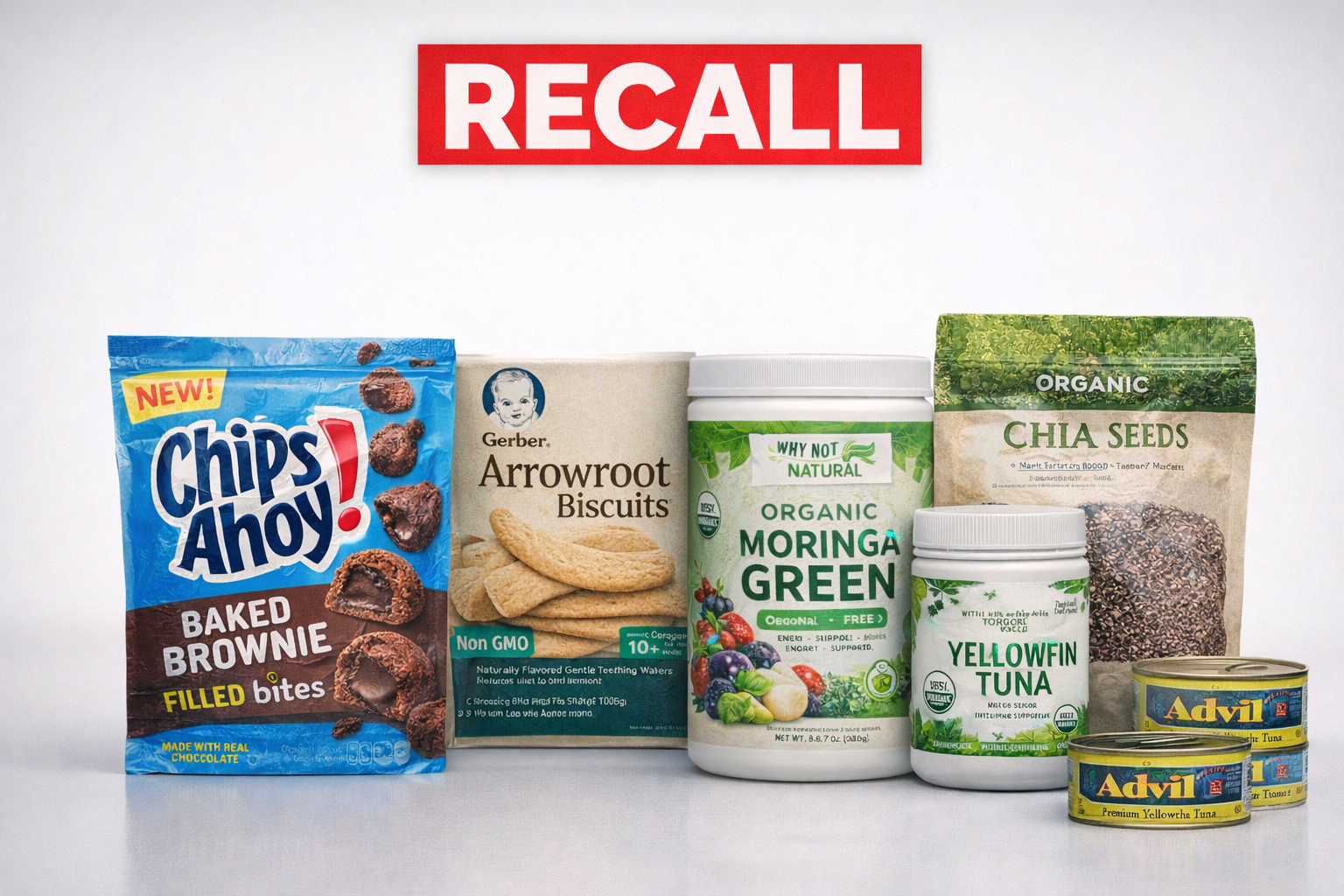
Among the most recent actions is a voluntary recall by Mondelez Global, announced on February 4, involving Chips Ahoy baked brownie bites. The company cited the possible presence of undisclosed hard pieces that could pose a choking hazard.
One of the most extensive recalls this year was announced in late January by Gold Star Distribution, affecting nearly 2,000 products. The FDA classified the recall as Class II after determining that items stored at a Minneapolis warehouse—including products such as Cheerios, Pringles, Gatorade, and Advil—were exposed to rodent and bird feces. The affected products were distributed in Minnesota, North Dakota, and Indiana, and consumers were urged to dispose of them immediately due to the risk of bacterial infection.

Salmonella contamination has been a recurring concern. The FDA is continuing its investigation into an outbreak linked to moringa leaf powder used in dietary supplements. An update issued February 5 reported 20 additional illnesses since mid-January, including cases involving a newly identified strain of Salmonella Newport.
In response, Why Not Natural recalled its Organic Moringa Green Superfood on January 28, warning consumers of symptoms such as fever and diarrhea, which can be especially dangerous for young children, older adults, and people with weakened immune systems.
Similarly, Live it Up Super Greens powders, in both original and wild berry flavors, were recalled on January 20 due to possible Salmonella contamination. The recall affects products with lot codes starting with “A” and expiration dates extending through 2028. At the time of the recall, no illnesses had been directly linked to the product, but the FDA advised consumers not to use it and to seek refunds.
On January 26, Gerber Products initiated a voluntary recall of limited batches of arrowroot biscuits after a supplier reported potential contamination with soft plastic or paper fragments. The products, manufactured between July and September 2025, were distributed nationwide. No injuries had been confirmed, but the FDA warned of possible ingestion hazards.
Undeclared allergens also prompted enforcement action. On January 28, Koikoi Trading recalled Fu Zhou fish balls after discovering the products contained undeclared wheat and sesame, which could trigger severe allergic reactions. The items were distributed in several states, including California and New York.
Additional recalls included organic chia seeds, withdrawn on January 23 due to Salmonella risk, and yellowfin tuna, recalled on January 19 over concerns related to Clostridium botulinum, the bacterium that can cause botulism.
Altogether, the FDA reported 19 recalls in January, with eight linked to foodborne pathogens. Consumers are being advised to review lot numbers posted on the FDA’s website and discard or return affected products.

While many of the recalls are precautionary, food safety experts note they demonstrate the scope of federal monitoring and the challenges of managing safety in a complex, global food system.