

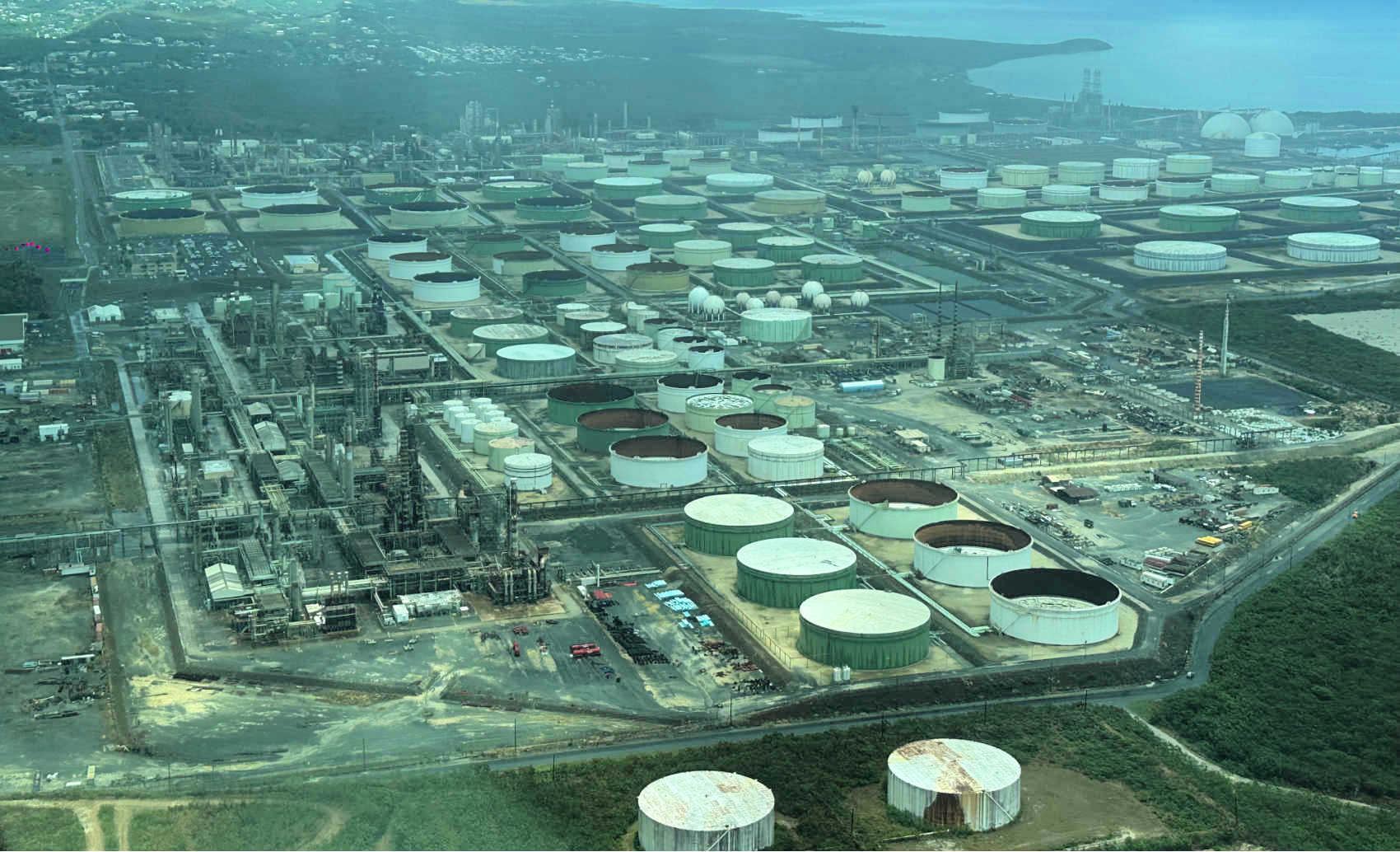
The U.S. Environmental Protection Agency has completed oversight of hazardous material removal operations at the Port Hamilton refinery on St. Croix, marking what officials describe as the final phase of required remediation under a 2024 legal agreement.

According to the EPA’s latest community update, Port Hamilton Refining and Transportation LLLP completed the removal of all remaining hazardous materials — primarily liquified petroleum gas (LPG) — from two LPG units at the refinery on January 21. The following day, January 22, residual vapors remaining in those units were destroyed using a thermal oxidizer.
In total, 16,493 gallons of hazardous material were transferred into three ISO containers and transported to the Container Port to await shipment off island. The three containers, along with any hazardous waste generated during the process, are scheduled to be shipped off island by the end of February 2026.
The removal actions were mandated under a 2024 Administrative Order on Consent between the EPA and Port Hamilton to ensure compliance with the Clean Air Act. Following the completion of field operations and air monitoring activities, EPA personnel demobilized from the facility by the end of January 2026, removing equipment, materials, temporary facilities, and staff from the work location.

EPA stated that this marks its final community update regarding the removal and destruction of remaining hazardous materials at the refinery.
The 2024 Administrative Order on Consent required Port Hamilton to implement measures for the safe removal of hazardous materials, including inspections, monitoring, and remediation activities focused specifically on two LPG units at the facility. In 2025, the EPA approved Port Hamilton’s work plans to carry out those removal operations.
Throughout the process, EPA conducted air quality monitoring at fixed stations within refinery areas during removal activities. EPA and its contractors also performed daily air assessments using portable monitoring devices capable of detecting mercury vapor, hydrogen sulfide (H2S), and volatile organic compounds (VOCs) at multiple locations across the site.
Mercury vapor, the gaseous and odorless form of mercury, can pose health risks when inhaled. Hydrogen sulfide gas, commonly associated with a “rotten egg” smell, can be highly toxic at elevated concentrations. Monitoring equipment also measured oxygen levels and the presence of explosive gases.
The air monitoring devices provided real-time data and alerted personnel to potentially hazardous conditions. EPA used these monitors to ensure that air quality levels remained below established safety thresholds intended to protect both workers and surrounding communities from potential exposure.
LPG, or liquified petroleum gas, is a category of flammable hydrocarbon gases that may include propane and butane. The hazardous materials removed from the refinery were stored in ISO containers, which are standardized shipping containers designed according to specifications set by the International Organization for Standardization.

With the removal and vapor destruction complete, and shipments scheduled to leave the territory by the end of February, EPA indicated that its required oversight activities related to these specific materials have concluded.