



People traveling by air from foreign countries to the U.S. Virgin Islands will be required to sign a declaration confirming they have not been in the Democratic Republic of the Congo during the preceding 21 days, under a new federal Ebola prevention measure taking effect early Wednesday.

The requirement, issued by the Centers for Disease Control and Prevention, applies to international flights entering any U.S. jurisdiction, including the Virgin Islands and Puerto Rico. It covers U.S. citizens, foreign nationals, lawful permanent residents, airline crews and individuals traveling aboard private or cargo aircraft.
The amended CDC order, published in the Federal Register on October 30, takes effect at 11:59 p.m. Eastern Standard Time on Tuesday, November 3, equivalent to 12:59 a.m. Wednesday in the Virgin Islands. It is scheduled to remain in effect through December 18, unless federal health officials modify or rescind it earlier.
The new requirement is intended to prevent the introduction of Ebola into the United States amid an outbreak of the disease in the Democratic Republic of the Congo. Although the declaration specifically concerns travel to that country, the requirement applies to people boarding flights to the United States from any foreign country, regardless of whether they have visited Africa.

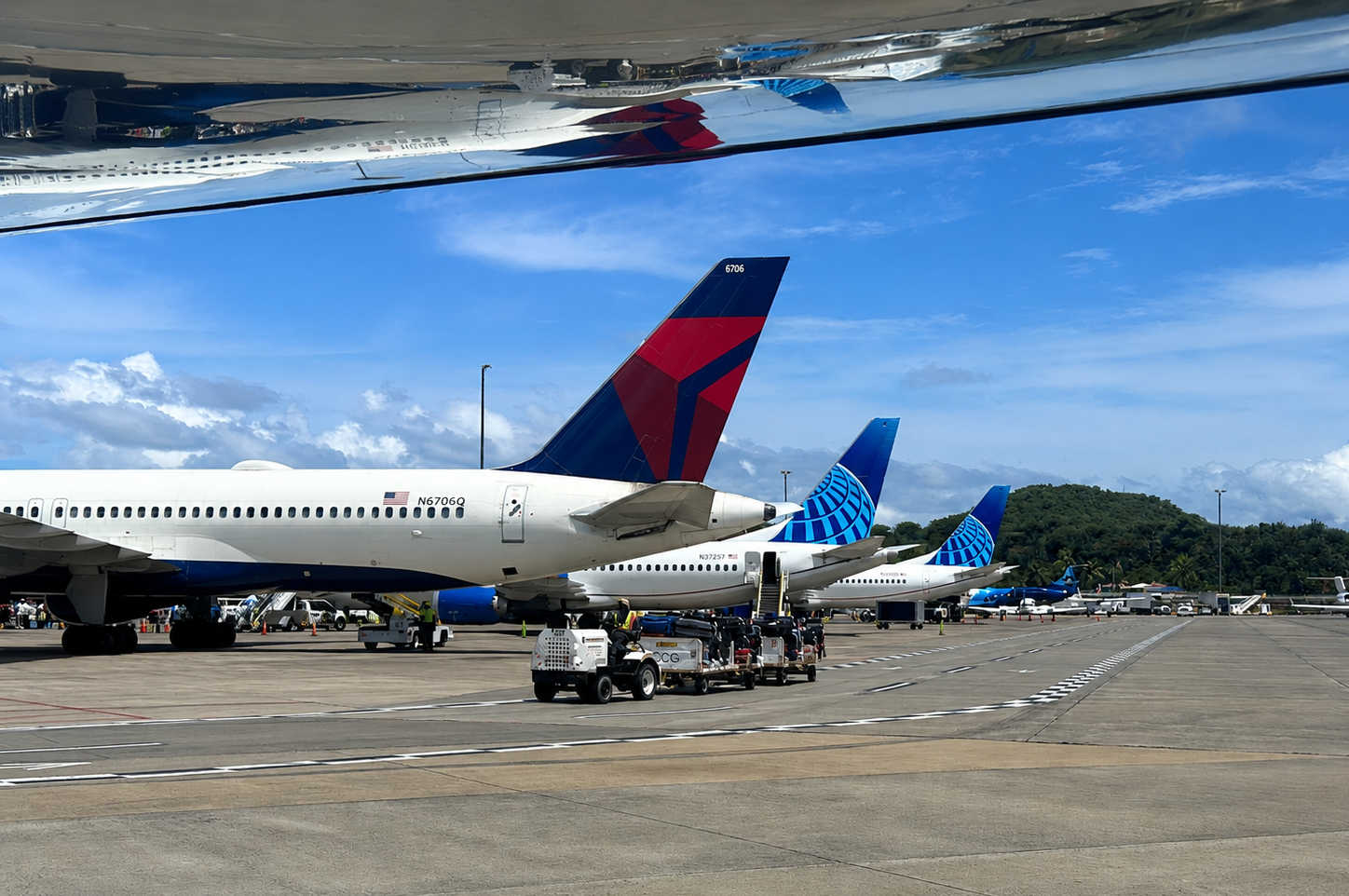
For the Virgin Islands, that means passengers flying directly into the territory from foreign Caribbean jurisdictions, including the neighboring British Virgin Islands, would be subject to the requirement. Travelers arriving on flights originating in Puerto Rico or the U.S. mainland would not be covered by this particular order because those locations are not classified as foreign countries under the regulation.
The CDC also confirmed that the declaration requirement does not apply to travelers arriving by sea. Consequently, passengers using ferry services between the British Virgin Islands and the USVI are not required to complete the declaration under this order, although other applicable travel and health requirements remain unaffected.
Airlines must collect declarations before boarding
Under the new procedures, airlines and other aircraft operators must verify that each covered passenger or crew member has completed and signed the required declaration before boarding.
The statement may be submitted electronically or on paper, allowing airlines to incorporate it into their existing check-in systems. Operators must retain copies for at least 42 days and make them available to the federal government upon request.
The CDC issued its original order on October 22 and amended it on October 28 to clarify that the requirement extends beyond passengers to aircraft crews, including individuals repositioning for future flights. Both commercial and private aircraft are covered, along with cargo operations.
A parent, guardian or other authorized representative may complete the declaration on behalf of a child younger than 18. Authorized representatives may also sign for individuals unable to complete the document themselves.
People who cannot provide the required declaration must be denied boarding unless they have received an applicable federal exemption. Knowingly submitting false information may also result in criminal penalties under federal law.
The CDC has established limited exceptions for certain humanitarian circumstances, including federally authorized medical evacuations.
Travelers who recently visited Congo face restrictions
While the declaration applies broadly to international air travelers, individuals who have actually been in the Democratic Republic of the Congo within the preceding 21 days face additional restrictions.
According to the CDC's updated travel guidance, those individuals, including American citizens, are prohibited from boarding flights to U.S. destinations until the required waiting period has passed.
The restriction also applies to travelers who merely connected through an airport in the Democratic Republic of the Congo, even if they never left the aircraft.
For purposes of calculating the waiting period, the day a person leaves the country is designated Day 0. The first full calendar day outside the country is Day 1, and eligible travel to the United States may resume on Day 22.
Separate federal restrictions also remain in place for certain travelers who have recently been in Uganda or South Sudan. U.S. citizens and nationals returning from those countries may be required to undergo public health screening at designated mainland airports, while other categories of travelers face temporary entry restrictions.
Ebola outbreak prompts wider preventive action
The federal measures follow an outbreak of Ebola disease caused by the Bundibugyo virus in the Democratic Republic of the Congo.
The virus can cause severe illness, including fever, vomiting, diarrhea and, in some cases, internal or external bleeding. Ebola spreads through direct contact with infected bodily fluids or contaminated materials, and symptoms may develop between two and 21 days after exposure.
The CDC said the new travel declaration is designed to reduce the possibility that individuals who may have been exposed to the virus enter the United States before completing the disease's incubation period.
Despite the additional restrictions, the agency emphasized in its October 30 guidance that the "overall risk to the American public and travelers remains low."
The measure does not establish a general prohibition on international travel to the Virgin Islands. Instead, it adds a mandatory declaration process for people boarding aircraft from foreign countries while maintaining restrictions on those with recent travel histories involving Ebola-affected locations.

Travelers planning international flights into the territory are encouraged to review the CDC's official instructions and check with their airlines about how the declarations will be collected before boarding.