

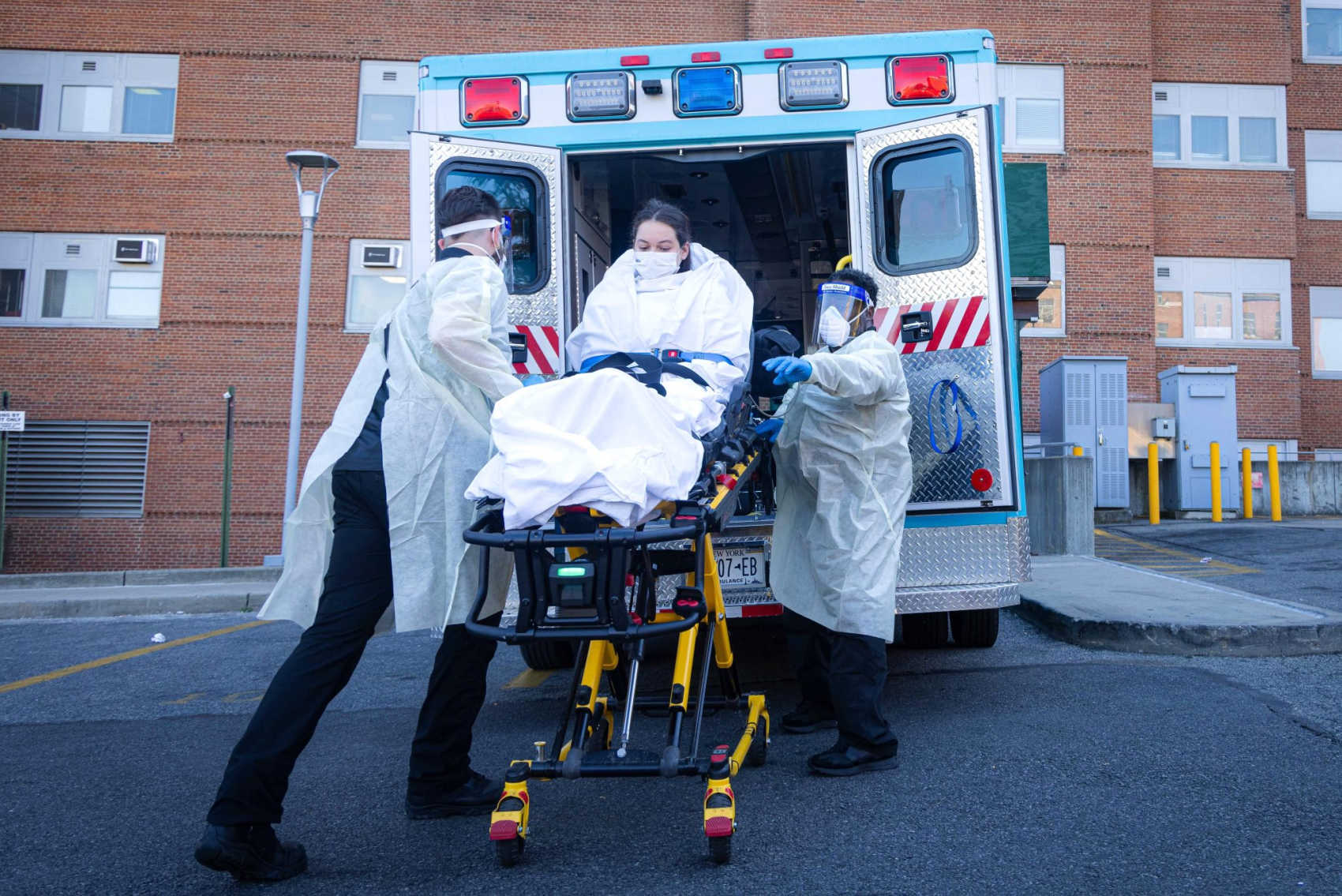
Three unannounced exercises using professional actors posing as patients potentially infected with avian influenza were conducted at healthcare sites in the U.S. Virgin Islands earlier this year, according to a newly released federal report that does not identify the local sites or disclose how they individually performed.
The Centers for Disease Control and Prevention published the findings Thursday in its Morbidity and Mortality Weekly Report, detailing 73 drills conducted between January and June 2026 across New York, New Jersey and the Virgin Islands.
Three of those exercises took place in the USVI. However, the performance data were combined with results from the other jurisdictions, leaving unanswered whether Virgin Islands healthcare workers successfully identified, masked and isolated the simulated patients, properly used protective equipment, or alerted infection-control personnel.
The report also does not name the Virgin Islands facilities involved.

That information exists at least at the facility level. According to the CDC report, participants were debriefed following each exercise and post-drill reports were provided to the participating facilities.
The exercises were designed to test how healthcare facilities respond when someone who could be carrying a dangerous infectious disease arrives seeking care under ordinary conditions.
Professional patient actors from New York University's Standardized Patient Program were used. They presented themselves with symptoms and a history designed to resemble avian influenza A(H5), commonly known as bird flu.
The simulated patients were between 20 and 28 years old and reported pink eye, fever, muscle aches, coughing and general illness. They said they had not recently traveled, deliberately shifting the focus away from the travel screening traditionally associated with some high-consequence infectious diseases.
If asked whether they had been around anyone or anything sick, the actors would respond, “Does a sick bird count?”
They would then describe attempting to rescue a sick duck, handling it without gloves and having direct contact with the animal before it died.
If healthcare staff never asked about sick contacts, the actor was instructed to eventually disclose the bird exposure to the clinician anyway.
The exercise tested four major areas: how quickly facilities recognized that a patient could have a serious infectious disease; how quickly the patient was masked and isolated; whether healthcare workers followed infection-control procedures and used appropriate personal protective equipment; and whether clinicians recognized the risk and notified infection-control personnel and public health authorities.
Participating hospitals across the federal government's Health and Human Services Region 2 — which includes New York, New Jersey, Puerto Rico and the Virgin Islands — had previously been invited to take part. Facilities therefore volunteered for the program, but the individual exercises were designed to be unannounced.
Facility coordinators were given educational material about avian influenza after an exercise was scheduled, according to the report. Frontline performance was then tested under conditions intended to resemble a real patient encounter.
Of the 73 drills, 52 occurred in New York City, 15 elsewhere in New York State, three in New Jersey and three in the Virgin Islands. Puerto Rico did not participate.
Across all jurisdictions, the results revealed significant gaps.
Healthcare personnel conducted symptom screening in 68 of the 73 exercises, or 93.2 percent, while travel histories were obtained in 79.5 percent.
But staff specifically asked questions capable of uncovering exposure to avian influenza in only seven exercises — 9.6 percent of the total.
CDC researchers said that finding suggests screening systems designed around travel-related illnesses may not yet be sufficiently adapted to diseases that can emerge through animal exposure within the United States.
Sixty of the 73 simulated patients, or 82.2 percent, were told to wear masks. The median time from entering a facility to being masked was two minutes, compared with the exercise target of one minute.
Among exercises with usable timing information, only 43.1 percent met that one-minute masking goal.
Isolation results were also mixed. The simulated patient was placed in isolation during 52 exercises, or 71.2 percent, with a median isolation time of 11 minutes. The target was no more than 10 minutes, and fewer than half of the drills met it.
CDC considered an exercise successful if the simulated patient was ultimately both masked and isolated, regardless of how long the process took.
By that measure, 44 of the 73 drills — 60.3 percent — were successful.
Personal protective equipment was another major weakness.
Among 68 exercises where a clinician encounter made the measure applicable, clinicians wore all required protective equipment — including items such as gloves, masks, gowns and eye protection — in only 25 percent of cases.
In 5.9 percent of those encounters, clinicians wore no personal protective equipment at all.
The report further found that 18 percent of facilities did not provide a mask to a visibly coughing simulated patient reporting fever, while 19 percent of clinicians did not wear a mask or respirator during their evaluation.
The actor was correctly recognized as being at risk for avian influenza in 45 of 71 applicable exercises, or 63.4 percent.
Facility infection-prevention and control personnel were notified, or clinicians indicated that they planned to notify them, in 40 of the 73 exercises — 54.8 percent.
Those findings are regional. The CDC did not provide a separate table or narrative showing whether the three Virgin Islands exercises were among the strongest or weakest performers in any category.
The report also does not say whether the three USVI drills occurred at three different healthcare facilities. It states only that three drills were conducted in the territory, part of 73 exercises conducted across 69 emergency departments, hospital outpatient clinics and urgent-care centers regionwide.
Researchers said healthcare waiting rooms can become high-risk environments for spreading respiratory illnesses when patients are not quickly identified and appropriate infection-control measures are delayed.
They emphasized the role not only of doctors and nurses, but also security officers, receptionists and registration personnel, who are often the first employees encountered by an infectious patient.
Security or reception staff conducted the initial symptom screening in more than half of the exercises where screening took place and were responsible for providing masks in nearly two-thirds of applicable drills.
The researchers recommended role-specific infection-control training for clinical and nonclinical personnel who regularly interact with patients.
The CDC also cautioned against reading the regional findings as representative of every healthcare facility. Not every hospital participated, comparatively few outpatient and urgent-care exercises were conducted, and actors could not perfectly reproduce physical symptoms such as an actual fever.
Researchers also acknowledged that some workers might have learned that an exercise was underway before or during the encounter, potentially affecting their response.
The exercises come as federal health authorities continue monitoring avian influenza in the United States. CDC surveillance through late August found no indication of unusual influenza activity in people associated with A(H5), and the agency continues to assess the risk to the general public as low.