




ST. CROIX — A donated scoreboard intended for the Isaac Boynes Ballpark in Frederiksted remains in storage, prompting lawmakers on Friday to question whether government procedures are making it unnecessarily difficult for private individuals and businesses to contribute to public recreation facilities.

The issue surfaced during Friday's meeting of the Senate Committee on Culture, Youth, Aging, Sports and Parks, when Sen. Franklin Johnson asked Department of Sports, Parks and Recreation Commissioner Vincent Roberts why the scoreboard had not yet been installed.
“The scoreboard will be put in place once we identify the funding, once we have the scope of work completed, and once it goes through the process,” Mr. Roberts responded. He also referenced “some legal matters going on,” but did not elaborate.
Mr. Roberts acknowledged that the circumstances surrounding the donation were not well understood by his current leadership team. “Nobody on my leadership team knew about the scoreboard,” he said, and was unable to tell lawmakers how long the equipment had been kept in storage.

Mr. Johnson asked whether a contractor had previously offered to install the scoreboard, but Mr. Roberts said the commitment was more limited. The contractor had offered to provide the poles needed to support it. “That was the long and short of what he intended to donate for the scoreboard,” the commissioner said.
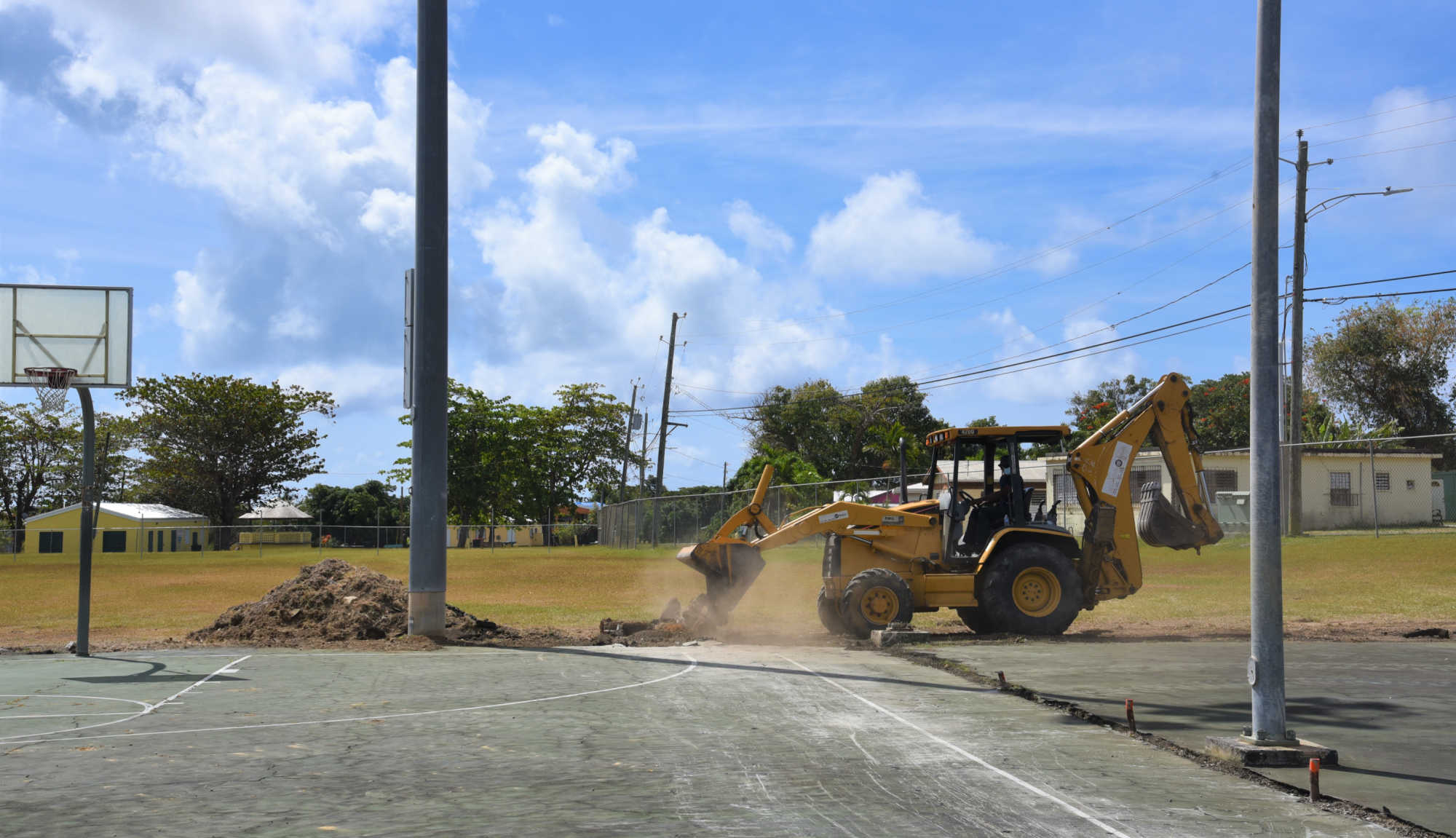
Installing the scoreboard will require considerably more work. “We have to run conduits across the field to erect the scoreboard. You need a crane to erect the scoreboard. You got to put up the poles to to put up the scoreboard,” Mr. Roberts explained. DSPR has not yet calculated a definitive cost for the work.
Arol Abel, a disaster recovery specialist, told lawmakers that another private entity had at one point been willing to perform the installation, but that opportunity may now have been lost. “As recently as a couple days ago, that entity told me they were no longer interested in installing the scoreboard,” he said.
That disclosure frustrated Mr. Johnson, who argued that the department should more aggressively pursue private assistance at a time when government resources are limited. “Knock on these doors at these company. Call them. Find out who is willing to help you because you're gonna need that help,” he said.
Mr. Roberts pushed back against any suggestion that DSPR is unwilling to accept assistance, saying the department must ensure donations and donated services comply with government requirements. “We don't have no problem working with any organization, any contractor that wants to assist the department, but there’s that process. And we have to be very careful when it comes to just accepting services or items from just anybody.”
That process can include memoranda of understanding, verification that contractors are in good standing and confirmation that they carry appropriate insurance. “My issue is not that we don't welcome the help, but some of these things take a little time, and people feel like because you come to me today and you tell me I want to do a favor for you, that is going to happen tomorrow,” Mr. Roberts said.
Mr. Johnson nevertheless urged the department to find ways to move legitimate offers of assistance through the process more quickly. “Because guess what, the money don't sit there, and those investors that want to help you, they're gonna run go someplace else,” he warned.
Sen. Alma Francis Heyliger said the commissioner’s concerns were legitimate, noting that donations to government cannot simply bypass established procedures. “There is a procurement process that the Government of the Virgin Islands follows, and no individual or outside organization can just preclude that process. They cannot just decide to arbitrarily do it the way that they want,” she said.
“If you're going to support a department or provide something for a department, you have to follow the parameters as much as you're trying to help,” Ms. Francis Heyliger added, warning that some people “may be representing themselves outside of their purview or their scope, and that's another problem within itself.”
Still, she agreed that the government should prioritize viable donations when they could save public money. “If this thing costs $100,000 to set up versus a private entity saying we'll go ahead and do it for you, that's $100,000 being saved from the general fund…Even government is still running a business, and we still have to make priorities as it relates to trying to get things executed and save cost.”
Sen. Novelle Francis Jr. similarly urged DSPR to resolve the outstanding issues. “I know that there are some concerns regarding indemnification and who's legally responsible…but let's try to work that out and get that scoreboard up and running,” he said.
Funding Gaps at Other Recreation Projects
The debate over the scoreboard came as DSPR outlined significant funding gaps at other facilities under its control.
At the Estate Prophet Community Center, the department has identified “just over $1.5 million for necessary work that falls outside the FEMA project worksheet, including the required local match.” At Cramer’s Park, the estimated funding shortfall is approximately $1 million.
Mr. Roberts explained that the additional costs involve work FEMA does not cover. As an example, he said federal funds may pay to replace damaged galvanized steel but not necessarily deteriorated wood to which that steel is attached, leaving DSPR responsible for financing the additional work required to properly restore the facility.
At Estate Prophet, Mr. Abel said as much as two-thirds of the damage was caused by vandalism after the hurricanes rather than by the storms themselves. “FEMA refused to pay for that additional work that's necessary to build back the facility to make the facility usable,” he told lawmakers.
Mr. Francis, who chairs the Committee on Budget, Appropriations and Finance, said the Legislature would need to examine those shortfalls further. He promised “further discussion in terms of those shortfalls, so we can see how best to fulfill that because obviously we can't go in there halfway.”

He also suggested that future project scopes should include greater contingency planning for the additional problems that often emerge once work begins on older government facilities. There should be “some level of a built-in contingency in some of these scope of work that allow for these mitigating situations…because we've seen it throughout in terms of all of these facilities, they're very aged, dilapidated…” he said.