

Correction: July 8th, 2025 at 9:00 p.m.

An earlier version of this article incorrectly stated that the One Big Beautiful Bill, signed into law on July 4, 2025, includes a provision that limits Section 8 housing assistance to two years for able-bodied adults. In fact, no such provision was included in the final legislation.
The two-year limit referenced by Governor Bryan stems from a separate FY 2026 budget proposal put forward by the Trump administration. That proposal recommends capping rental assistance for nonelderly, able-bodied adults at two years, but it has not been enacted into law and is currently awaiting action in Congress as part of the federal appropriations process.
We acknowledge the error and remain committed to delivering accurate, reliable information.

Updated Article: In a sweeping legislative overhaul, President Donald J. Trump signed the “One Big Beautiful Bill Act” into law on July 4, marking a transformative moment in American domestic policy. Among its many provisions, one topic has drawn particular attention and required correction: a reported two-year cap on Section 8 rental assistance for able-bodied adults without disabilities. Contrary to our original reporting, this cap was not included in the final law. The two-year limit is part of a separate FY 2026 budget proposal submitted by the Trump administration that is currently awaiting congressional action. We regret the error and are committed to providing accurate information moving forward.
Virgin Islands officials worry that transitioning to state-run assistance with slashed federal support—as outlined in the budget plan—could exacerbate the USVI’s longstanding fiscal fragility. The territory relies heavily on federal programs to fund public services amid ongoing budget constraints and disaster recovery needs. A sudden drop in housing support would force territorial leaders to divert scarce revenue toward filling gaps in housing aid. This may hinder economic recovery, increase homelessness risks, and place additional strain on island social services already stretched by past hurricanes and chronic underfunding.
The Section 8 program, formally known as the Housing Choice Voucher Program, has been a cornerstone of federal housing policy since the 1970s, providing subsidies to low-income families to afford safe and stable housing in the private market. Under the Trump administration’s budget proposal, able-bodied adults without disabilities would face a two-year limit on receiving these vouchers. After this period, they would be expected to transition off the program, achieving self-sufficiency through employment or other means. The policy does not affect elderly or disabled tenants, who would remain eligible for ongoing assistance. However, it is important to stress that this measure is not law—it remains under congressional review as part of ongoing appropriations deliberations.
The final legislation signed on July 4, 2025, allocates $32.14 billion for HUD’s Tenant-Based Rental Assistance (TBRA) program, which includes Section 8 vouchers—a $3.65 billion increase from the previous fiscal year—and $16.89 billion for Project-Based Rental Assistance (PBRA), up $880 million. The bill also contains language that lays groundwork for transitioning some housing assistance to state-based formula grants. “The budget empowers states by transforming the current federal dysfunctional rental assistance programs into a state-based formula grant which would allow states to design their own rental assistance programs based on their unique needs and preferences,” said HUD Secretary Scott Turner in a statement related to the discretionary budget proposal.
While the bill stops short of codifying the two-year cap, the broader policy direction—favoring decentralization and state control—has raised alarms about the capacity of individual states to meet rising housing demands, especially in under-resourced territories. Should the proposed cap be enacted, its potential to disrupt housing stability for low-income Americans remains a source of significant concern.
Supporters of the budget proposal argue the cap aligns with efforts to reduce dependency on federal aid and promote workforce participation. The Trump administration and Republican lawmakers have framed it as a way to “rightsize” safety net programs, focusing aid on the elderly and disabled while curbing waste, fraud, and abuse. “This bill eliminates waste, fraud, and abuse by ending benefits for at least 1.4 million illegal immigrants who are gaming the system,” the White House stated in a release. While undocumented immigrants are already ineligible for federal housing assistance, the administration’s language underscores a broader intent to tighten eligibility across public aid programs.
The budget proposal’s philosophy also echoes other work-focused reforms included in the signed legislation, such as expanded work requirements for Medicaid and the Supplemental Nutrition Assistance Program (SNAP). By shifting responsibility to states and imposing time limits, the administration aims to rein in federal spending while promoting individual accountability.
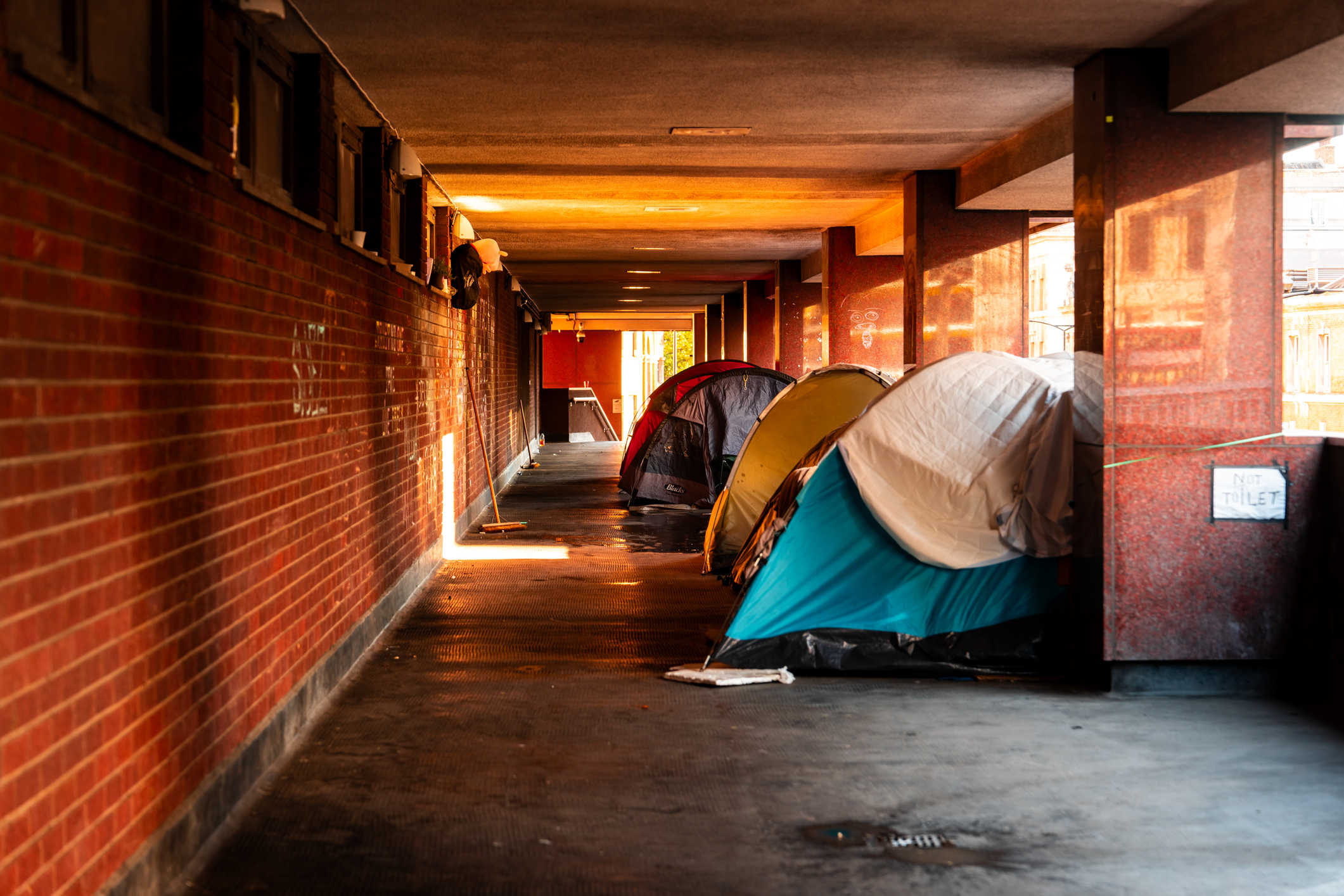
Opponents of the proposed two-year Section 8 cap argue it ignores harsh economic realities and could trigger housing instability across the U.S. and U.S. Virgin Islands. With Section 8 vouchers critical in markets where post-hurricane rents have nearly doubled, the territory faces severe risks. In St. Thomas and St. Croix, two-bedroom units now average $1,387 and $1,723 per month, respectively, with St. John rents soaring to $2,178. Annual median studio rents exceed $1,017, and furnished 900 sq. ft. apartments cost over $1,000 monthly. In such a constrained market, removing assistance could push families—already spending more than 40% of their income on rent—into homelessness unless housing aid is expanded at the state level.
“Housing is the foundation of economic stability,” said Diane Yentel, president of the NLIHC. “Cutting off Section 8 after two years assumes people can magically double their income in that time, which is unrealistic for most low-wage workers. This policy risks pushing families onto the streets or into overcrowded, unsafe living conditions.”
The Congressional Budget Office (CBO) has not issued a specific estimate for how many households could lose housing aid under the proposed cap, but its broader analysis of Trump’s fiscal agenda suggests a major contraction in safety net participation. For example, the CBO projects that Medicaid reforms in the bill could lead to 11.8 million Americans losing health coverage over the next decade, raising the possibility of parallel impacts in housing.
Critics also note that shifting control of Section 8 to the states may deepen inequality. Many states face budget pressures of their own and may not be able to replace the $26.7 billion in federal housing cuts proposed in the Trump administration’s spending plan. “If states can’t make up for the funding losses, we’ll see waitlists grow longer and fewer families served,” said Sarah Saadian, vice president of public policy at the NLIHC. “The two-year cap just accelerates that crisis.”
On Monday, Governor Albert Bryan Jr. addressed the housing provisions in Trump’s newly signed law, expressing concern that the policy shift toward state control could unravel years of progress his administration has made in addressing the Virgin Islands’ affordable housing shortage. "This measure in particular serves to challenge those efforts significantly in the years to come," he said, referring to the larger trend toward devolving housing aid from the federal to local level.

The housing discussion is just one aspect of the broader legislation. The “One Big Beautiful Bill” includes $46.5 billion for border wall construction, $45 billion to expand immigrant detention capacity, and sweeping tax reforms—such as extending the 2017 Tax Cuts and Jobs Act and eliminating taxes on tips and overtime through 2028. To offset these costs, the bill includes deep cuts to Medicaid, SNAP, and clean energy incentives. The CBO projects the overall package will add $3.3 trillion to the federal deficit over the next decade.