




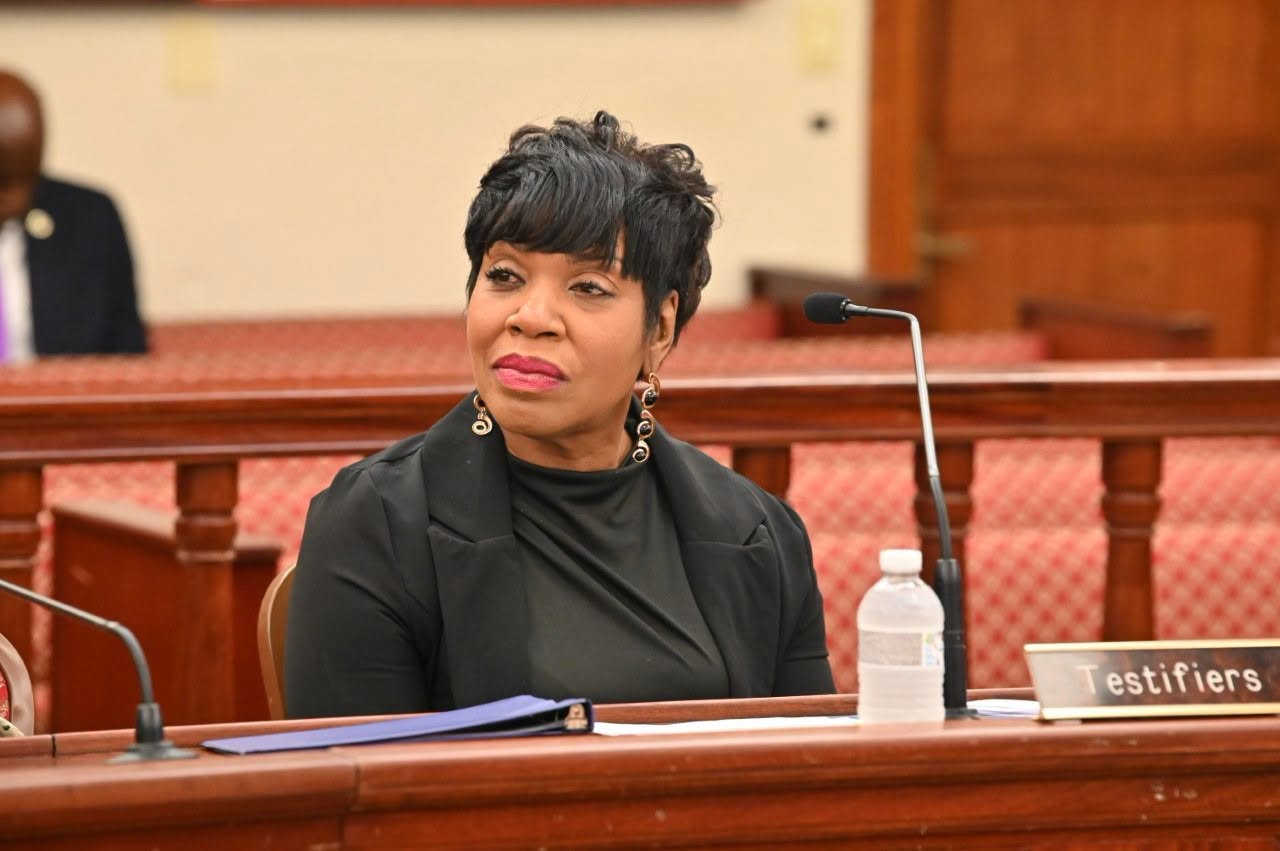
Lawmakers on Monday pressed V.I. Taxicab Commission Executive Director Melissa Smith over missing medallions, improperly issued taxi licenses and lingering enforcement deficiencies documented by the Inspector General, with several senators arguing that the agency has yet to demonstrate enough progress in correcting problems that in some cases stretch back decades.

Ms. Smith appeared before the Committee on Government Operations, Veterans Affairs and Consumer Protection to discuss the findings of the Inspector General's March audit of the Commission's administrative functions. She emphasized that the review covered fiscal years 2018 through 2022, before she assumed leadership, but acknowledged that the findings left the current administration with significant corrective work to perform.
The audit was particularly severe. The Office of the V.I. Inspector General found 13 unsold taxi medallions missing, licenses granted to seven applicants who had failed the required written examination and three others for whom auditors found no evidence that they had taken the exam at all. Required biannual vehicle-for-hire inspections were not conducted during the audit period, and auditors determined that such inspections had not occurred since at least 2008.
The absence of those inspections cost the Commission at least $170,310 in uncollected inspection fees, according to auditors, while fines collected from citations declined by 94 percent. The audit also identified delayed deposits and accounting problems, including $44,622 deposited late, $258,342 in revenue not posted to the government's financial system on time, $54,811 in medallion sales that had not been posted, and an unreconciled $18,587 difference between deposits and amounts recorded in the system.

The medallion records themselves presented another problem. Auditors said portions of the St. Thomas-St. John registry were mold-covered, torn or detached, with pieces of records placed between unrelated pages. Of 70 medallions sampled, 44 had incomplete, missing or inconsistent information in registries or owner files. The 13 missing medallions — all designated for St. Thomas — were valued by auditors at at least $286,000 based on the average price of medallions sold during the audit period.
Twelve of those 13 medallions had already been reported missing in a 2005 Inspector General audit, meaning only one additional St. Thomas medallion was determined to have disappeared since that earlier review. The 2005 audit had also identified failures involving registry accuracy, medallion and license-plate controls, required vehicle inspections and enforcement staffing. In its 2026 report, the Inspector General concluded that the Commission had not made significant improvements in two of those longstanding areas — accurate medallion registries and biannual inspections.
The Consortium detailed those findings when the audit was released in March. Read the Consortium's original report on the Taxicab Commission audit
Ms. Smith told senators Monday that the Commission is now “in a period of significant transition and rebuilding,” and said substantial work has been done since the period examined by auditors. She said registry records have been assessed, stronger validation procedures have been implemented for medallion transactions, and a notification protocol will be developed to address medallions that are missing or otherwise unaccounted for.
The Commission has also implemented “stricter verification procedures” for taxi licenses, Ms. Smith said, while emphasizing that maintaining the improvements will require enough money to modernize records, preserve historical documents, strengthen enforcement and maintain public services.
The Inspector General issued 19 recommendations in the March report. At the time of publication, five were classified as resolved and implemented, 11 were resolved pending follow-up reviews, one was resolved but not implemented, another was resolved pending additional information, and one was partially resolved pending follow-up.
Senators nevertheless focused Monday on work that remains incomplete.
Asked about the 13 medallions the Inspector General classified as missing, Ms. Smith said other pressing agency priorities have prevented the Commission from establishing a timetable for completing the necessary research. She later told Senator Angel Bolques Jr. that officials are “still trying to determine what is defined as missing” and are working with the Inspector General's office for additional clarification.
The responses drew concern from lawmakers who argued that the Commission must resolve problems inherited from previous administrations rather than separating them from its present-day responsibilities.
“You may not have been there in the past, but you're the new person to the helm. So this is definitely something you would inherit,” Committee Chairman Avery Lewis told Ms. Smith. He urged the agency to establish a corrective plan. “We have to address the past and the current, moving forward.”
Senator Franklin Johnson similarly questioned the Commission about licenses that may have been issued improperly. Ms. Smith said she could not explain actions taken before her tenure but maintained that current procedures are being followed.
“I'm not sure of what occurred in the past. However, we do know definitively moving forward that every license issued in the Taxicab Commission is issued accurately,” she said.
Mr. Johnson urged the agency to review the existing roster of license holders rather than focusing exclusively on new applicants, arguing that previously issued licenses should be examined and the list effectively “purged” where necessary.
Enforcement capacity emerged as another major concern.
Senator Ray Fonseca questioned why the Commission's collections have not increased more significantly during a period of strong tourism activity and increased cruise traffic. Ms. Smith said additional visitors do not automatically translate into additional Commission revenue, which depends in part on staffing, documentation reviews, fees and enforcement activity.
She said revenue increased after new taxi inspectors came aboard, but their field operations have since come to a “limited halt.” According to Ms. Smith, the Commission is awaiting an opinion from the Attorney General on whether inspectors may operate marked vehicles. Until that question is resolved, the Commission has suspended use of the vehicle in question, while the Department of Property and Procurement has no loaner vehicle available.
The staffing shortage remains acute. Ms. Smith said the agency is attempting to hire another inspector on St. Croix but cautioned that one additional employee would “just touch the tip of the iceberg to address all of the infraction issues for the territory.”
“I requested staffing levels for at least six officers, but I haven't received the funding for those, so I'm going to just continue to work with what we have at this point,” she said.
The Inspector General had separately described the Commission as “severely understaffed” and found that the shortage impaired inspections, patrols and enforcement.
Senator Carla Joseph said she remained concerned that the agency needed additional money to expand its services. The Legislature last week approved a $554,637 fiscal year 2027 appropriation for the Taxicab Commission.
Senator Kenneth Gittens took a different position, reiterating his belief that the Commission should no longer exist as a separate agency and that its responsibilities should instead be placed under the Bureau of Motor Vehicles or the Department of Licensing and Consumer Affairs.
“This entity has demonstrated nothing but a long-standing pattern of total ineffectiveness,” Mr. Gittens said. Referring to the Commission's roughly half-million-dollar appropriation, he added, “This half a million dollars that we just passed in the fiscal year budget to give this entity is just a waste, in my opinion.”
Mr. Gittens said a colleague has prepared legislation that would reorganize the Commission's functions. Similar structural changes have been debated before: legislation considered in the 35th Legislature proposed replacing the independent Taxicab Commission with a Division of Transportation and Taxicab Services and transferring functions to a reorganized entity.
Ms. Smith rejected the characterization that the Commission is failing under its current leadership. She told senators that the agency is “doing an excellent job” while confronting “a lot of egregious activities” inherited from previous leadership.
Her central argument throughout Monday's hearing was that the agency has begun correcting the deficiencies identified by auditors but lacks the staffing and financial capacity to complete all of the work at once.

Lawmakers' response was that new leadership does not erase the Commission's institutional obligations. For the committee, the unresolved medallions, historical licensing questions and limited enforcement presence remain matters the current administration must ultimately address.