




Correction - August 25, 2026: This article has been updated to correct a text error in the St. Croix water production figure. St. Croix is producing 3.5 million gallons per day against demand of 3 million to 3.2 million gallons. Despite the current production margin, officials say drought conditions continue to strain water supplies.

Water supplies remain tight across the territory as a Level 3 drought continues to drain household cisterns, increase reliance on WAPA’s distribution system and leave the major islands with only several days of stored water, even as current production on St. Croix and St. Thomas exceeds daily demand.
V.I. Territorial Emergency Management Agency Director Daryl Jaschen said Monday that WAPA, through its contractor Seven Seas, is producing 3.5 million gallons of water per day on St. Croix, compared with daily demand of between 3 million and 3.2 million gallons. That leaves a production margin of approximately 300,000 to 500,000 gallons per day.
On St. Thomas, production runs as high as 2.9 million gallons daily. “Our consumption rate and demand [is] about 2.6 to 2.7 [million gallons],” Mr. Jaschen said, giving that system a production margin of roughly 200,000 to 300,000 gallons when operating at the higher production level.

The production margins have not eliminated pressure on the system. Water haulers, although restricted in their hours of operation, continue to cause pressure drops farther along distribution lines, with Frederiksted continuing to feel the impact.
WAPA Director of Corporate Communications Chaneel Spencer said demand has increased across St. Croix as households whose cisterns have run dry increasingly draw from the public system. Several mainline leaks have compounded the strain and contributed to low or no water pressure in higher elevations. She urged residents to report suspected leaks either online or by telephone.
Cisterns are also running low on St. John. “We have a lot of water haulers going through St. John right now. They are consuming 200 to 225 gallons per day,” Mr. Jaschen said.
Stored supplies remain limited across all three islands. St. Croix currently has enough water stored for approximately three days, while St. John has about four days of supply and St. Thomas about four and a half days, according to Mr. Jaschen.
He urged Virgin Islanders to continue conserving water despite production currently exceeding demand.
“Now is not the time to wash cars,” he admonished. “Take shorter showers, run your…laudnry only when you have full loads. Fix those water drips,” Director Jaschen advised.
“If you’re washing fruits and veggies use a bowl to do so…when you’re washing dishes, whether it’s in the dishwasher or by hand, wait until you have a significant amount to actually wash at one time versus washing throughout the day.”
The drought is unfolding alongside persistent heat, with the AccuWeather heat index indicating that conditions felt hotter than 100 degrees Monday.
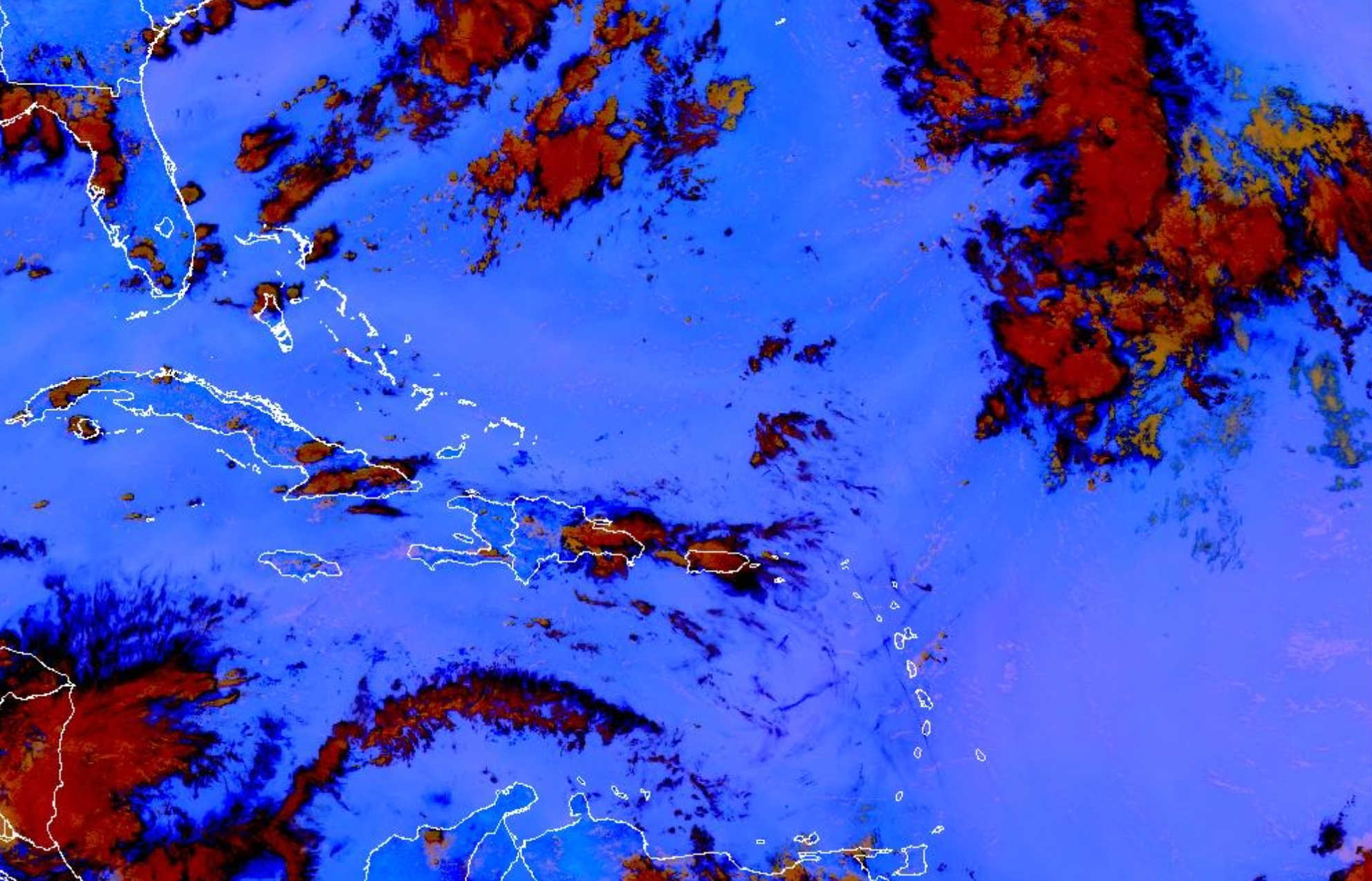
Mr. Jaschen also cautioned residents about increasing Saharan dust levels Tuesday and Wednesday.

“It’s been here for several weeks and months now, but coming in more tomorrow and Tuesday night, reaching moderate to high levels,” he said, advising people with respiratory conditions to limit outdoor activity while dust concentrations are elevated.