

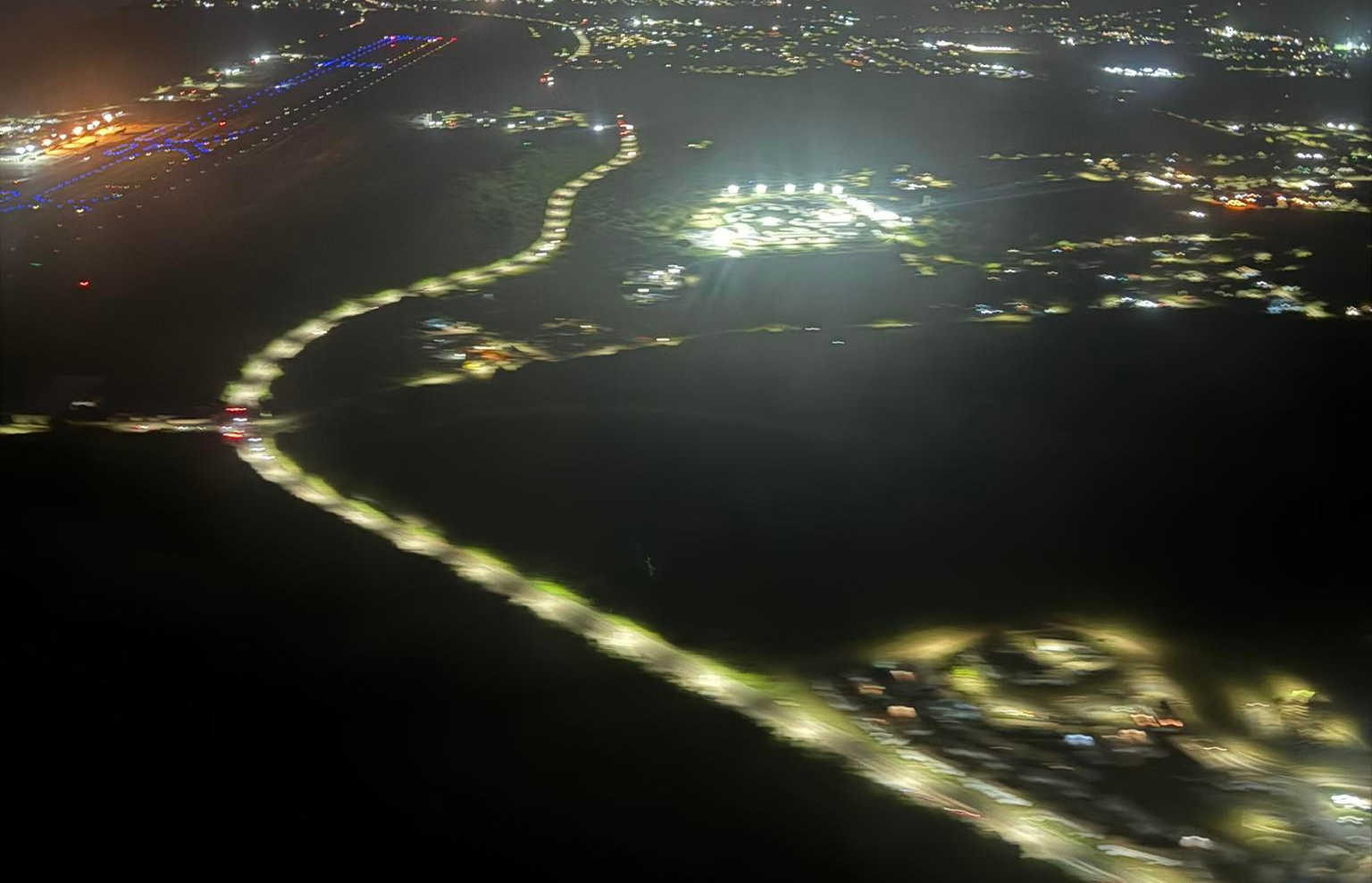
The V.I. Department of Finance has not paid the Water and Power Authority for streetlights since 2024, running up an almost $10 million balance in the process.

WAPA Chief Operating Officer Lemuel Lavinier made the disclosure on Tuesday, during a meeting of the Public Services Commission. “Currently, the authority is conducting relevant evaluation of its street light service to engage decisionmakers in meaningful discussions on a path forward to rectify this unsustainable underpayment,” Mr. Lavinier told commissioners.
Lorraine Kelly, the authority's chief financial officer, disclosed that WAPA officials met with Department of Finance Commissioner Kevin McCurdy and Office of Management and Budget Director Julio Rhymer in September 2025 to discuss the issue. “We did get a commitment from Commissioner McCurdy at that meeting that payments would start October 1,” Ms. Kelly said. However, “since that commitment that was made in that call, we have received not one penny.”
In the face of the mounting bill, Ms. Kelly noted that “the legislature has passed an act to be able to assist us with approximately $4 million worth, but that is not going to recoup the amount that is past due.” Complicating matters further, “three of the four million of that is to be put towards future project,” Ms. Kelly explained. She told commissioners that WAPA has received requests to consider the installation of new street lighting, but with such a large amount already outstanding, the utility is understandably hesitant to commit.

Currently, street lighting is paid for via property taxes, a small amount of which are diverted into a special fund. However, Ms. Kelly says it's not enough to pay for the actual cost of the lighting. According to recent analysis conducted by WAPA, “we’ve actually found that we have been underbilling based on most recent consumption data that we have,” she told commissioners. However, while WAPA is working on collating and presenting that data to the Department of Finance for their consideration. “It’s somewhat of a moot point if we haven’t even been paid for what we have been billing.”
PSC attorney Boyd Sprehn provided some historical context to the issue of funding for street lights. Originally the job of the Department of Public Works, the Legislature transferred that responsibility to WAPA approximately two decades ago but failed to allocate funding for the service. At first, the PSC agreed to add a surcharge onto consumer bills to pay for the street lighting, until the Street Lighting Fund was created in 2003, funded by a small percentage of property taxes. The allocation was subsequently increased from two to four percent of property taxes. “Nothing in that act said that the government is entitled to free street lighting,” Mr. Sphren declared. If the cost of lighting exceeds the balance in the fund, “the government should be paying the bill, in my view of the legal situation,” he continued.
“Either the government needs to pay for the street lighting it obtains or the street lighting needs to be reduced to what the government is willing to pay for. WAPA should not be burdened with carrying out a customer service for which there is no compensation,” Mr. Sphrehn concluded.
Compounding the issue, Ms. Kelly told commissioners that street lighting usage has increased in recent months. “The monthly bill was approximately $620,000 about a year ago; it has recently been in the $710,000 to $725,000 a month,” she said. Meanwhile, WAPA has received indication from government finance officials that “the maximum that they are allowed to pay is the maximum that is coming from the property taxes with no redress or resolution whatsoever towards the gap between that amount and the amount that is being billed.”
That position is merely academic at this point, however, since nothing at all is being paid currently. “My emails are ignored. Conversations that we’ve had are left not addressed. Texts and phone calls are ignored when it is about the topic of streetlights,” Ms. Kelly complained, asking the PSC for support in helping to resolve the thorny issue.

“I’m not sure what we can do to help you with street lighting,” said PSC Chair David Hughes, elected to that position on Tuesday after recently elected chair Laura Nichols-Samms resigned the post. “I’m not sure a stern letter from the PSC is going to move anybody over in Finance these days….we wish you luck in collecting.”