




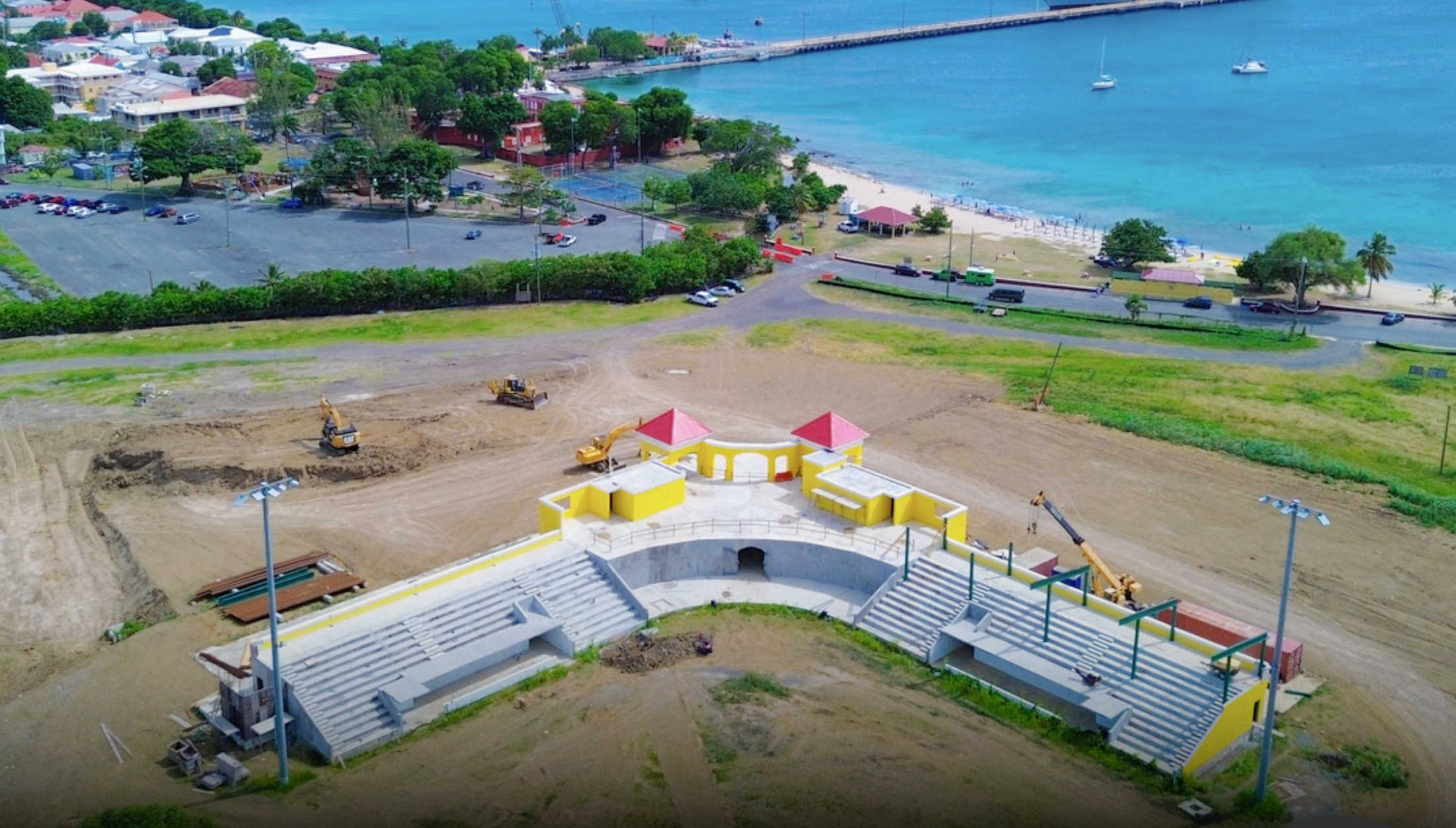
ST. CROIX — The Department of Sports, Parks and Recreation intends to operate Paul E. Joseph Stadium itself once the long-delayed facility is handed over, rejecting a suggestion that an outside company be brought in to manage a complex that could cost as much as $2.2 million annually to operate.

The possibility of outsourcing management was raised Friday by Sen. Novelle Francis Jr. during a meeting of the Committee on Culture, Youth, Aging, Sports and Parks. DSPR Commissioner Vincent Roberts pushed back on the idea, saying the department has the capacity to run the facility if it is properly staffed. “I believe the Department can manage the facility. I just think it's a matter of hiring the right people to station at the facility,” he said.
Once the stadium is turned over, DSPR will become responsible for its day-to-day operations, including maintenance of the playing surface, electrical systems and other infrastructure. Mr. Roberts placed annual operating costs in a range that could reach $2.2 million, while the department projects annual revenue of between $800,000 and $1.6 million. The Legislature’s official account of Friday’s hearing similarly said DSPR estimates annual operating expenses at approximately $1.5 million to $2.2 million, with revenue expected from sports leagues, tourism, rentals, concerts, festivals, concessions and advertising.
On staffing alone, Mr. Roberts said preliminary estimates for seven employees dedicated to the stadium would approach $350,000 annually, while equipment could require another $400,000. The commissioner said the department does not intend to maintain the stadium as an ordinary recreational field, particularly if the territory expects the facility to help attract higher-level sporting events.

“We're talking about sports tourism. We're talking about major league teams, so we're looking at at kind of equipment that you need to maintain a major league field and a major league facility,” Mr. Roberts told Sen. Avery Lewis. “It's going to take not just the regular groundskeeper, but you will need people that know what they're doing when it comes to maintaining a facility.”
It was precisely that scope of responsibility that prompted Mr. Francis to raise the possibility of professional outside management. The stadium will require specialized care extending from the field itself to electrical systems, event operations, security, equipment and routine facility maintenance.
Mr. Roberts nevertheless maintained that DSPR can take on the responsibility. Once the agency receives the keys, he said it intends to maintain a facility that is “practical, functional, and capable of sustained use, provided the necessary resources are in place.” The department plans to “immediately implement a structured operational rollout that includes safety certifications, hiring dedicated staff, implementing standard operating procedures, and a phased opening, based on comparable facilities.”
That approach was also outlined in the Legislature’s summary of the hearing, which said DSPR plans to begin with safety certifications, staffing, operating procedures and a phased opening once construction is complete.
The department is simultaneously developing a revenue strategy intended to offset some of the stadium’s operating expenses. Mr. Roberts said DSPR envisions a “diverse revenue model that is projected to generate $800,000 to $1.6 million annually from local league play, sports tourism, facility rentals, concerts, festivals, concession fees, and advertising.”
Even at the upper end of that projection, however, direct revenue could remain below the facility’s annual operating costs. Mr. Roberts cautioned lawmakers against judging the stadium solely by whether it generates enough revenue to cover every expense.
Its value, he said, “will be measured more by the economic activity, community engagement, and utilization it generates than by direct revenue. Consistent utilization will be critical to the facility's success, given that operating costs will remain high.”
The discussion over who will ultimately manage the facility comes as the stadium itself remains under construction, with a new substantial completion date of December 31, 2026. Public Works and contractor GEC LLC told lawmakers Friday that they believe the deadline can be met, although senators expressed skepticism after reviewing the extensive work still outstanding. The project is currently about 75 percent complete, according to the Legislature.

If that timeline holds, DSPR would then move from preparing for the stadium’s eventual opening to assuming responsibility for operating one of the territory’s largest sports facilities — a task the department insists it does not need to outsource.