




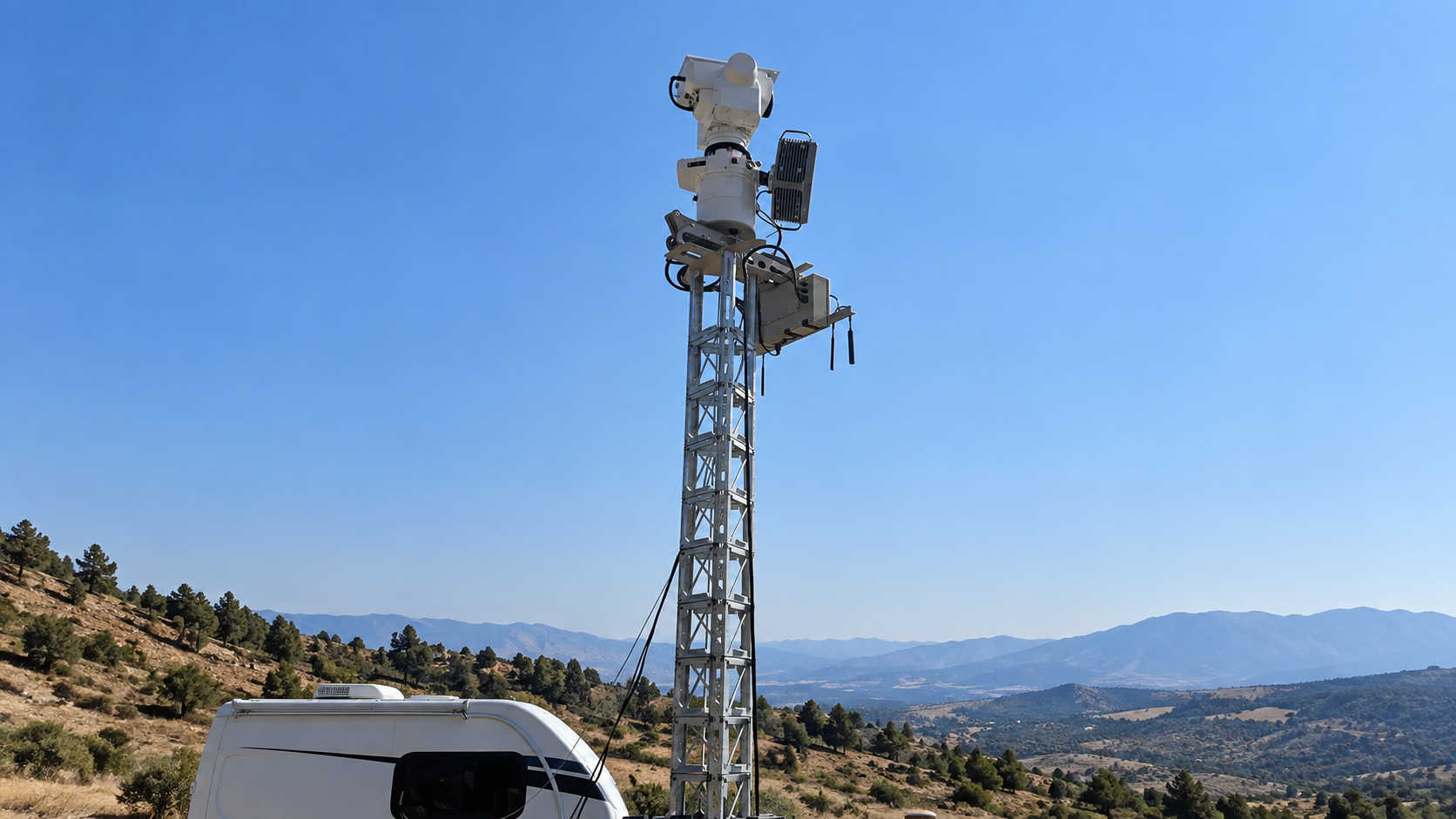
U.S. Customs and Border Protection has disclosed that its Maritime Approaches Surveillance Towers network includes sites in two U.S. Virgin Islands, while declining to reveal their specific locations as the agency prepares for continued operation and expansion of the maritime surveillance system.

The disclosure appears in an October 1 amendment to a federal request for information issued by CBP's Air and Marine Operations division for operations and support services for the Maritime Approaches Surveillance Towers, known as MAST.
“Specific MAST site locations will not be disclosed at this time,” CBP states in the amended notice.
For planning purposes, however, the agency identifies current MAST locations as Southern California, South Texas, Puerto Rico and “two US Virgin Islands.”

The systems form part of CBP's maritime domain awareness infrastructure and combine several surveillance technologies designed to detect and monitor vessels approaching U.S. territory.
Separate Department of Homeland Security acquisition records describe a MAST system as using commercial off-the-shelf maritime surface-search radar, electro-optical and infrared cameras, encrypted Automatic Identification System receivers, a mission-management system and supporting communications equipment.
Information collected by the systems is transmitted through a DHS-accredited network to authorized federal operations centers.
According to DHS, MAST systems operate continuously, 24 hours a day, seven days a week, and can include radar, cameras, communications equipment, remote health-monitoring systems and independent power capabilities. Sites may use towers, monopoles, tripods, raised platforms or existing buildings depending on terrain and operational needs.
The equipment is positioned at strategic coastal locations intended to maximize overlapping radar and camera coverage.
Consistent with the security-sensitive nature of the surveillance network, CBP has not publicly identified which two Virgin Islands host the systems or where within those islands the equipment is positioned. The agency has also not disclosed when the installations became operational or the individual cost of each USVI site.
The newly amended request is not itself a contract award. Instead, CBP is gathering information from industry as it plans future sustainment, maintenance and logistical support for deployed MAST systems and the transition of additional systems into regular operations.
The scope includes maintenance of existing equipment as well as support for new systems as they are installed across current and future surveillance zones.
A separate DHS acquisition forecast published September 16 shows that CBP is also planning a much larger procurement for the rapid production and deployment of additional MAST systems. The government estimates that acquisition at more than $100 million, with a solicitation currently projected for December 2026 and an anticipated award during the third quarter of fiscal year 2027.
That planned contract is expected to extend into 2032.
Federal records describe the MAST network as part of CBP Air and Marine Operations' effort to improve detection of vessels moving through maritime approaches where conventional patrol assets alone may not provide continuous coverage.
DHS has previously reported significant enforcement results from the Caribbean MAST program.
In its fiscal year 2025 budget materials, the department described a Caribbean configuration consisting at the time of five sensor sites and a command-and-control site. During its first nine months of operation, DHS said the system was credited with 10 successful interdictions that resulted in the seizure of more than 600 kilograms of cocaine and approximately 15 apprehensions.
The federal documents do not establish how many of those interdictions involved the Virgin Islands sites or whether any of the cocaine seizures or apprehensions occurred in USVI waters.
They also do not disclose the surveillance range of the local installations, the extent to which individual vessels can be visually identified, how long information collected by the systems is retained, or which agencies beyond CBP may access the data.
The agency's latest procurement activity indicates that the MAST network is not a temporary pilot. DHS describes both continued support for existing sites and a broader effort to produce and deploy additional systems, with long-term federal contracting planned for the network.

For the Virgin Islands, the newly released documents provide an uncommon public glimpse into a largely unseen layer of federal maritime surveillance infrastructure operating around the territory.