




Eligible Virgin Islands farmers and rural small businesses seeking federal grants for renewable energy systems or energy-efficiency improvements will have to complete their projects and document a year of actual results before applying, under new U.S. Department of Agriculture rules that require applicants to arrange financing before knowing whether they will receive a grant.

The overhaul of the Rural Energy for America Program, known as REAP, was published October 1 and takes effect October 16. It changes the sequence for obtaining assistance, requiring completed, operating projects to compete for funding based on documented energy production or savings.
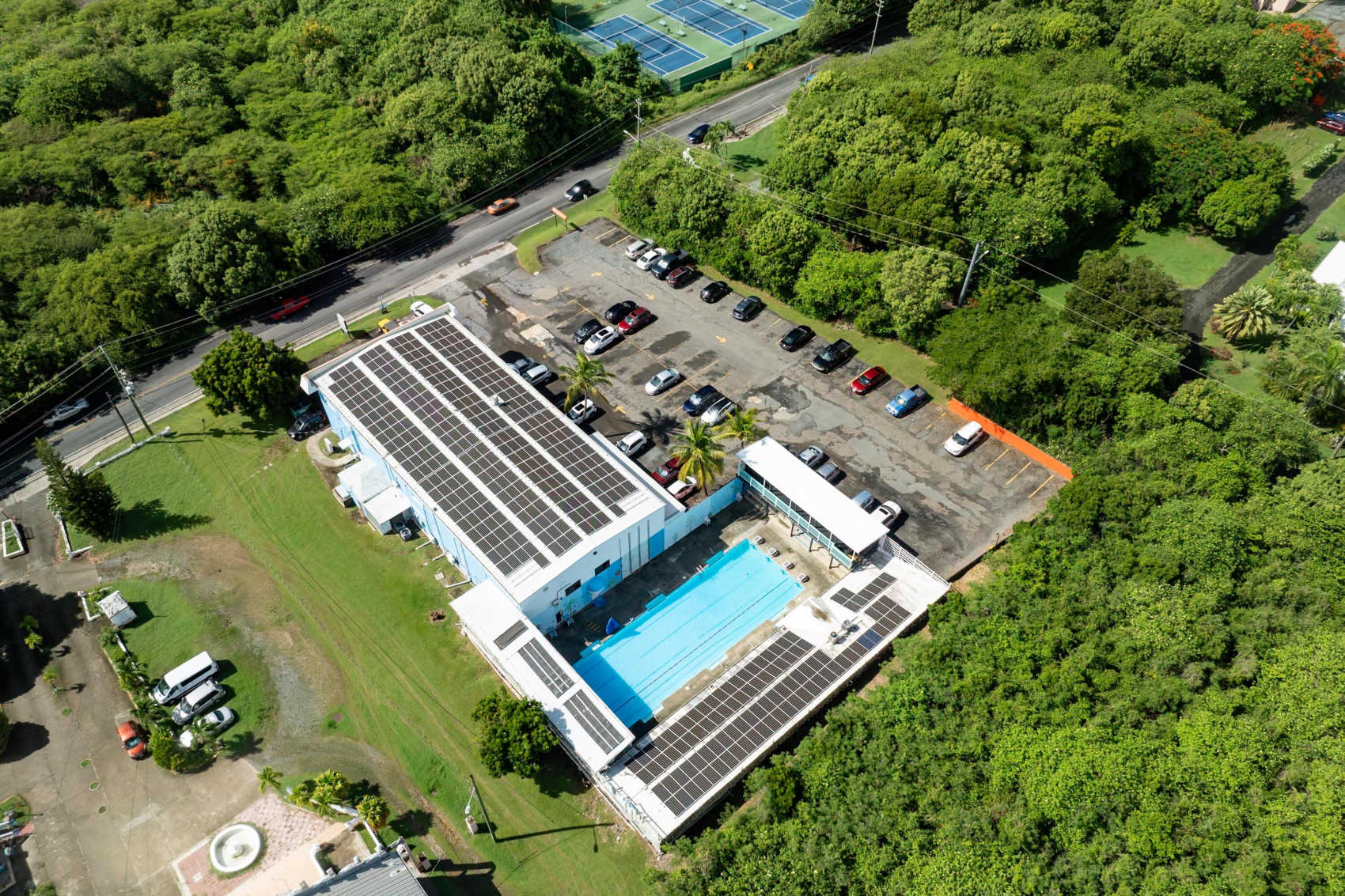
The program has supported projects in the territory. USDA’s January 10, 2025, funding announcement listed $21,180 for Beeston Hill Health and Wellness LLC on St. Croix, $32,010 for CPI Inc., doing business as Sister Twister Frozen D’Lite on St. Thomas, and $225,000 for Calidad Construction & Maintenance LLC on St. Croix. The three announced investments totaled $278,190 and included solar installations.
Under the new rules, applicants must supply 12 months of actual energy-production or energy-savings data, along with pre-installation energy information. USDA will then review eligibility, financial risk and the application’s competitive merits. Completing a project and meeting eligibility requirements will not guarantee an award.

Generally, projects must have been completed between 12 and 24 months before the application date. A separate provision allows a wider lookback for the first application window: the end of the project period, which covers allowable development, design and installation expenses, may fall between 12 and 36 months before the application. That project period cannot exceed 24 months and must end no later than 30 days after installation.
USDA explicitly acknowledged concerns about financing projects before receiving grant assistance. Its stated response is that applicants can seek support for upfront costs through the separate REAP Guaranteed Loan Program. That option involves borrowing from a lender, with repayment obligations and interest, while a grant provides assistance subject to the award’s conditions.
Applicants may apply separately for a guaranteed loan and a grant for the same project, but combined REAP grant and guaranteed-loan funding cannot exceed 75 percent of project cost. The availability of the loan program therefore does not remove the need for applicants to secure financing or satisfy lending requirements.
The revised grant regulation requires applicants to provide at least 75 percent of project costs through cost sharing, leaving a maximum grant share of 25 percent. Grant requests must be at least $1,500, with maximum awards of $500,000 for renewable energy systems and $250,000 for energy-efficiency improvements.
USDA says the changes are intended to simplify administration, reduce processing backlogs and assess projects using verified results. The agency said some previous applicants misunderstood which expenses qualified for funding, while some proposed systems were substantially larger than their businesses needed. Requiring completed projects, USDA argues, will encourage appropriately sized systems and allow more accurate evaluation of program performance.
The U.S. Virgin Islands is expressly included in the regulation’s definition of a state, but applicants and individual projects must still satisfy the program’s requirements. Projects must be in qualifying rural areas. The rule generally excludes cities or towns with more than 50,000 residents and their contiguous, adjacent urbanized areas, subject to statutory exceptions.
Applicants must qualify as agricultural producers or rural small businesses and must have been an existing business at least 12 months before the project period began. Rural small-business applicants must maintain an active Small Business Administration profile within the federal registration system. The rules also impose ownership and financial requirements, including positive cash flow and current assets at least equal to current liabilities.
Additional restrictions affect which projects can qualify. Ground-mounted solar systems and wind turbines installed on cropland are ineligible, as are projects spanning multiple locations. Solar and wind systems containing components manufactured in countries designated as foreign adversaries are also excluded. Projects installed before the rule’s October 1 publication date are exempt from that component restriction, but must meet other applicable requirements.
For applicants already in the pipeline, the rule establishes different treatment depending on their status. USDA says applicants affected by its March 31, 2026, decision to discontinue processing pending applications may resubmit if they meet the revised requirements. Applications with a Form 1940-1, the request for obligation of funds, signed by both the applicant and USDA before the rule takes effect will continue to be processed, provided the projects remain consistent with applicable terms and conditions.
The October 16 effective date does not itself establish a new application window. USDA says a separate funding notice will provide application procedures, funding priorities and competition details. As of October 2, its program website continued to state that REAP grant applications were not being accepted, while guaranteed-loan applications could be submitted.

Public comments on the final rule are due November 2, after it takes effect. USDA says those comments may inform future guidance or rulemaking.