



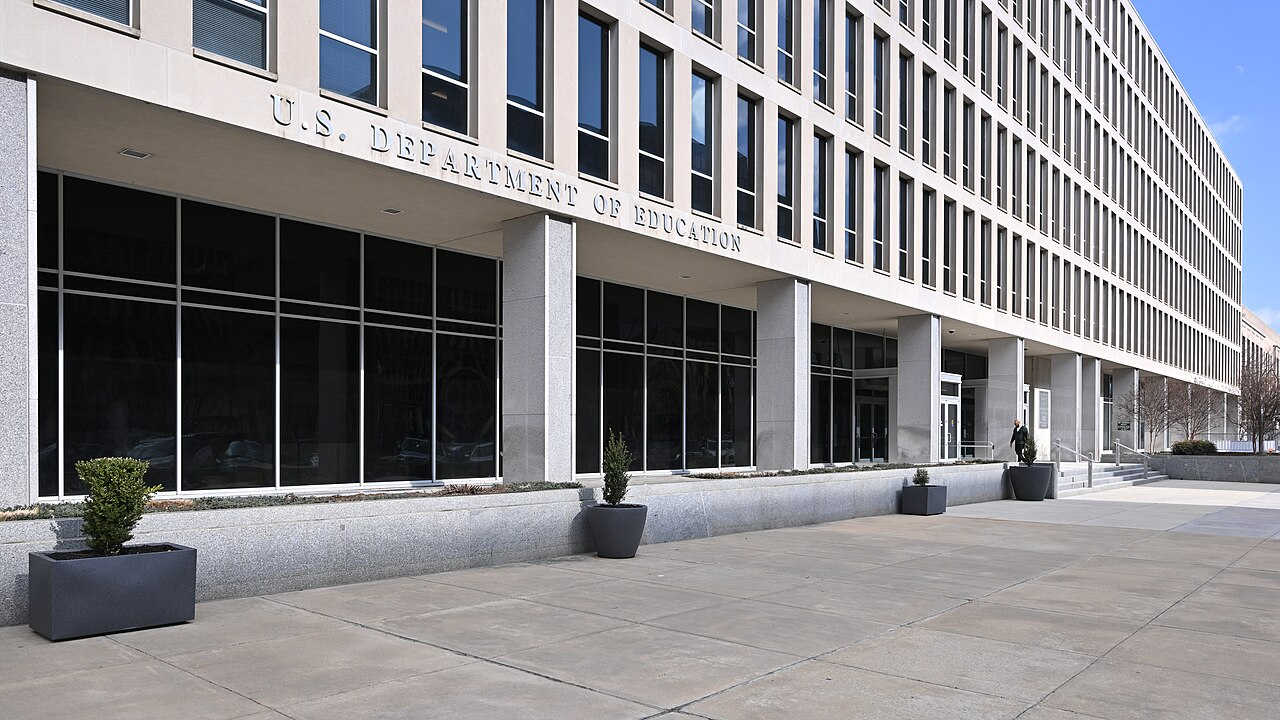
Both federally funded special-education systems in the Virgin Islands remain in the U.S. Department of Education's “Needs Assistance” category for 2026, extending a status that has persisted for at least three consecutive annual determinations while federal grant conditions remain in place and reviewers continue to flag problems with data, oversight and compliance.

The findings cover two separate programs under the Individuals with Disabilities Education Act, or IDEA: the V.I. Department of Education's Part B program for children and young adults ages 3 through 21, and the V.I. Department of Health's Part C Infants and Toddlers Program for children from birth through age 2. The Education Department issued the territory's latest Part B determination on June 18 and its Part C determination on June 16, based largely on federal fiscal year 2024 performance reports.
For the Department of Education, the federal determination contains an important distinction. VIDE earned an overall Results-Driven Accountability score of 80 percent, including an 88.89 percent compliance score and a 66.67 percent results score. Under the federal scoring system, an 80 percent score would ordinarily result in a “Meets Requirements” determination.
But federal rules contain an exception for jurisdictions operating under longstanding programmatic grant conditions. The Education Department says an entity scoring 80 percent or higher still receives a “Needs Assistance” determination when Specific Conditions have been imposed on its three most recent IDEA Part B grant awards and remain in effect. Federal records show that such conditions were imposed on the Virgin Islands' fiscal years 2023, 2024 and 2025 Part B awards and remained in effect when the 2026 determination was made.

The nature of the latest federal concerns includes the territory's system for identifying and correcting noncompliance. In its submission, VIDE reported two findings of noncompliance from fiscal year 2023 relating to federal “child find” requirements, which govern the identification and evaluation of children who may need special-education services. The same submission, however, also stated that there was “no identified noncompliance for the reporting period.” Because of that contradiction, the federal Office of Special Education Programs said it could not determine whether the data were valid and reliable and directed the territory to submit valid and reliable information in its next annual report.
Federal reviewers also noted that VIDE did not provide the required web link to publicly available information describing its general-supervision policies, procedures and processes. The department told federal officials that its general-supervision policies and procedural manual were being revised. OSEP said the longstanding Specific Conditions attached to the territory's IDEA Part B grants remained in effect.
The report was not uniformly negative. VIDE reported that all 70 children for whom parental consent to evaluate was received during the reporting period had their evaluations completed within the required timeline. It also reported that all 52 children transitioning from Part C who were found eligible for Part B had individualized education programs developed and implemented by their third birthdays, and that all 266 students age 16 and older reviewed for secondary transition had IEPs containing the required transition components.
The territory also exceeded its federal target for students with disabilities leaving school with a regular diploma. Fifty of 73 students with IEPs who exited special education during the measured period did so with a regular high school diploma, producing a rate of 68.49 percent against a target of 56.5 percent.
The federal assessment of the Department of Health's Infants and Toddlers Program showed more substantial compliance weaknesses. The Part C program received an overall accountability score of 65.63 percent, consisting of a 75 percent results score and a 56.25 percent compliance score. Like VIDE, the program has operated under federal programmatic Specific Conditions for at least three years.
One of the largest deficiencies involved children preparing to leave early-intervention services. Federal rules require eligible toddlers exiting Part C to have an Individualized Family Service Plan containing transition steps and services within prescribed timelines before their third birthdays. Of 115 toddlers included in the Virgin Islands measure, only 69 — 62.61 percent — met that requirement, against a federal target of 100 percent. The territory attributed delays in the St. Croix district to documented exceptional family circumstances as well as program delays.
Other portions of the transition process performed considerably better. The program recorded 100 percent compliance for timely notifications to education agencies and for required transition conferences. Timely provision of early-intervention services stood at 97.11 percent, while the measure requiring initial evaluations, assessments and an Individualized Family Service Plan meeting within 45 days came in at 90.08 percent. The territory told federal reviewers that slippage on the 45-day requirement was partly tied to a shortage and high turnover of service coordinators on St. Croix, along with what it described as a lengthy government hiring process.
Data reliability emerged repeatedly as another problem in the Part C review. For example, federal data used for the territory's birth-to-3 child-find measure showed 48 infants and toddlers with Individualized Family Service Plans, while the Virgin Islands told reviewers that its own program spreadsheet showed 117. OSEP declined to substitute the local figure because the indicator was required to use data previously submitted through the federal IDEA Section 618 reporting system, and consequently classified the measure as not valid and reliable.
Federal reviewers reached a similar conclusion about the program's general-supervision data. The territory reported that two findings of noncompliance from the previous year had been corrected within one year, but OSEP said the submission did not adequately demonstrate that the program had verified correction in the manner required under federal guidance. The federal compliance matrix consequently classified general-supervision data as “Not Valid and Reliable.”
Public reporting also drew criticism. At the time of the federal review, OSEP said the Infants and Toddlers Program had not posted its fiscal year 2023 State Performance Plan/Annual Performance Report as required and had not provided a link demonstrating that its fiscal year 2024 report was publicly available. The Department of Health's current Infants and Toddlers webpage now lists the FFY 2023 Annual Performance Report, indicating that at least that earlier document has since been posted. As of September 16, however, the page's downloadable materials listed grant applications for fiscal years 2024 through 2026 but did not list an FFY 2024 Annual Performance Report.
The continuing federal designation comes against a backdrop of longstanding local challenges in providing special-education services. The Consortium reported in May 2025 that VIDE was struggling with shortages of special-education teachers, paraprofessionals and school psychologists while working through evaluation backlogs. Department officials told lawmakers at the time that the territory's recruitment difficulties were being compounded by licensing requirements, rising contract costs and competition with mainland school systems for specialized personnel.
“Needs Assistance” is the second of four IDEA determination categories and is less severe than “Needs Intervention” or “Needs Substantial Intervention.” However, when a jurisdiction remains in the category for two or more consecutive years, federal law requires the Education Department to take at least one enforcement action. Those actions can include requiring technical assistance, imposing additional grant controls or directing how certain federal funds are used. The Virgin Islands is listed among jurisdictions that have received the designation for two or more consecutive years under both Part B and Part C.

For 2026, federal officials have again required both territorial programs to work with appropriate technical-assistance providers and identify the areas and strategies on which that support will be focused. Both VIDE and the Department of Health must report by February 1, 2027 on the technical assistance they received and the actions taken as a result.