
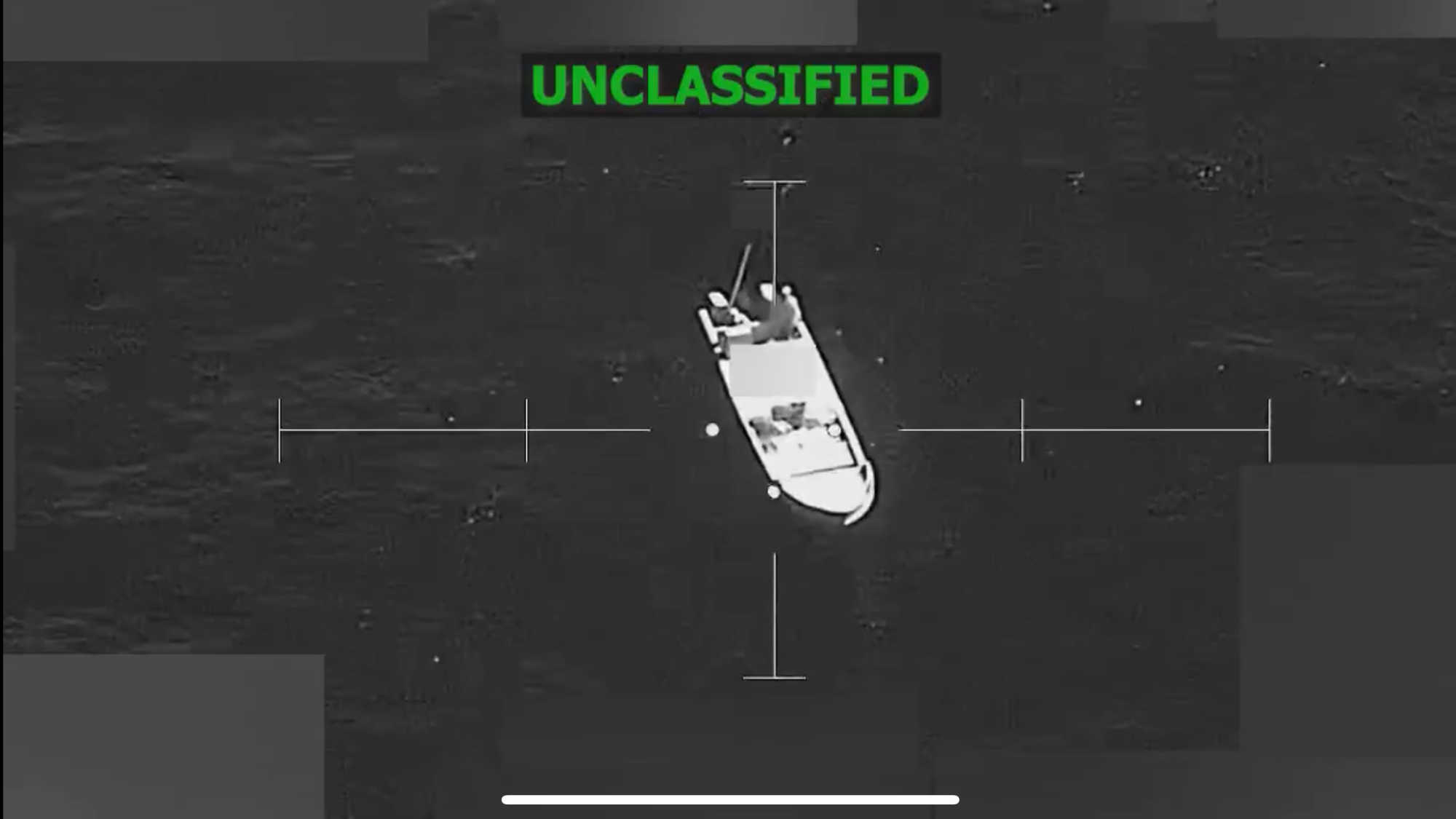
Aerial surveillance image showing a small vessel operating in open waters along a known narco-trafficking route in the Eastern Pacific, captured during U.S. counter-drug operations tied to Joint Task Force Southern Spear. Photo Credit: U.S. SOUTH COMMAND.
U.S. forces carried out lethal strikes on three vessels in international waters on Dec. 15 after intelligence assessed the boats were operating along known narco-trafficking routes and tied to “Designated Terrorist Organizations,” according to U.S. Southern Command and a statement shared by the Department of War. Officials said eight men described as “narco-terrorists” were killed across the three vessels, as the Trump administration framed the operation as part of a wider campaign targeting drug trafficking networks treated as national security threats.

The action was conducted by Joint Task Force Southern Spear “at the direction of @SecWar Pete Hegseth,” according to the statement provided, which said intelligence confirmed the vessels were transiting established trafficking corridors in the Eastern Pacific and were “engaged in narco-trafficking.” “A total of eight male narco-terrorists were killed during these actions—three in the first vessel, two in the second and three in the third,” the statement said.
U.S. Southern Command, in a public release, described the operation as “lethal kinetic strikes” carried out in international waters against three vessels linked to designated terror groups and described the action as part of an effort to disrupt maritime trafficking routes used by transnational criminal networks.
The strikes land amid an escalating U.S. posture in the wider Caribbean and Latin America, where the administration has paired interdiction operations with tougher designations and enforcement tools aimed at networks U.S. officials say are involved in drug trafficking and related illicit finance. In recent reporting, the administration’s approach has drawn scrutiny abroad and at home over the scope of maritime enforcement and the legal and diplomatic fallout that can follow when counter-drug operations intersect with broader geopolitical disputes—particularly those involving Venezuela.
While officials characterized the Dec. 15 action as a targeted strike on vessels tied to trafficking routes in the Eastern Pacific, the administration has also tied its wider counter-narco posture to Venezuela in public remarks and policy steps, arguing that regional trafficking and “narco-terrorism” networks pose a direct security threat. Analysts and critics have cautioned that a more aggressive posture could raise risks of escalation and complicate cooperation with partners in the region, even as the administration argues the strategy is necessary to disrupt entrenched trafficking corridors.
Officials have not, in the materials cited, released the names of the vessels, the specific designated organizations alleged to be operating them, or additional operational details beyond the stated location, the link to trafficking routes, and the reported fatalities. U.S. Southern Command’s release indicated the operation remains part of continuing efforts to counter maritime trafficking activity in the hemisphere.


Advertisements