

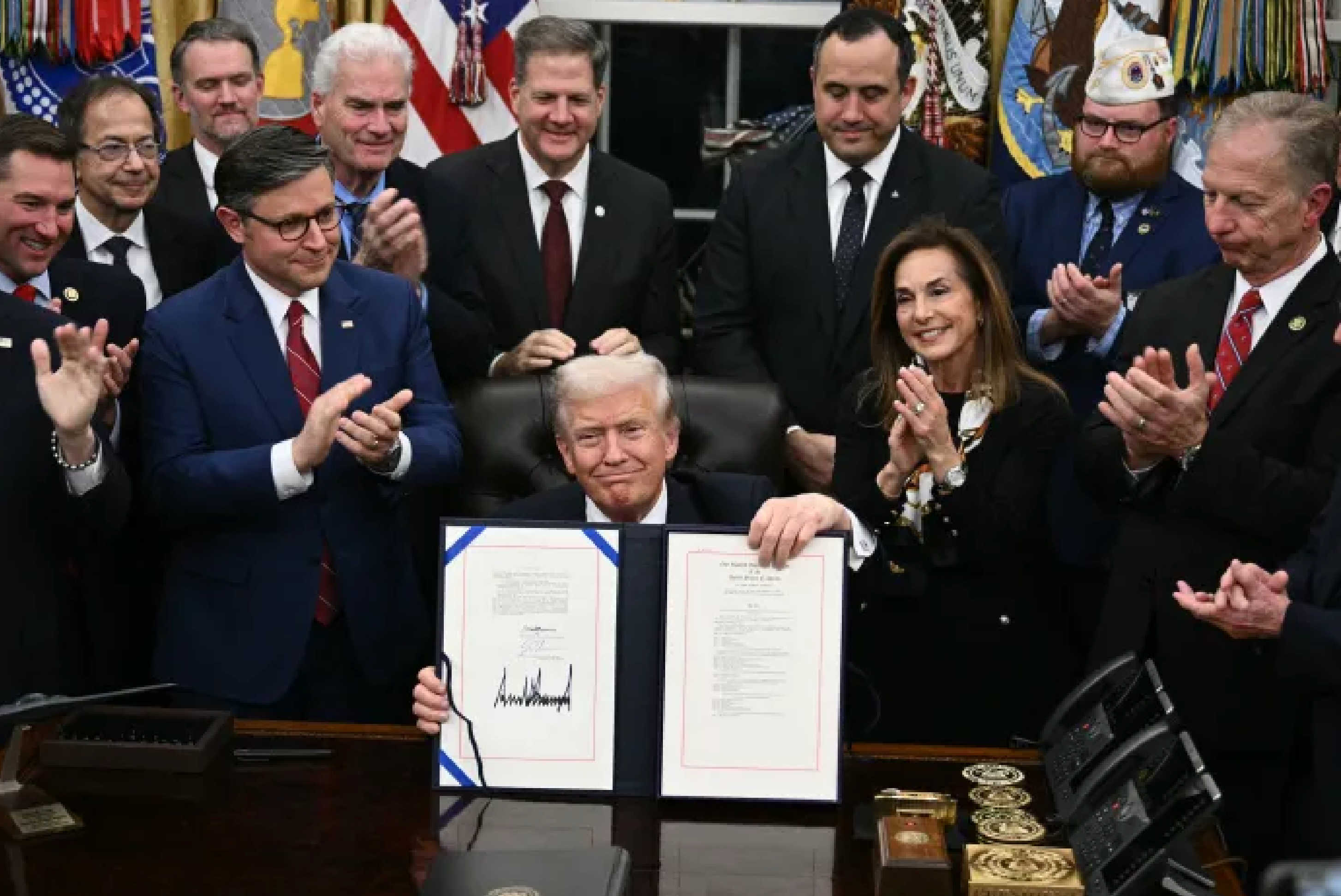
President Donald Trump has signed a funding bill to reopen the federal government, ending a 43-day shutdown that is now the longest in U.S. history. The measure cleared the House on Wednesday night in a 222–209 vote, with 216 Republicans and six Democrats voting in favor, and 207 Democrats and two Republicans opposed, according to official tallies and party breakdowns.

The bill, which had already passed the Senate earlier in the week by 60–40 after eight members of the Democratic caucus joined Republicans, funds much of the government through January 30, 2026, while three appropriations bills provide full-year funding for agencies including Veterans Affairs and parts of the Agriculture Department and Congress.
The shutdown was driven by a dispute over whether to extend the enhanced Affordable Care Act premium subsidies, a temporary program originally created during the pandemic that costs the federal government tens of billions of dollars annually. These subsidies lower insurance premiums for millions of Americans by increasing federal tax-credit payments to insurers, with most of the benefit flowing to consumers through reduced monthly costs. Supporters argued that failing to extend the program would lead to significant premium hikes, while opponents said the subsidies were meant to be temporary and that Congress should address the underlying drivers of rising healthcare costs rather than rely on increasingly expensive federal assistance. The disagreement remained unresolved as Democrats sought to include the subsidy extension in the continuing resolution and Republicans opposed adding policy measures to a short-term funding bill, resulting in a stalemate that prolonged the shutdown.
For federal workers, the agreement means a return to work and guaranteed back pay after weeks of missed paychecks. The legislation reverses Trump administration firings carried out during the shutdown, protects federal employees from further layoffs through January, and ensures they will receive the wages they were owed while the government was closed. Contractors, who are often left out of back-pay guarantees, are still awaiting clarity on how much of their lost income will be restored, but federal agencies are now authorized to ramp operations back up.

Air travel, which has been strained by unpaid air-traffic controllers and reduced staffing, will not snap back to normal overnight. The Federal Aviation Administration and the Department of Transportation have said that a 6 percent reduction in flights at 40 major airports will remain in place as controllers return and safety staffing levels are rebuilt, with a planned deeper cut of 10 percent now shelved. Officials say normal schedules will resume only after safety metrics show sustained improvement.
The bill also restarts key domestic programs that had been squeezed by the shutdown, including full funding for the Supplemental Nutrition Assistance Program (SNAP) through September, restoring food assistance security for more than 40 million Americans. Other affected services, from food safety inspections to certain military construction projects and farm programs, are expected to ramp back up over the coming days as agencies recall furloughed staff and restart contracts.

Although the immediate crisis has been defused, the deal sets up another round of brinkmanship early next year. Most agencies are funded only until January 30, 2026, leaving lawmakers a limited window to negotiate a broader budget agreement and decide whether to extend the ACA subsidies that helped trigger the shutdown. Republicans have already introduced a measure, backed by former President Trump, that would send more assistance directly to consumers instead of healthcare companies, signaling their push not only to scale back the current subsidies but to replace the structure altogether. Democrats are pressing for legislation to extend or preserve the existing ACA tax credits, setting up another clash on the same issue that brought the government to a standstill. The core dispute behind this shutdown remains unresolved and is poised to reemerge in the next round of negotiations.