




The Trump administration has expanded the federal government's authority to remove certain current employees for misconduct committed after they were hired and has opened the door to performance ratings being distributed on a standardized curve, prompting major federal unions to sue as roughly 900 federal government jobs remain based in the U.S. Virgin Islands.

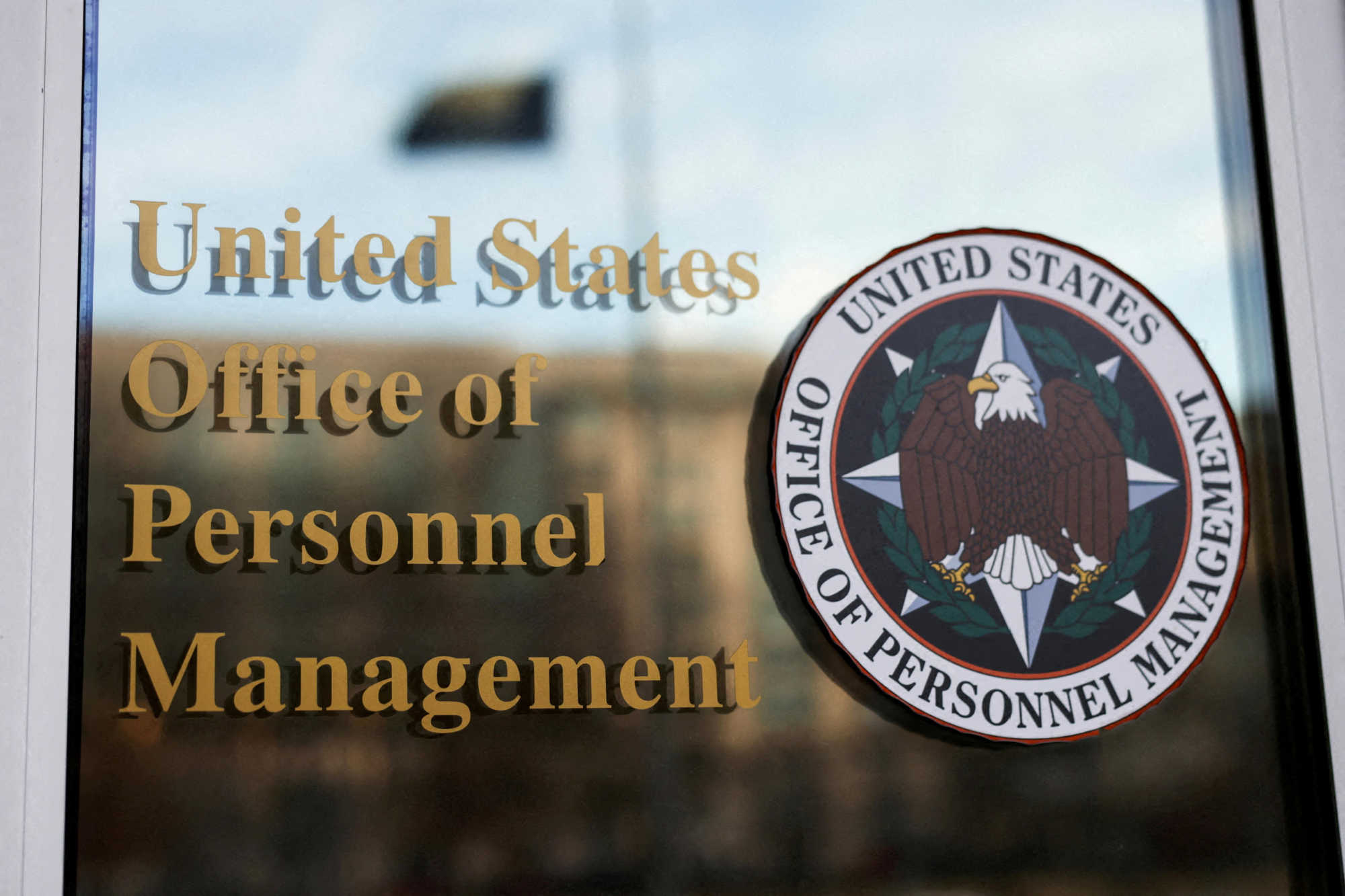
The lawsuit, filed Monday in federal court in San Francisco, challenges two rules issued by the U.S. Office of Personnel Management, the federal government's central personnel agency. The American Federation of Government Employees, the American Federation of State, County and Municipal Employees, the International Federation of Professional and Technical Engineers and the National Federation of Federal Employees, along with four AFGE locals, are asking the court to invalidate the rules and say they will seek a preliminary injunction to stop their enforcement while the case proceeds.
The changes have direct relevance to the Virgin Islands because the latest Bureau of Labor Statistics employment estimate shows about 900 federal government employees working in the territory. The seasonally adjusted figure stood at 0.9 thousand in June, where it had remained for several months. The data, however, do not identify the employees by civil-service classification, meaning the figure should not be interpreted to mean that all 900 workers are necessarily covered by every provision of the new rules.
The first change, known as the Suitability and Fitness rule, took effect July 30 and formalizes OPM's authority to take suitability actions against current employees for certain misconduct occurring after they entered federal service. The covered positions include employees in the competitive service, certain excepted-service positions that can be converted to competitive service, and career appointments in the Senior Executive Service.
In practical terms, an employing agency that identifies substantiated post-hiring conduct serious enough to raise a suitability concern can refer the case to OPM. The personnel agency then has authority to make the final suitability determination and, where warranted, remove the employee and potentially bar that person from returning to covered federal employment, including through a governmentwide debarment. OPM says unverified allegations or anonymous complaints alone are not sufficient; the referring agency must provide evidence substantiating the conduct.
That represents a significant change in how such cases can be handled. OPM acknowledges that, following a 2011 Merit Systems Protection Board decision, it had not used suitability actions against employees for post-appointment conduct. Agencies instead generally addressed workplace misconduct through existing adverse-action procedures, commonly known as Chapter 75, which can include penalties ranging from suspension to removal. The new rule creates an additional pathway specifically for serious conduct that raises questions about whether an employee remains suitable for federal service.
OPM argues that the approach provides a more effective way to address serious misconduct threatening the integrity or efficiency of the federal workforce. Unlike the broader range of penalties available under Chapter 75, if OPM determines that a suitability action is warranted against a current employee, the consequence is removal rather than a lesser disciplinary penalty, with debarment also possible. Employing agencies retain the option of using other disciplinary authorities rather than referring a case to OPM.
The administration itself estimates that the new mechanism could capture a substantial share of cases now handled through traditional disciplinary procedures. OPM found that an average of 2,452 federal employees were removed annually under Chapter 75 or equivalent procedures for post-appointment misconduct during fiscal years 2022 and 2023. It estimated that about half of those cases — roughly 1,226 — could instead be referred to OPM for suitability action.
That estimate does not mean OPM expects 1,226 additional federal workers to be fired each year. The agency presented the figure as an estimate of how many existing removal cases could shift from agency-run Chapter 75 proceedings into the suitability system, and said the actual number would depend on how often agencies choose to make referrals.
The unions contend that the new system goes beyond the authority Congress gave OPM and circumvents civil-service protections established for career employees. Their complaint argues that Congress assigned employing agencies the responsibility for disciplining workers and created procedures allowing employees to contest significant adverse actions. The unions say turning post-appointment misconduct into a suitability matter improperly gives OPM authority to become the ultimate decision-maker over removals. Those allegations have not yet been adjudicated.
The second rule changes how performance can be rated. Effective in August, OPM removed a longstanding regulatory prohibition against forced or standardized distributions and gave itself authority to establish distributions of some or all performance-rating levels that agencies would be required to apply. The rule expressly permits systems that compare, categorize or rank employees or groups based on their performance.
That is the basis for describing the system as a performance-rating curve, but the final rule contains an important qualification. Employees must still first be evaluated on their actual job performance against established standards. OPM says a standardized distribution would be applied afterward and has said it intends to limit the distribution requirements to the two highest rating levels — Levels 4 and 5 — rather than forcing agencies to assign a fixed number of workers failing grades. Level 3, or “Fully Successful,” would remain unrestricted.
In other words, the rule does not require a workplace with strong performers to designate a certain percentage of them as unacceptable. It does, however, permit the government to restrict how many employees receive the highest ratings, meaning workers who otherwise perform strongly could be differentiated from one another when agencies apply the standardized distribution. The rule also removes the option of challenging a rating of record through negotiated grievance procedures, subject to applicable federal labor law.
OPM says the changes are needed because federal performance reviews have become heavily concentrated at the top. In supporting the rule, the agency cited a 2016 Government Accountability Office finding that 99 percent of permanent, non-Senior Executive Service employees received ratings of “Fully Successful” or higher. OPM also said federal surveys and other research showed only 42 to 51 percent of employees believed supervisors meaningfully distinguished and recognized different levels of performance.
The unions reject the administration's legal basis for imposing such distributions. They argue that federal law requires performance systems to evaluate employees as accurately as feasible using objective criteria related to each person's job, and contend that forcing ratings into a distribution necessarily introduces comparisons between workers. OPM disputes that interpretation, saying federal law does not prohibit comparative methods and that employees will continue to be assessed against job-related performance standards before the distribution is applied.
The dispute comes amid a much broader reshaping of federal employment under the Trump administration. The civilian federal workforce declined by approximately 12 percent between September 2024 and January 2026 amid resignations, retirements, layoffs and other workforce-reduction initiatives.
For the Virgin Islands, the roughly 900 federal positions represent a relatively small but established segment of the territory's labor market. Whether individual local employees are subject to the new suitability process or performance-distribution requirements will depend on their agency, position and civil-service classification.
The filing of the lawsuit does not itself suspend either rule. Both remain in effect while the challenge proceeds unless the court intervenes. The unions say they intend to seek a preliminary injunction, setting up an early legal test of whether the Trump administration can continue enforcing the new firing and performance-review systems while their underlying legality is litigated.



Advertisements