



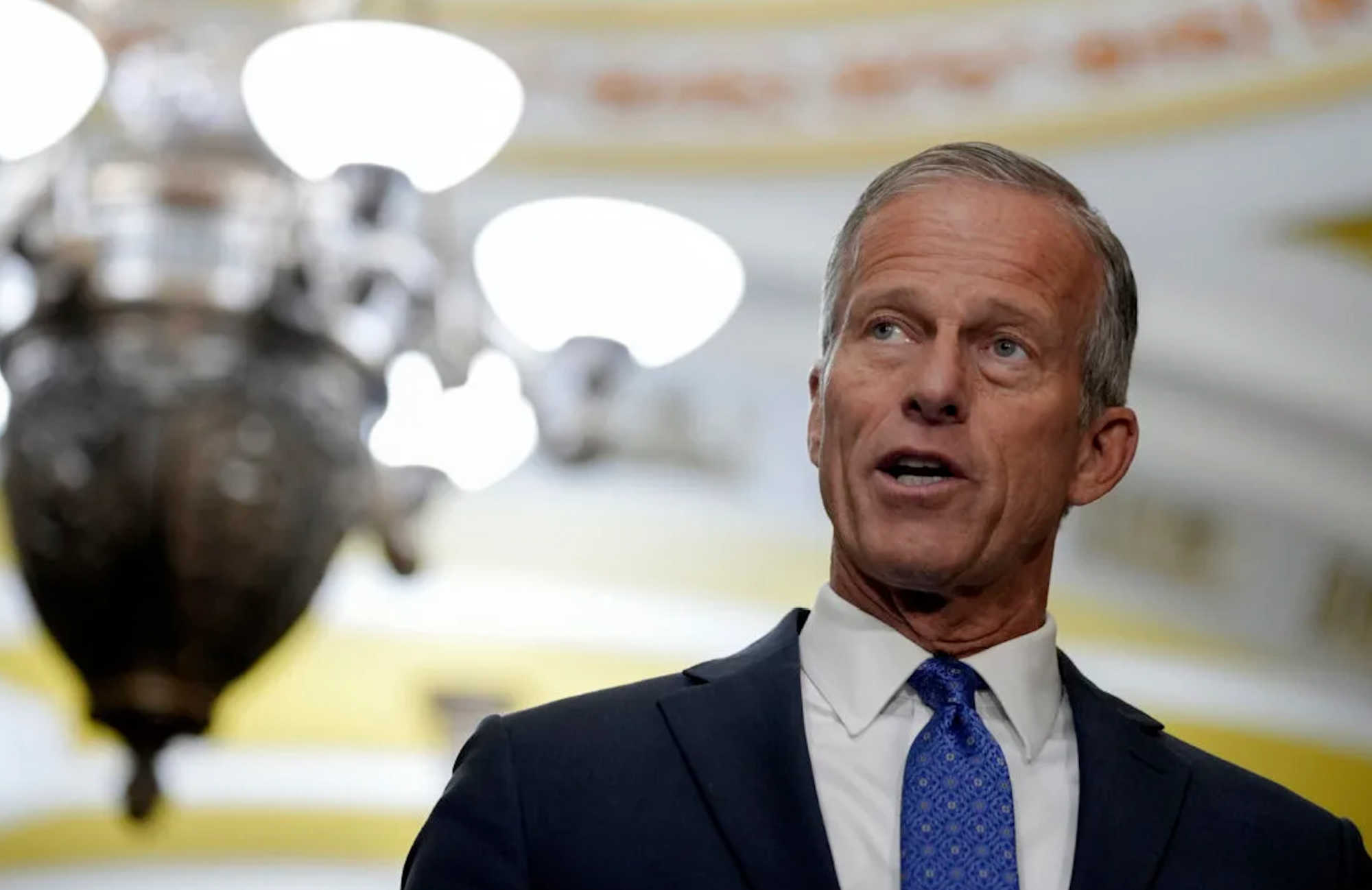
Senate Majority Leader John Thune, who vowed to keep the Senate in session until the government reopens.
Senate Republicans announced Saturday that they will remain in session through the weekend and beyond until a resolution is reached to reopen the federal government, now entering its second month and marking the longest shutdown in U.S. history. The move comes amid intensifying negotiations over healthcare funding, federal operations, and President Donald Trump’s latest proposal to reshape how government subsidies are distributed under the Affordable Care Act.

Senate Majority Leader John Thune said the chamber’s rare weekend session was necessary to maintain momentum as lawmakers face growing pressure from the public over disruptions caused by the shutdown — from canceled flights to shuttered national parks. Thune described the talks as “potentially promising” but reaffirmed that Republicans would not discuss broader healthcare reforms until the government is funded and reopened. “Our focus remains on restoring essential services before debating longer-term policy issues,” he said.
The decision to keep the Senate in continuous session underscores the urgency gripping Washington as hundreds of thousands of federal workers remain furloughed or working without pay. Public frustration has mounted nationwide, with the standoff now stretching into its 39th day.
Against that backdrop, President Donald Trump has introduced a new proposal aimed at breaking the impasse. In a series of posts on Truth Social, the president urged Republican lawmakers to redirect federal healthcare subsidies directly to American patients instead of insurance companies — a shift he framed as a potential “breakthrough” to end the deadlock.
Trump criticized both Democrats and what he described as “BIG, BAD health insurers,” arguing that bypassing traditional channels could provide immediate relief to families while cutting what he views as excessive profits within the insurance industry. “Let’s give the money directly to the people — not to the bureaucrats or the insurance giants,” Trump wrote, presenting the idea as a more efficient use of federal resources.
The proposal comes as negotiations have stalled over the expiration of Affordable Care Act premium subsidies, which are set to lapse at the end of 2025. Without renewal, analysts warn millions could see steep hikes in their insurance premiums. Democrats have offered a one-year extension of the subsidies as part of a broader agreement to reopen the government, but Republicans quickly rejected the proposal, saying healthcare reforms should be discussed only after government funding is restored.
Republican leaders have instead floated a short-term funding measure that would extend government operations through January 30, providing a temporary reprieve while longer-term negotiations continue.
Despite the stalemate, both parties have signaled limited optimism. Thune, while noncommittal on timelines, said discussions were ongoing and that “some movement” was possible if Democrats agreed to separate healthcare provisions from the funding debate.
Meanwhile, Trump’s call to eliminate the Senate filibuster to allow a simple majority vote on reopening measures has deepened divisions within his own party. Several GOP senators have publicly opposed the idea, warning that dismantling the filibuster could undermine legislative checks and balances.
Democrats, led by Senate Minority Leader Chuck Schumer, have accused Republicans of prolonging the shutdown to pursue structural changes to the Affordable Care Act, including potential repeal elements floated by Trump. “This is not about reopening government; this is about dismantling healthcare protections for millions,” Schumer said earlier in the week.
The Department of Justice, in filings related to ongoing court cases over subsidy allocations, has maintained that funding decisions must come through Congress, not executive or judicial action. “This is a crisis, to be sure, but it is a crisis occasioned by congressional failure, and that can only be solved by congressional action,” DOJ attorneys argued, dismissing calls for unilateral executive measures.
While the administration continues to push for healthcare reform, White House officials have pointed to ongoing executive actions, including initiatives to reduce drug costs, as evidence of their broader healthcare agenda. However, none of those measures directly address the subsidy dispute at the heart of the shutdown negotiations.

With the stalemate dragging, no firm timeline has emerged for a resolution. Federal employees, contractors, and affected industries remain in limbo, while both parties publicly insist progress is within reach.


Advertisements